

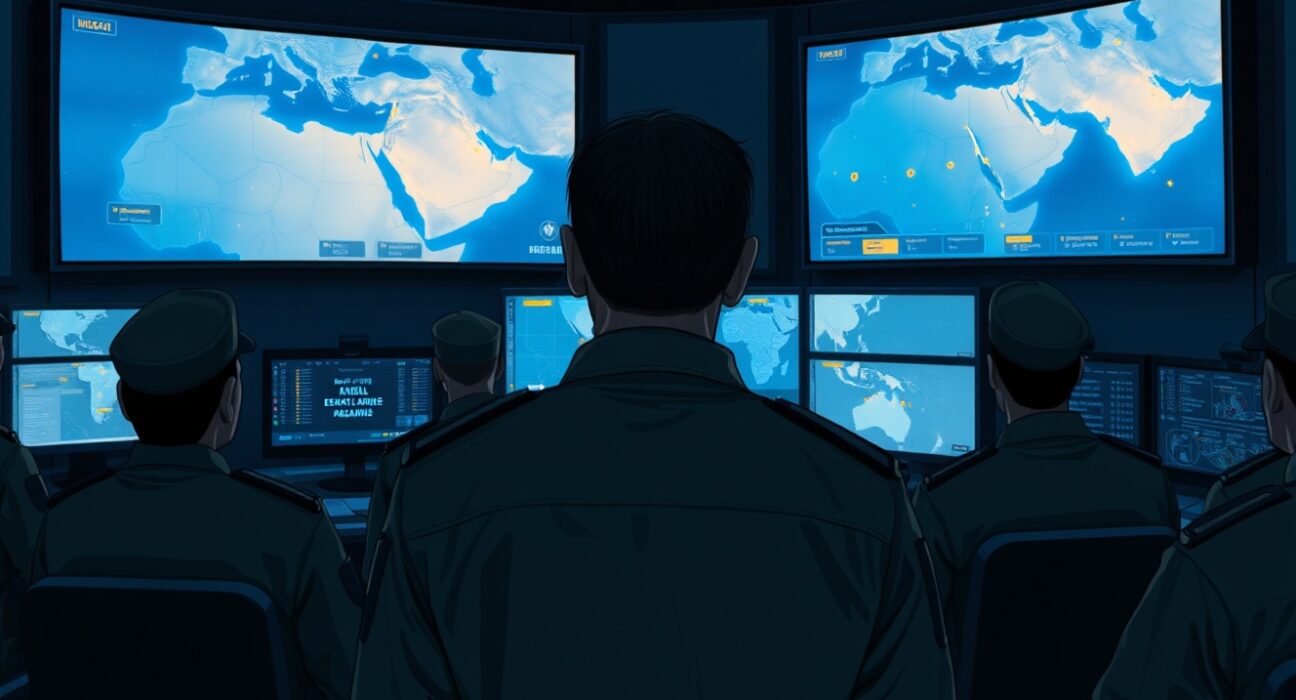
TEHRAN, Iran – January 15, 2025: Iranian military officials have issued a stark warning about launching powerful attacks on predetermined targets, a direct response to what they term repeated and escalating threats from former U.S. President Donald Trump. This development marks a significant escalation in regional tensions, potentially reshaping security dynamics across the Middle East. Consequently, analysts are scrutinizing the statement’s implications for global stability and energy markets.
Iran Attack Warning: Decoding the Official Statement
Senior commanders from Iran’s Islamic Revolutionary Guard Corps (IRGC) delivered the warning through state-affiliated media channels. They explicitly cited “provocative rhetoric” from Donald Trump as the catalyst. The statement declared that Iranian forces have “pre-identified and coordinates of valuable targets” and possess the capability for a “swift and crushing” response. Furthermore, the warning emphasized that any action would be “proportional and precise,” suggesting a calculated rather than indiscriminate approach. This language represents a shift from previous, more generalized threats to a posture of specific, actionable readiness.
Historically, such warnings often follow periods of intensified U.S. political discourse regarding Iran. For instance, the 2020 assassination of IRGC General Qasem Soleimani by a U.S. drone strike led to retaliatory missile attacks on Iraqi bases housing American troops. The current rhetoric, however, appears more strategically ambiguous, not naming specific locations but asserting a state of high preparedness. Military analysts note this creates a deterrent effect while maintaining operational secrecy.
Context of Repeated Threats by Trump
The Iranian warning references a series of public statements made by Donald Trump, particularly during the 2024 U.S. election campaign and in its aftermath. Trump has consistently advocated for a hardline stance against Iran, often revisiting themes from his presidency. Key points from his recent rhetoric include:
- Renewed Maximum Pressure: Advocacy for reinstating and strengthening the sanctions regime that was largely abandoned under the subsequent administration.
- Nuclear Deal Critique: Repeated condemnation of the Joint Comprehensive Plan of Action (JCPOA) and any efforts to revive it.
- Military Posturing: Suggestions of a more aggressive military option, including statements about responding forcefully to any Iranian proxy activity.
This pattern of threats creates a volatile backdrop. Importantly, the Iranian response is not merely to a single comment but to a sustained narrative perceived as an existential challenge. Regional experts argue that Tehran views this rhetoric as part of a broader strategy to isolate and pressure the Islamic Republic, regardless of who occupies the White House.
Expert Analysis on Deterrence and Escalation
Dr. Anahita Nassiri, a senior fellow at the Center for Strategic Studies in Tehran, provides critical context. “The Iranian military doctrine has long been based on asymmetric deterrence,” Nassiri explains. “Public warnings of this nature serve a dual purpose: they communicate resolve to a domestic audience requiring assurance of strength, and they signal capability and intent to an external adversary, hoping to deter further escalation.”
Conversely, security analysts in Washington express concern. “This is a classic security dilemma,” notes Mark Benson, a former Pentagon advisor. “Hardline rhetoric from U.S. political figures prompts a defensive, aggressive posture from Iran, which in turn validates the original hardline perspective, creating a dangerous feedback loop. The risk of miscalculation is now notably higher.”
Potential Predetermined Targets and Regional Impacts
While Iranian officials did not specify targets, regional security assessments point to several likely categories based on past behavior and military doctrine. The concept of “predetermined targets” suggests extensive prior surveillance and planning.
| Target Category | Examples | Regional Impact |
|---|---|---|
| U.S. Military Assets | Bases in Iraq, Syria, or naval vessels in the Gulf. | Direct U.S.-Iran conflict, massive oil price spike. |
| Israeli Strategic Sites | Commercial ports, infrastructure, or peripheral military installations. | Expansion of conflict to Israel, multi-front engagement. |
| Regional Adversaries | Assets of Saudi Arabia or the United Arab Emirates. | Destabilization of Gulf Arab states, impact on global energy exports. |
| Maritime Chokepoints | Strait of Hormuz shipping lanes. | Global trade disruption, 20%+ of world’s oil supply at risk. |
Iran’s military capabilities have evolved significantly. Their arsenal now includes advanced drones, precision-guided ballistic missiles, and extensive naval asymmetric warfare units. A targeted strike could demonstrate this capability without triggering an all-out war, a delicate balance Tehran has attempted before. However, the explicit warning increases the stakes, as failing to respond after such a public declaration could be seen as weakness.
Global Reactions and Diplomatic Channels
The international response has been swift, urging restraint. The United Nations Secretary-General called for “maximum restraint and immediate dialogue to lower tensions.” European powers, deeply invested in regional stability and energy security, have engaged in quiet diplomacy, attempting to relay messages between parties. Meanwhile, Gulf Cooperation Council (GCC) states have expressed alarm, calling for a de-escalation to protect the fragile economic recovery in the region.
Significantly, other global powers like Russia and China have also counseled calm. Their interest lies in preventing a conflict that could disrupt their energy imports and broader geopolitical projects. This creates a rare moment of overlapping interests where major powers might collectively pressure both the U.S. and Iran to step back from the brink. Diplomatic efforts are currently focused on reactivating indirect communication channels that have lain dormant.
Conclusion
The Iranian attack warning represents a critical inflection point in an already tense geopolitical landscape. It is a direct, calculated response to perceived repeated threats from a major U.S. political figure, underscoring how domestic American politics can have immediate international security consequences. The situation demands careful statesmanship to avoid a miscalculation with devastating regional and global effects. The coming weeks will test whether diplomatic channels can absorb this shock or if the cycle of threat and counter-threat will lead to tangible conflict. The world now watches to see if this Iran attack warning remains rhetorical or becomes a tragic reality.
FAQs
Q1: What specifically triggered Iran’s latest warning?
A1: Iranian officials cite a pattern of “repeated threats” from former U.S. President Donald Trump, including his campaign rhetoric advocating for a renewed “maximum pressure” strategy and more aggressive military posturing against Iran. They perceive this as an ongoing and escalating existential challenge.
Q2: What does “predetermined targets” likely mean?
A2: The term suggests that Iranian military planners have already identified, coordinated, and potentially rehearsed strikes against specific assets. Based on doctrine and history, these could include U.S. military bases in the region, Israeli infrastructure, assets of regional rivals like Saudi Arabia, or critical maritime chokepoints like the Strait of Hormuz.
Q3: How credible is the threat of an Iranian attack?
A3: The threat is considered highly credible in terms of capability. Iran possesses advanced drones, precision missiles, and asymmetric naval forces. The decision to execute an attack, however, is a political calculation weighing the benefits of demonstrating strength against the risks of triggering a massive U.S. or Israeli retaliation.
Q4: How are global markets reacting to this tension?
A4: Financial markets, particularly oil futures, are highly sensitive to Middle East tensions. Any escalation prompts immediate price volatility. Major economies are monitoring the situation closely due to the risk to energy supplies transiting the Strait of Hormuz, through which about one-fifth of the world’s oil passes.
Q5: What is the historical context for such warnings?
A5: Similar cycles of threat and counter-threat have occurred before, notably during the “maximum pressure” campaign of 2018-2020, which culminated in the U.S. killing of IRGC General Qasem Soleimani and subsequent Iranian missile strikes on U.S. bases in Iraq. The current situation echoes that pattern but within a potentially more volatile political context in both nations.
Disclaimer: The information provided is not trading advice, Bitcoinworld.co.in holds no liability for any investments made based on the information provided on this page. We strongly recommend independent research and/or consultation with a qualified professional before making any investment decisions.
