

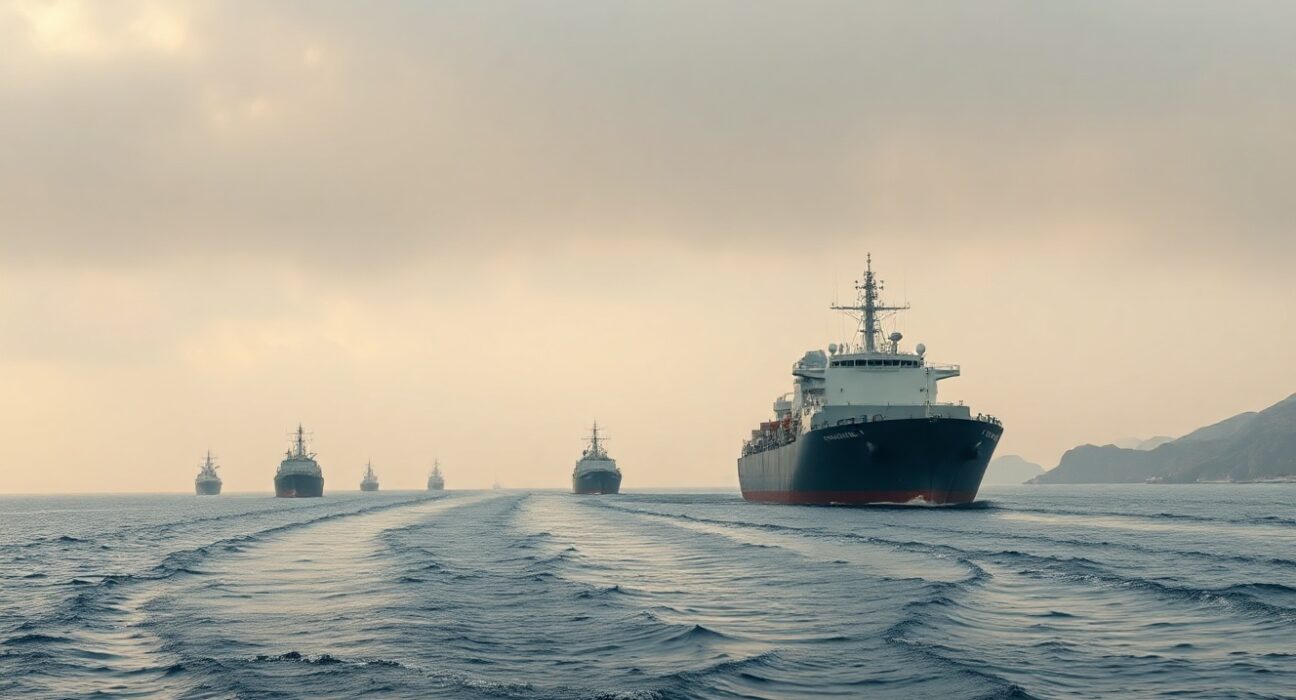
Iran, in coordination with its regional allies in the Axis of Resistance, has decided to impose a full blockade on the Strait of Hormuz, according to a report published by Iran’s semi-official Tasnim News Agency. The report, which did not specify a timeline or operational details, stated that additional maritime chokepoints, including the Bab el-Mandeb Strait, could also be targeted as part of the broader response.
Strategic Implications of a Strait of Hormuz Blockade
The Strait of Hormuz is one of the world’s most strategically important waterways, connecting the Persian Gulf to the Gulf of Oman and the open ocean. Approximately 20% of the world’s oil passes through this narrow channel, making it a critical artery for global energy supplies. A blockade would effectively cut off oil exports from major producers such as Saudi Arabia, Iraq, Kuwait, the United Arab Emirates, and Qatar, as well as Iran itself.
Iran has previously threatened to close the strait in response to economic sanctions or military pressure, but has never followed through with a sustained blockade. The latest announcement, if implemented, would represent a significant escalation in regional tensions and could trigger a direct confrontation with the United States and its allies, who have repeatedly stated that they would intervene to keep the waterway open.
Broader Regional Context
The Tasnim report linked the blockade decision to ongoing developments in the region, including the conflict in Gaza and heightened tensions between Iran and Israel. The mention of the Bab el-Mandeb Strait is notable, as it suggests a coordinated strategy to disrupt maritime traffic at multiple points simultaneously. The Bab el-Mandeb, located between Yemen and Djibouti, is another critical chokepoint for oil and commercial shipping, and has been a focal point of attacks by Houthi forces in recent months.
Iran’s Axis of Resistance includes a network of allied groups and governments, such as Hezbollah in Lebanon, the Houthi movement in Yemen, and various militias in Iraq and Syria. The coordination implied by the Tasnim report indicates a unified command structure capable of executing complex military operations across multiple theaters.
Impact on Global Oil Markets and Shipping
News of the potential blockade has already contributed to volatility in global oil markets. Analysts warn that even the credible threat of a blockade could drive up oil prices, as traders price in the risk of supply disruptions. Insurance premiums for vessels transiting the region are expected to rise sharply, and shipping companies may begin rerouting cargoes around the Arabian Peninsula, adding significant time and cost to voyages.
The blockade would also have immediate humanitarian and economic consequences for countries heavily dependent on oil imports, particularly in Asia. Japan, India, South Korea, and China are among the largest consumers of Persian Gulf oil and would be most vulnerable to supply interruptions.
Conclusion
The announcement by Tasnim News Agency represents a serious and credible threat to global energy security and regional stability. While the operational details remain unclear, the strategic coordination implied by the report suggests that Iran and its allies are preparing for a significant escalation. The international community will be closely watching for any confirmation or denial from official Iranian channels, as well as any military preparations in the region. The situation remains highly fluid, and further developments are expected in the coming days.
FAQs
Q1: What is the Strait of Hormuz and why is it important?
The Strait of Hormuz is a narrow waterway between Iran and Oman that connects the Persian Gulf to the open ocean. It is a critical chokepoint for global oil shipments, with about 20% of the world’s oil passing through it daily.
Q2: Has Iran blockaded the Strait of Hormuz before?
Iran has frequently threatened to close the strait in response to sanctions or military pressure, but has never carried out a sustained blockade. Previous threats have led to heightened military readiness by the U.S. and allied navies.
Q3: What is the Axis of Resistance?
The Axis of Resistance is a term used to describe a network of Iran-aligned groups and governments, including Hezbollah, the Houthi movement, and various Iraqi and Syrian militias. They coordinate politically and militarily with Iran to oppose U.S. and Israeli influence in the region.
Disclaimer: The information provided is not trading advice, Bitcoinworld.co.in holds no liability for any investments made based on the information provided on this page. We strongly recommend independent research and/or consultation with a qualified professional before making any investment decisions.
