

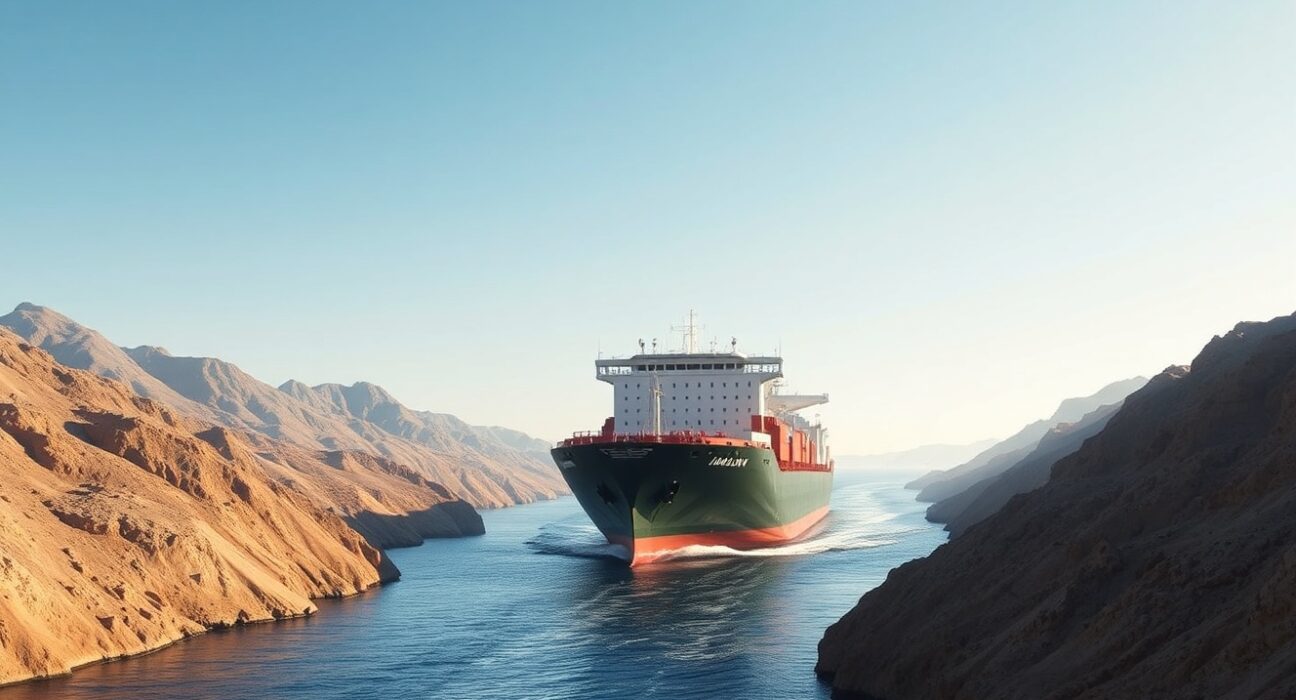
In a bold move escalating maritime tensions, an Iranian-flagged cargo vessel is currently navigating the Strait of Hormuz, directly challenging a declared United States military blockade of the strategic waterway. The ship departed from Shahid Rajaee Port in southern Iran early today and is en route to Kandla Port in India, according to official Iranian statements. This development occurs against a backdrop of significant regional friction and carries immediate implications for global energy security and international law.
Strait of Hormuz Becomes Flashpoint in US-Iran Standoff
The Iranian Maritime Authority confirmed the vessel’s transit early this morning. Officials released specific ship tracking data to international media outlets. This data reveals not just the single cargo ship’s journey, but a broader pattern of maritime activity. In fact, the data shows three vessels transited the strait within the past twelve hours. One oil tanker exited the Persian Gulf, while two other commercial ships entered the waterway.
This information directly contradicts the operational reality of the US-led blockade. Consequently, it raises immediate questions about the blockade’s enforcement and scope. The Strait of Hormuz is arguably the world’s most important oil transit chokepoint. The US Fifth Fleet, based in Bahrain, patrols the region. However, Iran’s Islamic Revolutionary Guard Corps (IRGC) Navy maintains a strong presence along its own coastline.
Historical Context of Persian Gulf Maritime Tensions
This incident is not an isolated event. Instead, it represents the latest chapter in a long history of confrontations in these waters. The US re-imposed stringent sanctions on Iran’s oil exports in 2018. Since then, maritime incidents have increased in frequency and severity. Key events include the seizure of tankers by both sides and alleged attacks on shipping.
International law provides a complex framework for such situations. The United Nations Convention on the Law of the Sea (UNCLOS) guarantees transit passage through straits used for international navigation. However, the United States maintains that its blockade is a lawful countermeasure. It cites previous UN Security Council resolutions concerning Iran’s nuclear program.
Expert Analysis on Blockade Enforcement
Naval strategy experts point to the significant practical challenges of enforcing a full blockade. The Strait of Hormuz is approximately 21 nautical miles wide at its narrowest point. Its shipping lanes are even narrower. “Physically stopping all traffic in such a congested waterway is a monumental task,” explains Dr. Anya Petrova, a maritime security analyst at the Gulf Studies Center. “It requires an immense concentration of naval assets and carries a high risk of miscalculation leading to direct conflict.”
Commercial shipping data from Lloyd’s List Intelligence shows typical daily traffic. The table below illustrates the volume, highlighting the blockade’s operational difficulty.
| Vessel Type | Average Daily Transits (Pre-Blockade) | Primary Destination/Origin |
|---|---|---|
| Crude Oil Tankers | 15-20 | Asia, Europe |
| LNG Carriers | 5-8 | Qatar, Asia |
| Container Ships | 10-15 | Global Ports |
| Other Cargo | 20+ | Regional Ports |
Immediate Global Impacts and Market Reactions
The immediate reaction in global energy markets was sharp and pronounced. Brent crude futures jumped by over 3% following the Iranian announcement. Insurance premiums for ships entering the Persian Gulf, known as war risk premiums, also spiked significantly. Furthermore, major shipping companies began issuing advisories to their fleets.
Regional allies are monitoring the situation closely. Key stakeholders have issued statements:
- Saudi Arabia: Called for “de-escalation and freedom of navigation.”
- United Arab Emirates: Emphasized the need for “dialogue and diplomatic solutions.”
- India: Expressed concern, noting Kandla Port is the destination for the Iranian ship.
- European Union: Urged all parties to “avoid actions that threaten regional stability.”
These reactions underscore the international stakes. Approximately one-fifth of the world’s oil passes through the Strait of Hormuz. A major disruption would therefore have severe consequences for the global economy. Energy analysts are now modeling various disruption scenarios.
Legal and Diplomatic Pathways Forward
The situation presents a complex legal puzzle. Iran’s action tests the boundaries of maritime law and the enforcement of sanctions. The US Department of Defense has not yet detailed its specific response options. However, Pentagon officials previously outlined a spectrum of possible actions during congressional testimony.
Diplomatic channels remain active behind the scenes. The Swiss government, which represents US interests in Iran, is reportedly engaged. Simultaneously, Oman, which borders the strait, has a history of mediating between Tehran and Washington. The coming hours will be critical for de-escalation. The risk of an accidental clash between US and Iranian naval forces is now elevated.
Conclusion
The transit of an Iranian cargo ship through the Strait of Hormuz in defiance of a US blockade marks a serious escalation in a protracted geopolitical struggle. This event directly challenges the enforcement mechanism of American sanctions and tests the limits of naval power in a congested chokepoint. The immediate effects are already visible in energy markets and shipping corridors. Ultimately, the situation highlights the fragile nature of security in the Persian Gulf and the global reliance on the free flow of commerce through the Strait of Hormuz. The international community now watches closely to see if this defiance prompts a military response or opens a new diplomatic dialogue.
FAQs
Q1: What is the Strait of Hormuz and why is it so important?
The Strait of Hormuz is a narrow waterway between Oman and Iran. It connects the Persian Gulf with the Gulf of Oman and the Arabian Sea. It is the world’s most important oil transit chokepoint, with about 21 million barrels of oil per day passing through it, representing roughly 21% of global petroleum liquid consumption.
Q2: What legal authority does the US have to impose a blockade?
The United States cites multiple United Nations Security Council resolutions related to Iran’s nuclear program as the basis for its sanctions regime. It characterizes the naval blockade as a lawful measure to enforce these sanctions and prevent the proliferation of weapons. However, the legality of a unilateral blockade outside of a UN mandate is debated under international law.
Q3: How can Iran defy the blockade if the US Navy is present?
Enforcing a complete blockade in a busy, narrow waterway is logistically challenging. Iran’s own naval forces and coast guard provide escort and protection for its vessels within its territorial waters. A direct interception by the US Navy could be seen as an act of war, requiring a significant political decision.
Q4: What are the immediate risks to global shipping?
The primary risks are a sharp increase in war risk insurance premiums, potential delays as ships reroute, and the danger of accidental or intentional military engagement. Shipping companies may advise vessels to exercise extreme caution or avoid the area entirely, disrupting supply chains.
Q5: What are the potential outcomes of this incident?
Potential outcomes range from a diplomatic de-escalation, where the ship’s passage is tacitly accepted, to a military confrontation if the US attempts to forcibly stop the vessel. It could also lead to renewed international negotiations or, conversely, a tightening of sanctions and further regional militarization.
Disclaimer: The information provided is not trading advice, Bitcoinworld.co.in holds no liability for any investments made based on the information provided on this page. We strongly recommend independent research and/or consultation with a qualified professional before making any investment decisions.
