

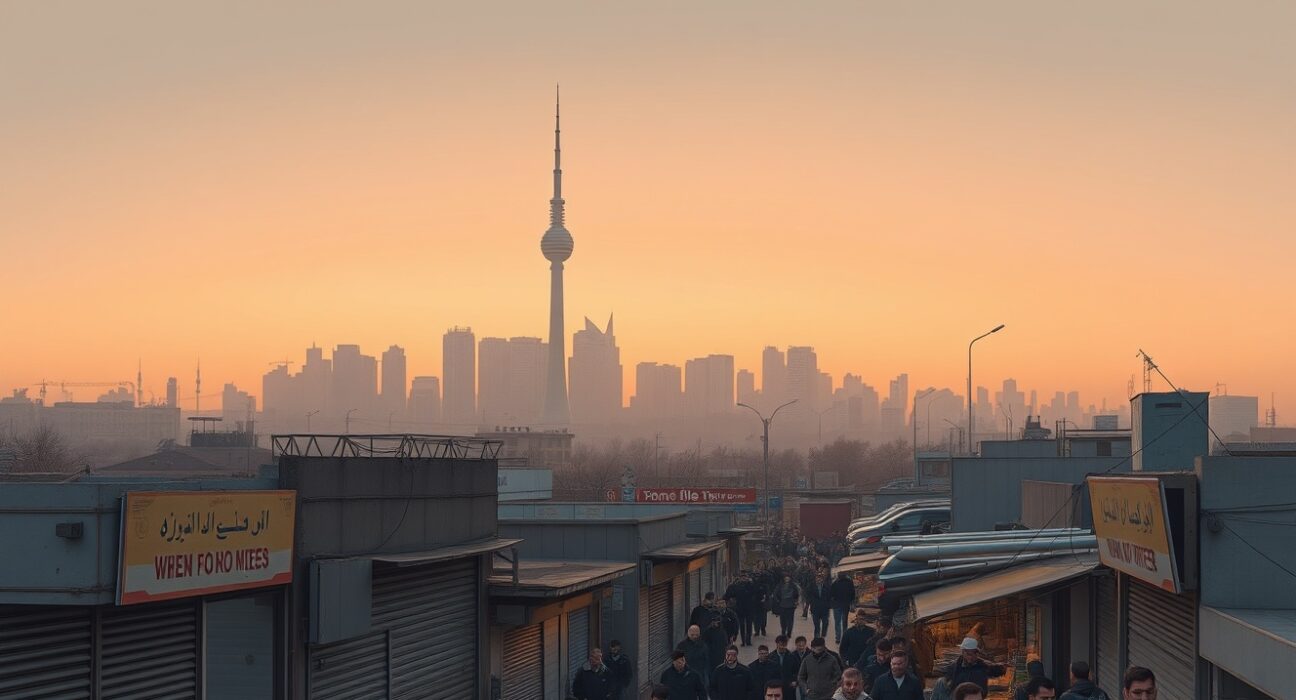
In a startling declaration that has sent ripples through global markets and diplomatic circles, US President Donald Trump has asserted that Iran is in a state of collapse. This statement, delivered during a press briefing, underscores the deepening economic and political turmoil within the Islamic Republic. The claim arrives amid escalating tensions in the Middle East and a sustained campaign of maximum pressure from Washington. For analysts and investors, this signals a critical juncture in the region’s stability.
Understanding the Iran Collapse Narrative
President Trump’s characterization of Iran’s condition is not without precedent. Since the US withdrawal from the Joint Comprehensive Plan of Action (JCPOA) in 2018, the Iranian economy has faced severe headwinds. Sanctions have crippled oil exports, which are the lifeblood of the nation’s revenue. Consequently, the rial has plummeted, inflation has soared past 40%, and unemployment rates have hit record highs. The Iran collapse narrative, therefore, finds grounding in observable economic data.
Furthermore, internal protests have erupted across multiple cities. Citizens have voiced anger over food shortages, power outages, and a lack of basic freedoms. These domestic pressures compound the external sanctions, creating a perfect storm. The government in Tehran struggles to maintain control, often resorting to heavy-handed tactics that further isolate it on the world stage.
Key Indicators of Economic Strain
- Currency Devaluation: The Iranian rial has lost over 80% of its value since 2018.
- Inflation: Official rates hover near 50%, with unofficial estimates much higher.
- Oil Exports: Dropped from 2.5 million barrels per day to under 500,000.
- Unemployment: Youth unemployment exceeds 25%.
These figures paint a grim picture. International organizations, including the International Monetary Fund (IMF), have downgraded Iran’s growth projections repeatedly. The Iran economy now operates in a survival mode, prioritizing basic needs over long-term investment.
Geopolitical Fallout from the Trump Statement
The Trump Iran statement has immediate geopolitical consequences. Allies in the Gulf region, such as Saudi Arabia and the United Arab Emirates, are closely monitoring the situation. They fear that a collapsing Iran could lead to increased proxy warfare, refugee flows, and a power vacuum. Meanwhile, European powers have called for restraint, urging a return to diplomatic negotiations.
Russia and China, both key partners of Iran, have expressed concern. Moscow relies on Tehran for strategic depth in Syria, while Beijing imports Iranian oil despite sanctions. A full-blown Middle East crisis could disrupt these alliances and force a recalibration of global energy markets. Oil prices have already ticked upward in response to the uncertainty.
Regional Power Dynamics
The balance of power in the Middle East is fragile. Iran’s collapse would embolden Israel and Sunni Arab states, potentially triggering a new arms race. Conversely, it could empower non-state actors like Hezbollah and the Houthis, who may act more aggressively to defend their interests. The US administration must navigate these complexities carefully to avoid unintended escalation.
Expert Analysis on the Iran Situation
Dr. Amina Karimi, a senior fellow at the Center for Strategic and International Studies, offers a nuanced view. “The term ‘collapse’ is strong, but not hyperbolic,” she states. “Iran is experiencing a systemic failure across multiple sectors. However, the regime has proven resilient before. We must differentiate between economic collapse and state collapse.”
This distinction is crucial. While the Iran collapse may refer to economic and social metrics, the political apparatus remains intact for now. The Islamic Revolutionary Guard Corps (IRGC) still controls key industries and security forces. Yet, their ability to project power is diminishing as resources dwindle.
Timeline of Key Events
| Year | Event |
|---|---|
| 2018 | US withdraws from JCPOA; reimposes sanctions |
| 2019 | Oil exports drop by 80%; protests erupt |
| 2020 | COVID-19 pandemic worsens economic crisis |
| 2021 | Ebrahim Raisi elected president; nuclear talks stall |
| 2022 | Mahsa Amini protests; crackdown intensifies |
| 2023 | Inflation tops 50%; currency hits record low |
This timeline illustrates a steady deterioration. Each year adds new pressures, making recovery increasingly difficult without a fundamental policy shift.
Impact on Global Markets and Energy Security
The geopolitical analysis of Iran’s situation extends to its impact on global markets. The Strait of Hormuz, a critical chokepoint for oil transit, lies within Iran’s sphere of influence. Any disruption there could send oil prices above $100 per barrel. Investors are already hedging against this risk, with gold and safe-haven currencies seeing increased demand.
Furthermore, the situation affects supply chains. Iran is a major producer of petrochemicals and metals. Sanctions have already restricted these exports, but a full collapse could halt them entirely. This would impact industries from construction to pharmaceuticals, particularly in neighboring countries.
Comparative Economic Data
To understand the scale of the crisis, consider Iran’s GDP per capita. It has fallen from over $8,000 in 2017 to less than $4,000 today. This is a 50% decline in purchasing power. In contrast, regional peers like Saudi Arabia have seen growth. The disparity highlights the unique severity of Iran’s predicament.
Humanitarian Consequences of the Crisis
Beyond the headlines, ordinary Iranians bear the brunt of the Iran economy collapse. Access to medicine has become a critical issue. Sanctions on banking and shipping make it difficult to import life-saving drugs. The UN has reported shortages of insulin, cancer treatments, and basic antibiotics.
Food insecurity is also rising. Bread prices have doubled in the past year. Meat and dairy have become luxuries for many families. The World Food Programme estimates that 10 million Iranians now require food assistance. This humanitarian dimension adds urgency to the diplomatic efforts.
International Response and Aid Efforts
Humanitarian organizations have called for exemptions to sanctions. The US has maintained that food and medicine are not targeted, but banks remain wary of processing transactions. This bureaucratic hurdle has slowed aid delivery. Meanwhile, countries like Turkey and Qatar have stepped in with limited assistance, but it is not enough to offset the crisis.
Conclusion
President Trump’s assertion that Iran is in a state of collapse is a stark reflection of a decade of sanctions, mismanagement, and internal strife. The Iran collapse is not a single event but a process unfolding in real time. Its ramifications extend from the streets of Tehran to the boardrooms of global energy companies. As the world watches, the need for a comprehensive strategy—balancing pressure with humanitarian relief—has never been more critical. The path forward remains uncertain, but one thing is clear: the status quo is unsustainable.
FAQs
Q1: What did President Trump say about Iran?
President Trump stated that Iran is in a state of collapse, referencing its economic and political instability under US sanctions.
Q2: What are the main causes of Iran’s economic collapse?
The primary causes include US sanctions on oil exports, currency devaluation, inflation, and internal mismanagement.
Q3: How does Iran’s collapse affect global oil prices?
Iran’s instability threatens the Strait of Hormuz, a key oil transit route, which could push prices higher due to supply disruption risks.
Q4: Is the Iranian government at risk of falling?
While the economy is collapsing, the political regime remains intact for now, though internal protests and resource shortages are increasing pressure.
Q5: What humanitarian issues are arising from the crisis?
Access to medicine and food is severely limited, with millions facing shortages of basic necessities like insulin and bread.
Disclaimer: The information provided is not trading advice, Bitcoinworld.co.in holds no liability for any investments made based on the information provided on this page. We strongly recommend independent research and/or consultation with a qualified professional before making any investment decisions.
