

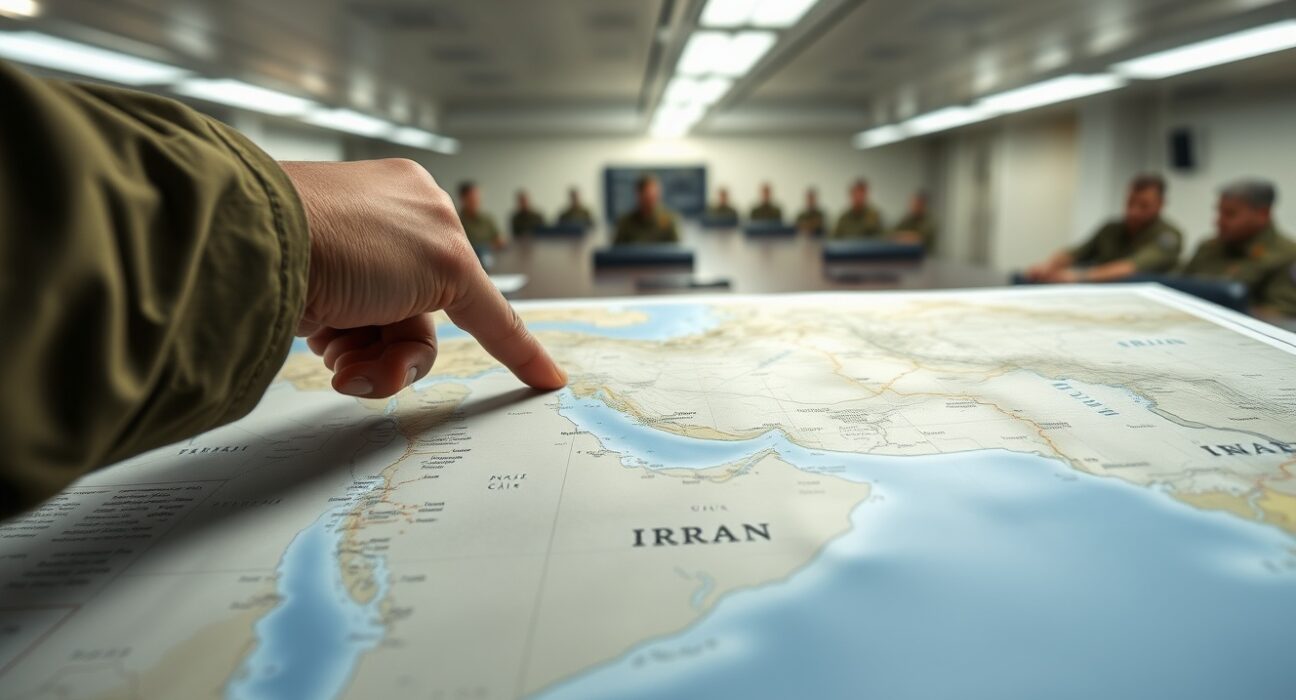
TEHRAN, Iran – April 21, 2025 – Iran has declared its forces are fully prepared to resume combat operations, according to a report from the state-affiliated Tasnim News Agency. This announcement comes as a critical deadline in the nation’s fragile ceasefire agreement with the United States rapidly approaches. The agency cited stalled diplomatic progress, attributing the deadlock to what it termed “excessive U.S. demands” and the recent American declaration of a naval blockade. Consequently, Iranian military assessments now indicate a high probability of renewed hostilities, prompting visible strategic preparations.
Iran Combat Readiness and Military Redeployments
Over the preceding fortnight, Iranian defense officials have conducted a comprehensive threat assessment. This analysis has directly led to tangible military movements. Authorities have initiated the redeployment of select military units to strategic positions. Furthermore, command structures have reportedly prepared updated lists of potential strike targets. Tasnim News Agency emphasized that, should fighting restart, Iran intends to launch what it described as a “devastating assault” against both U.S. and Israeli interests from the initial moments of conflict. These preparations underscore a significant escalation in regional military posturing.
Military analysts note that such redeployments typically involve missile brigades, naval assets in the Strait of Hormuz, and drone units. The Islamic Revolutionary Guard Corps (IRGC) Quds Force often spearheads these logistical shifts. Historical data from the International Institute for Strategic Studies (IISS) indicates Iran maintains one of the largest missile arsenals in the Middle East. This arsenal includes precision-guided munitions capable of reaching regional adversaries. The table below outlines key Iranian military capabilities frequently referenced in strategic assessments:
| Capability Type | Primary Systems | Estimated Range |
|---|---|---|
| Ballistic Missiles | Shahab-3, Emad, Sejjil | 1,000 – 2,000 km |
| Cruise Missiles | Soumar, Ya Ali | ~700 – 1,000 km |
| Attack Drones | Shahed-136, Mohajer-6 | Operational radius varies |
| Naval Asymmetrics | Fast attack craft, naval mines | Persian Gulf & Strait of Hormuz |
Stalled Negotiations and the U.S. Naval Blockade
The diplomatic process, which had shown intermittent promise, has now reportedly ground to a halt. Iranian officials point to two primary obstacles from their perspective. First, they characterize recent U.S. negotiation points as excessive and non-negotiable. Second, and more operationally significant, is the formal U.S. declaration of a naval blockade in key waterways. A blockade represents a serious escalation in maritime security policy. It directly impacts Iran’s ability to export hydrocarbons and conduct trade. Consequently, Tehran views it as an act of economic warfare that invalidates previous diplomatic understandings.
International relations experts often reference the 1982 United Nations Convention on the Law of the Sea (UNCLOS) regarding blockades. However, its application in conflict zones remains a complex legal issue. The U.S. Fifth Fleet, headquartered in Bahrain, traditionally enforces such maritime security measures. Its presence in the region has been a constant feature for decades. The immediate impacts of a blockade are multifaceted:
- Economic Pressure: Restricts Iran’s oil exports, a primary source of government revenue.
- Logistical Challenge: Complicates the import of goods, potentially including dual-use technologies.
- Symbolic Posture: Sends a unambiguous signal of military resolve to Tehran and regional allies.
- Escalation Risk: Increases the probability of accidental clashes between naval forces.
Expert Analysis on Ceasefire Dynamics
Dr. Anahita Shirazi, a senior fellow at the Center for Strategic and International Studies (CSIS), provides critical context. “Ceasefire agreements in this theater are inherently fragile,” she notes. “They rely on a temporary convergence of interests, not lasting trust. The introduction of a naval blockade fundamentally alters the cost-benefit analysis for Iran. It moves the dispute from the diplomatic arena back into the military domain.” This perspective highlights how procedural actions can derail complex negotiations. Historical precedent supports this view. For instance, the breakdown of the 2015 Joint Comprehensive Plan of Action (JCPOA) followed a similar pattern of escalating secondary pressures.
The current ceasefire, whose specific terms remain partially confidential, was likely designed as a confidence-building measure. Its apparent collapse suggests that core disagreements over regional influence, nuclear research, and support for proxy groups were never resolved. Instead, they were merely temporarily suspended. Intelligence agencies monitor several indicators for conflict renewal, including:
- Unusual communications traffic among IRGC leadership.
- Mobilization of Iran-backed militias in Iraq, Syria, and Yemen.
- Increased testing and readiness checks of missile systems.
- Inflammatory rhetoric in state-controlled media outlets.
Regional Implications and Global Security Concerns
A resumption of open conflict between Iran and U.S.-allied forces would have immediate and severe regional consequences. The Strait of Hormuz, a chokepoint for roughly 20% of the world’s oil transit, would become a primary flashpoint. Global energy markets are acutely sensitive to disruptions in this waterway. Furthermore, Iran’s network of allied militias, often called the “Axis of Resistance,” would almost certainly activate against U.S. and Israeli targets. This could manifest as rocket attacks, drone incursions, or cyber operations.
Neighboring Gulf Cooperation Council (GCC) states, such as Saudi Arabia and the United Arab Emirates, would face direct security threats. These nations have invested heavily in missile defense systems like the U.S.-made Patriot and THAAD. A conflict would test these systems under real-world saturation attack scenarios. European and Asian nations, dependent on stable energy supplies from the region, would face economic headwinds. The potential for miscalculation or unintended escalation into a broader regional war remains the paramount concern for global security officials.
Conclusion
The declaration by Iran’s state media of full combat readiness marks a critical juncture in Middle Eastern geopolitics. It signals the potential failure of a ceasefire agreement and a return to overt military confrontation. The stalled negotiations, compounded by the U.S. naval blockade, have created a volatile standoff. Iran’s reported military redeployments and target list preparations are tangible indicators of this deteriorating situation. The international community now watches closely as the deadline approaches, aware that the resumption of hostilities would carry profound implications for regional stability and global security. The focus remains on whether last-minute diplomatic channels can avert a return to open conflict.
FAQs
Q1: What is the Tasnim News Agency and how credible is its report?
Tasnim News Agency is a semi-official news outlet in Iran known to have close ties to the Islamic Revolutionary Guard Corps (IRGC). While it reflects the Iranian government’s messaging and strategic communications, its reports on military readiness are considered a deliberate signal to international audiences and are treated seriously by intelligence analysts.
Q2: What specific U.S. demands are stalling the negotiations?
The exact details are not fully public, but analysts suggest they likely involve limits on Iran’s ballistic missile program, restrictions on its support for regional proxy groups, and more intrusive monitoring of its nuclear activities. Iran has historically viewed these as infringements on its sovereignty.
Q3: What does a U.S. naval blockade entail?
A naval blockade involves positioning warships to monitor, stop, and inspect vessels entering or leaving specified maritime zones. In this context, it is likely aimed at enforcing sanctions and preventing the transfer of weapons, but it is also a powerful military and economic pressure tool.
Q4: How likely is a direct military conflict between Iran and the United States?
While both sides have shown restraint to avoid all-out war, the current posture increases the risk of miscalculation. A direct, sustained conflict is considered a high-impact, lower-probability event, but limited strikes and counter-strikes have occurred in the past and could escalate.
Q5: How are other countries in the region responding to this increased tension?
Gulf Arab states like Saudi Arabia and the UAE are likely enhancing their defensive postures and engaging in urgent diplomacy. Israel remains on high alert for potential attacks from Iranian proxies. European and Asian nations are likely urging restraint and seeking to protect energy supply routes.
Disclaimer: The information provided is not trading advice, Bitcoinworld.co.in holds no liability for any investments made based on the information provided on this page. We strongly recommend independent research and/or consultation with a qualified professional before making any investment decisions.
