
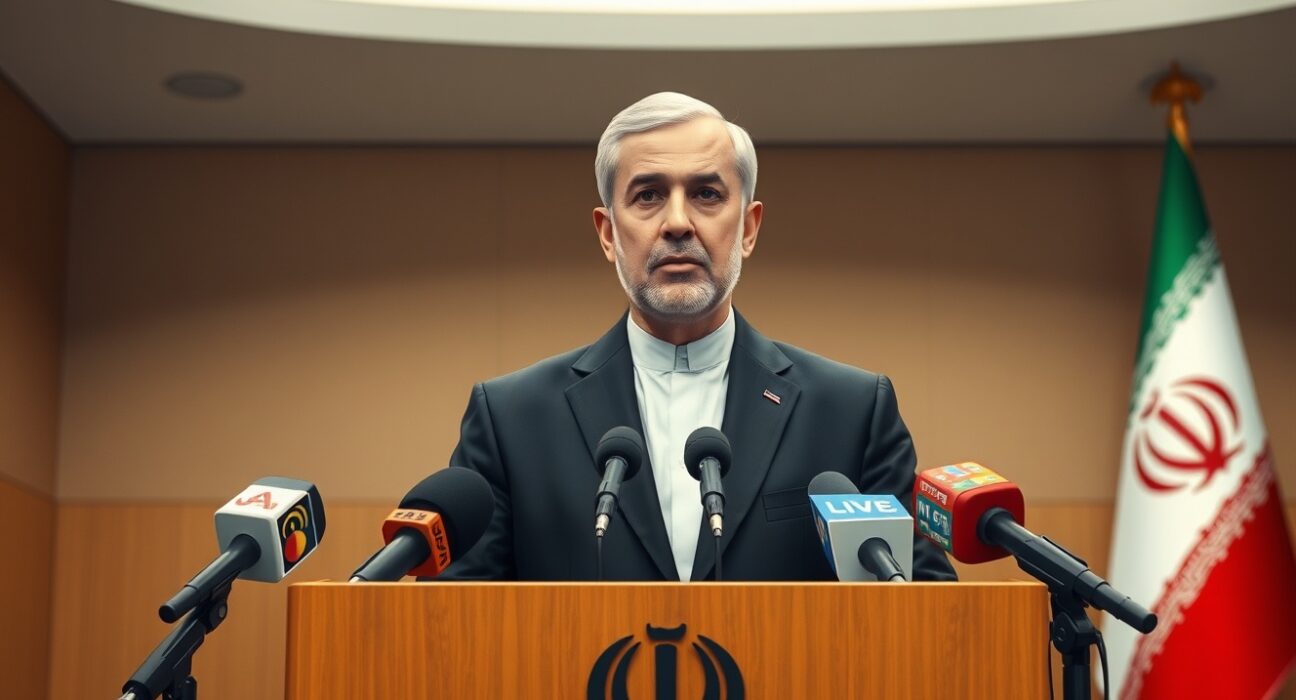
TEHRAN, Iran – In a swift and firm diplomatic rebuttal, Iran has categorically denied former U.S. President Donald Trump’s assertion that it requested a ceasefire, labeling the claim as patently false and escalating a war of words with significant implications for Middle Eastern stability.
Iran’s Forceful Denial of Trump’s Ceasefire Claim
A spokesperson for the Iranian Foreign Ministry issued a definitive statement rejecting President Trump’s remarks. Consequently, the official characterized the former president’s comments as “false and baseless.” This direct contradiction emerged shortly after Trump publicly suggested Iran had sought a truce with the United States. Moreover, the denial underscores the persistent and profound mistrust defining U.S.-Iranian relations. Historically, public disagreements between the two nations often precede periods of heightened regional tension. Therefore, analysts are closely monitoring this exchange for potential escalatory signals.
The ministry’s response followed a specific protocol, first reported by Iranian state media. Importantly, the statement avoided naming Trump directly but left no ambiguity about its target. This diplomatic phrasing, however, carried a sharp tone. The spokesperson emphasized Iran’s consistent policy of resistance and dismissed any notion of seeking American favor. Subsequently, regional news outlets amplified the message across the Middle East.
Context and History of U.S.-Iran Tensions
This incident did not occur in a vacuum. Instead, it represents another chapter in a long history of confrontation. The relationship has been fraught since the 1979 Islamic Revolution. Key events have consistently fueled mutual animosity.
- 2015 Nuclear Deal (JCPOA): A landmark agreement temporarily eased tensions, which Trump later abandoned in 2018.
- Maximum Pressure Campaign: The U.S. re-imposed crippling sanctions, devastating Iran’s economy.
- 2020 Assassination of Qasem Soleimani: A U.S. drone strike killed a top Iranian general, bringing the nations to the brink of war.
- Stalled Vienna Talks: Efforts to revive the nuclear deal have repeatedly stalled since 2021.
This backdrop makes any claim of a ceasefire request inherently significant. Furthermore, it touches on core issues of national pride and strategic posture for Tehran. A public admission of seeking a truce would contradict Iran’s long-stated doctrine of strategic patience and asymmetric response.
Expert Analysis on Diplomatic Signaling
Regional security experts quickly weighed in on the denial’s implications. Dr. Leila Ahmed, a senior fellow at the Middle East Institute, noted the statement’s purpose likely extends beyond mere fact-checking. “This is a performative rejection aimed at both domestic and international audiences,” Ahmed explained. “Domestically, it reassures hardline factions that the government is not softening. Internationally, it signals to allies and adversaries that Iran’s position remains firm.”
Other analysts point to the timing. The exchange occurs amidst fragile negotiations concerning Iran’s nuclear program and its regional activities. A statement perceived as weakness could undermine Iran’s negotiating leverage. Therefore, the forceful denial serves a critical strategic function. It maintains a consistent narrative of strength and resolve.
Mechanics of Modern Diplomatic Communication
Understanding this event requires examining how states communicate in the digital age. Denials and statements now travel at the speed of social media. The Iranian Foreign Ministry utilizes multiple channels to broadcast its message.
| Communication Channel | Primary Audience | Speed |
|---|---|---|
| Official Press Statement | International Media, Governments | Hours |
| Social Media (Twitter/X, Telegram) | Global Public, Journalists | Minutes |
| State News Agency (IRNA) | Domestic Population, Regional Allies | Immediate |
| Briefings for Allied Diplomats | Friendly Governments | Hours/Days |
This multi-pronged approach ensures the narrative is controlled and consistent. The immediate denial likely aimed to pre-empt any speculation or international reporting that might grant Trump’s claim credibility. In today’s media landscape, the first narrative often holds significant sway.
Potential Regional and Global Impacts
The ramifications of this diplomatic clash are potentially wide-ranging. Regional actors are carefully calibrating their responses. Key impacts to monitor include:
- Nuclear Negotiations: Hardliners in Iran may use the incident to argue against further diplomatic engagement with the West.
- Gulf Security: U.S. allies like Saudi Arabia and Israel will analyze the exchange for shifts in American or Iranian posture.
- Energy Markets: Perceptions of rising tension can influence global oil prices, affecting economies worldwide.
- Proxy Dynamics: Iranian-backed groups in Yemen, Syria, and Lebanon may adjust their activities based on perceived shifts in Tehran’s resolve.
Furthermore, the incident highlights the enduring influence of former leaders on active diplomacy. Statements from figures like Trump continue to shape the geopolitical landscape, even outside official office. This creates a complex environment for current policymakers in both Washington and Tehran.
Conclusion
Iran’s definitive denial of Trump’s ceasefire claim reinforces the deep-seated antagonism characterizing U.S.-Iran relations. This exchange is more than a war of words; it is a diplomatic signal with real-world consequences for Middle Eastern stability and global security. The incident underscores the critical importance of verified facts and official channels in an era of rapid information and disinformation. Ultimately, the path to de-escalation remains fraught, requiring careful, consistent, and truthful communication from all involved parties. The Iranian denial serves as a stark reminder that in high-stakes diplomacy, public perceptions and official narratives are powerful currencies.
FAQs
Q1: What exactly did the Iranian Foreign Ministry deny?
The ministry denied former U.S. President Donald Trump’s claim that Iran had requested a ceasefire or truce with the United States, calling the assertion “false and baseless.”
Q2: Why is this denial significant for Iran’s domestic politics?
A public admission of seeking a truce would contradict Iran’s doctrine of resistance and could weaken the government’s standing with powerful hardline factions who oppose any conciliation with the U.S.
Q3: How does this incident affect ongoing nuclear talks?
It could harden positions, giving Iranian negotiators less room to maneuver and potentially empowering voices within Iran who are skeptical of diplomacy with Western powers.
Q4: What are the typical channels Iran uses for such diplomatic statements?
Iran employs a coordinated strategy using official press releases, its state news agency (IRNA), social media accounts of key officials, and briefings for allied diplomats.
Q5: Could this verbal clash lead to actual military escalation?
While direct conflict is not an immediate certainty, such public accusations and denials can poison the atmosphere, reduce trust, and increase the risk of miscalculation or provocative actions by either side or their proxies.
Disclaimer: The information provided is not trading advice, Bitcoinworld.co.in holds no liability for any investments made based on the information provided on this page. We strongly recommend independent research and/or consultation with a qualified professional before making any investment decisions.