

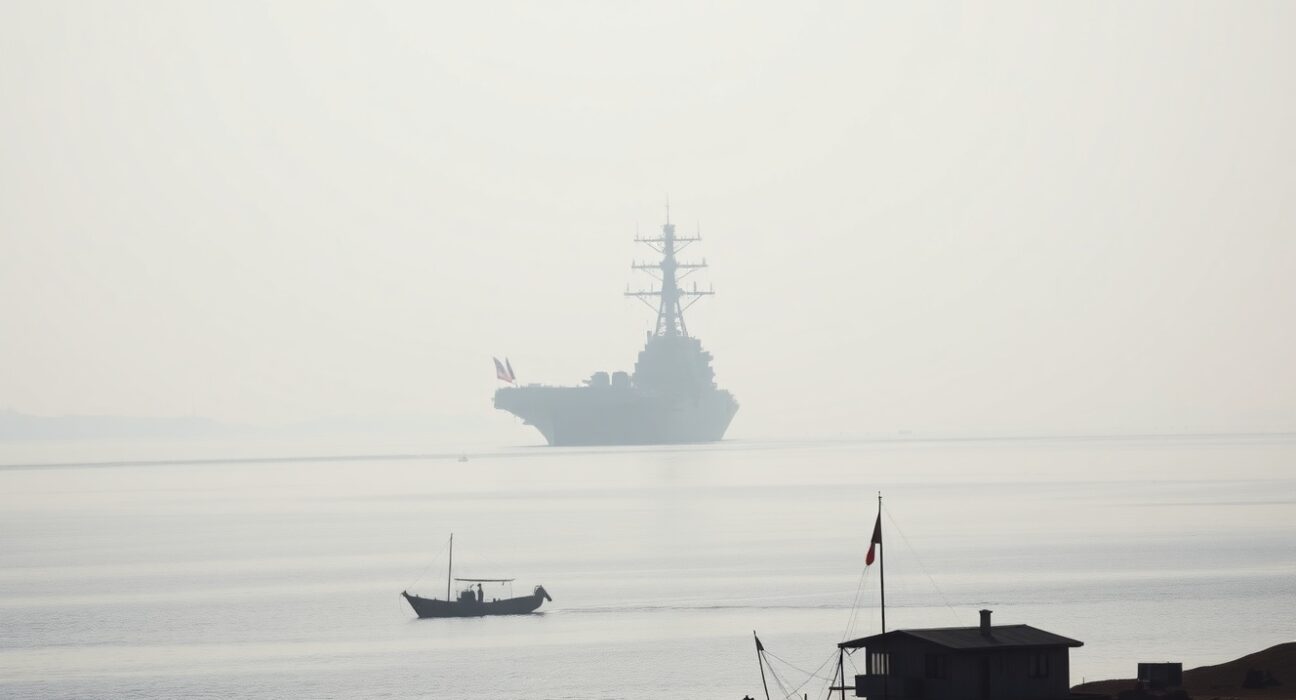
Iran’s Foreign Ministry has issued a sharp rebuke against the United States’ military posture in the Persian Gulf, asserting that the sustained American presence in the region acts as a primary driver of instability and division among Gulf states. The statement, delivered by a ministry spokesperson during a weekly press briefing in Tehran, reiterates a long-standing Iranian position that foreign military forces, particularly those of the United States, undermine the sovereignty and security of littoral nations.
Context of the Statement
The remarks come amid heightened geopolitical friction between Iran and the United States, a rivalry that has defined much of the Middle East’s security landscape for decades. The US maintains significant naval and air force assets in the Gulf, including bases in Bahrain, Qatar, the United Arab Emirates, and Kuwait, as well as a rotational aircraft carrier presence. Iran has consistently argued that these forces are not only unnecessary for regional stability but actively provoke tensions by enabling aggressive posturing against Tehran.
Iranian officials have long called for a security framework built exclusively by regional states, without external intervention. This latest statement aligns with that vision, framing the US presence as a destabilizing element that prevents genuine cooperation among Gulf Cooperation Council (GCC) countries and Iran.
Implications for Regional Dynamics
The Iranian position carries weight in a region already grappling with fragile détentes and proxy conflicts. In recent years, diplomatic channels between Iran and Saudi Arabia have reopened, and broader Gulf diplomacy has seen tentative steps toward de-escalation. However, the presence of US military assets complicates these efforts, as Gulf states remain caught between security alliances with Washington and the practical need to coexist with Iran.
Analysts note that the US military footprint in the Gulf serves multiple purposes: deterring Iranian aggression, protecting maritime trade routes, and reassuring allies. From Tehran’s perspective, however, this same footprint is perceived as a direct threat and an obstacle to any lasting regional security architecture. The ministry’s statement underscores that as long as US forces remain, trust will remain elusive.
What This Means for Readers
For observers of Middle East geopolitics, this is not a new argument but a reaffirmation of a core Iranian policy. The significance lies in its timing and the ongoing diplomatic environment. With the US focused on great-power competition with China and Russia, its commitment to the Gulf may face new scrutiny. Iran’s messaging aims to capitalize on any potential shift in US strategic priorities, pushing for a regional order that excludes Washington.
For investors and businesses with exposure to Gulf energy markets, any escalation in rhetoric or military incidents could affect shipping insurance rates, oil price volatility, and the broader risk profile of the region. The stability of the Strait of Hormuz, through which about 20% of the world’s oil passes, remains a critical variable.
Conclusion
Iran’s Foreign Ministry has made clear that it views the US military presence in the Gulf as a root cause of insecurity and division, not a guarantor of peace. While this position is well-established, it reinforces the fundamental divide between Tehran and Washington on regional security. As diplomatic efforts continue, the role of external military forces will remain a central point of contention, with direct implications for Gulf stability and global energy security.
FAQs
Q1: Why does Iran oppose the US military presence in the Gulf?
Iran argues that US forces are a source of instability and division, undermining regional sovereignty and preventing the development of a security framework led by Gulf states themselves.
Q2: What is the current US military footprint in the Gulf region?
The US maintains naval and air bases in several Gulf countries, including Bahrain (home of the US Fifth Fleet), Qatar (Al Udeid Air Base), the UAE, and Kuwait, along with rotational aircraft carrier deployments.
Q3: How does this affect global oil markets?
The Gulf region, particularly the Strait of Hormuz, is a critical chokepoint for oil transit. Any military escalation or heightened tensions can lead to supply disruption fears, affecting oil prices and shipping insurance costs.
Disclaimer: The information provided is not trading advice, Bitcoinworld.co.in holds no liability for any investments made based on the information provided on this page. We strongly recommend independent research and/or consultation with a qualified professional before making any investment decisions.
