

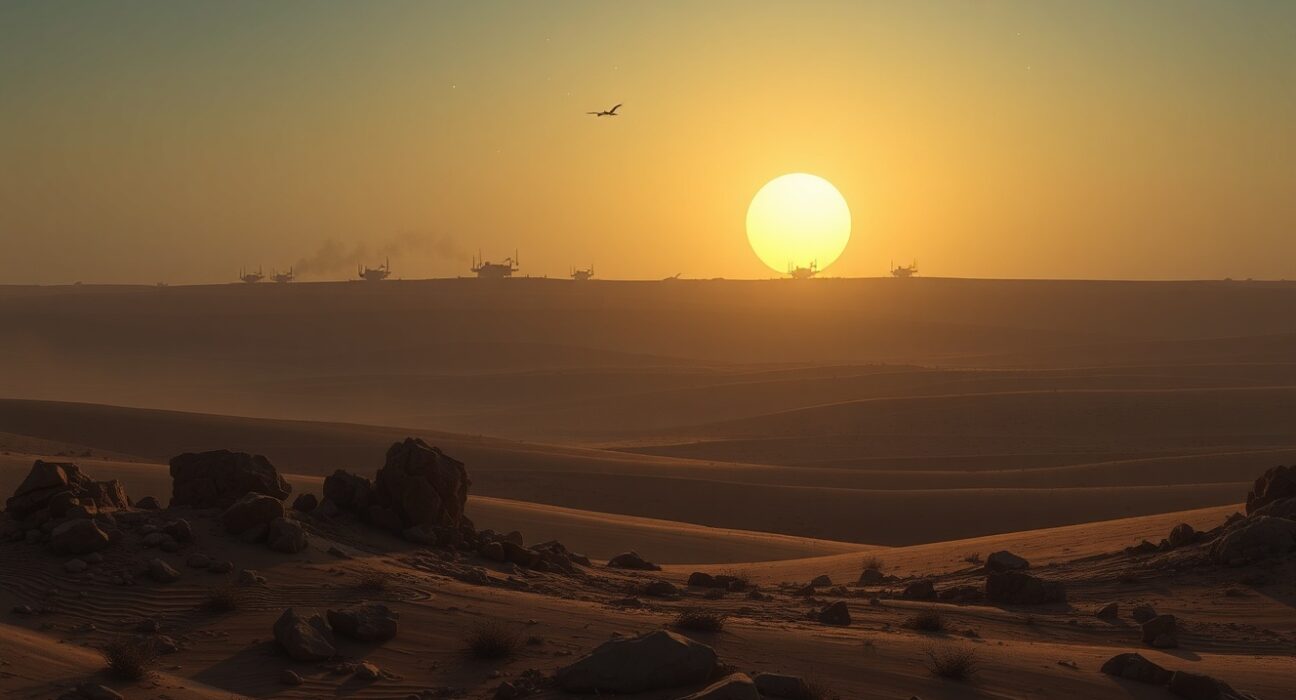
In a significant escalation of regional tensions, Iranian military forces have confirmed launching coordinated missile strikes against Israeli territory and United States military installations across three allied nations—Kuwait, Jordan, and Bahrain. This unprecedented multi-front attack, confirmed by Iranian state media on Tuesday, represents one of the most direct confrontations between Iran and the U.S.-Israel alliance in recent years. Consequently, global markets reacted immediately, with oil prices surging and security alerts elevated across the Middle East. Moreover, diplomatic channels have activated emergency protocols as world leaders assess the implications of this dramatic military action.
Iran Missile Strikes: Scope and Immediate Impact
The Iranian Revolutionary Guard Corps (IRGC) claimed responsibility for the attacks through an official statement. According to their declaration, the operation involved ballistic missiles and long-range drones targeting specific military assets. Significantly, this marks Iran’s first acknowledged direct missile attack on Israeli soil since the countries’ long-standing shadow war entered a more overt phase. Meanwhile, U.S. Central Command (CENTCOM) confirmed intercepting several projectiles aimed at its facilities in the region. However, initial reports suggest some missiles penetrated defense systems, causing structural damage at a logistics base in Kuwait and triggering emergency responses at facilities in Jordan and Bahrain.
Regional governments have issued statements regarding the attacks. For instance, the Kuwaiti Ministry of Defense confirmed missile debris fell near Ali Al Salem Air Base, a critical hub for U.S. air operations. Similarly, Jordanian authorities reported intercepting projectiles over the northeastern desert region near the Al-Asraq air base. Furthermore, Bahrain’s state news agency noted defensive systems were activated around the U.S. Navy’s Fifth Fleet headquarters. The following table summarizes the confirmed targets:
| Country | Target Facility | Reported Impact |
|---|---|---|
| Israel | Undisclosed military installation | Direct strike claimed by Iran |
| Kuwait | Ali Al Salem Air Base | Structural damage reported |
| Jordan | Al-Asraq Air Base | Projectiles intercepted |
| Bahrain | U.S. Naval Support Activity | Defensive systems activated |
Geopolitical Context and Escalating Tensions
This military action did not occur in isolation. Indeed, it follows months of escalating proxy conflicts and diplomatic stalemates. Specifically, several key developments created the current volatile environment:
- Nuclear negotiations between Iran and world powers have remained deadlocked since 2023
- Regional proxy attacks by Iran-aligned groups against U.S. forces increased throughout 2024
- Israeli operations targeting Iranian military assets in Syria intensified recently
- Maritime confrontations in the Persian Gulf and Red Sea disrupted global shipping
Security analysts immediately noted the strategic significance of targeting four nations simultaneously. Primarily, this demonstrates Iran’s evolving military capabilities and willingness to engage multiple adversaries directly. Additionally, the attacks test integrated air defense systems across the region. Meanwhile, the United Nations Security Council has scheduled an emergency session to address what several ambassadors have already termed “a dangerous escalation.”
Military Capabilities and Strategic Calculations
Iran’s missile arsenal has developed substantially over the past decade. According to the International Institute for Strategic Studies (IISS), Iran now possesses the largest and most diverse missile inventory in the Middle East. Their capabilities include:
- Short-range ballistic missiles with ranges up to 700 kilometers
- Medium-range systems capable of reaching 2,000 kilometers
- Precision-guided munitions developed with assistance from external partners
- Drone swarms that can overwhelm traditional air defenses
Military experts suggest Iran likely employed a mix of these systems in the recent attacks. For example, the strikes against Kuwait and Bahrain probably involved shorter-range systems launched from Iranian territory or vessels. Conversely, the attack on Israel would require longer-range missiles potentially launched from western Iran or through proxy launch sites. This multi-vector approach complicates defensive responses and demonstrates sophisticated operational planning.
International Reactions and Diplomatic Fallout
Global responses to the attacks have been swift and largely condemnatory. The White House issued a statement confirming President Biden convened the National Security Council. Subsequently, the administration emphasized America’s “ironclad commitment” to defending its forces and allies. Meanwhile, Israel’s Prime Minister declared the country “reserves the right to respond decisively” to the direct attack on its sovereignty. European Union foreign policy chiefs called for “maximum restraint” and announced emergency diplomatic outreach to all involved parties.
Regional reactions have been more varied. Gulf Cooperation Council (GCC) members, excluding those directly targeted, expressed concern about regional stability. Conversely, Iran’s regional allies, including certain factions in Iraq, Syria, and Yemen, praised the attacks as legitimate responses to “foreign occupation.” This division highlights the complex regional alliances that have developed around Iranian and American spheres of influence. Furthermore, Russia and China, both with significant interests in the region, called for de-escalation while criticizing what they termed “unilateral actions that increase tensions.”
Economic and Security Implications
The immediate economic impact has been most visible in energy markets. Brent crude oil prices jumped over 8% following the attacks, reflecting concerns about potential disruptions to Persian Gulf shipping lanes. Additionally, global shipping companies have begun rerouting vessels away from the Strait of Hormuz, a critical chokepoint for approximately 20% of the world’s oil supply. Insurance premiums for Middle East maritime routes have increased substantially, adding costs to global trade.
Security implications extend beyond the immediate region. The United States maintains approximately 45,000 troops across the Middle East, with significant concentrations in the targeted countries. Consequently, the Pentagon has placed all regional forces on heightened alert. Simultaneously, several European nations have advised against non-essential travel to the broader Middle East. Moreover, cybersecurity firms have detected increased malicious activity targeting critical infrastructure in countries involved in the conflict, suggesting the confrontation may extend into digital domains.
Historical Context and Precedent Analysis
While unprecedented in scale, these attacks follow a pattern of escalating Iranian responses to perceived threats. Historically, Iran has preferred indirect confrontation through proxy forces. However, several factors may explain the shift to direct attacks:
- Increased Israeli operations against Iranian nuclear scientists and facilities
- Recent U.S. sanctions targeting Iran’s oil exports and financial systems
- Domestic political pressures within Iran ahead of scheduled elections
- Strategic messaging to demonstrate capabilities to regional rivals
Previous major escalations provide context for understanding current developments. In 2020, Iran launched missile attacks against U.S. forces in Iraq following the assassination of General Qasem Soleimani. That incident brought the countries to the brink of direct conflict but ultimately resulted in calibrated responses from both sides. Similarly, Iranian-backed Houthi forces in Yemen have repeatedly launched drones and missiles against Saudi Arabia and the UAE. However, the current multi-national targeting represents a significant escalation beyond these previous actions.
Conclusion
The confirmed Iranian missile strikes against Israel and U.S. forces in Kuwait, Jordan, and Bahrain represent a dangerous new phase in Middle Eastern conflicts. These coordinated attacks demonstrate Iran’s willingness to engage in direct military confrontation across multiple fronts. Consequently, regional stability faces unprecedented challenges as defensive systems are tested and diplomatic channels strain under the pressure of escalation. The international community now watches closely as world leaders navigate responses that could either contain the crisis or trigger broader regional conflict. Ultimately, the coming days will determine whether this represents a temporary spike in tensions or a fundamental reshaping of security dynamics in the Middle East.
FAQs
Q1: What specific types of missiles did Iran use in these attacks?
While official confirmation of specific systems awaits forensic analysis, military experts believe Iran likely employed a combination of Fateh-110 short-range ballistic missiles and longer-range Emad systems. Additionally, drone swarms may have been used to overwhelm air defenses, a tactic previously demonstrated in attacks against Saudi oil facilities.
Q2: How have oil markets responded to these missile strikes?
Global oil prices surged approximately 8% immediately following news of the attacks. This reflects market concerns about potential disruptions to shipping through the Strait of Hormuz, through which about 20% of global oil shipments pass. Energy analysts warn that sustained conflict could push prices significantly higher.
Q3: What is the legal justification Iran has provided for attacking multiple countries?
Iran’s official statement cites Article 51 of the United Nations Charter, which recognizes the inherent right of self-defense. Iranian officials claim the attacks respond to “continued aggression” against their interests, specifically referencing recent Israeli operations in Syria and U.S. sanctions they describe as “economic warfare.”
Q4: How effective were air defense systems in intercepting the missiles?
Initial reports suggest mixed results. U.S. and allied systems successfully intercepted several projectiles, particularly in Jordan and Bahrain. However, some missiles reportedly penetrated defenses in Kuwait, causing damage. Israel’s multi-layered defense system, including Iron Dome and David’s Sling, appears to have intercepted most threats, though assessments continue.
Q5: What immediate security measures have been implemented at U.S. bases in the region?
The Pentagon has placed all U.S. forces in the Middle East on Force Protection Condition (FPCON) Charlie, the second-highest alert level. This includes enhanced perimeter security, restricted base access, and increased patrols. Additionally, the U.S. has temporarily suspended non-essential movements of personnel and increased aerial surveillance patrols.
Disclaimer: The information provided is not trading advice, Bitcoinworld.co.in holds no liability for any investments made based on the information provided on this page. We strongly recommend independent research and/or consultation with a qualified professional before making any investment decisions.