
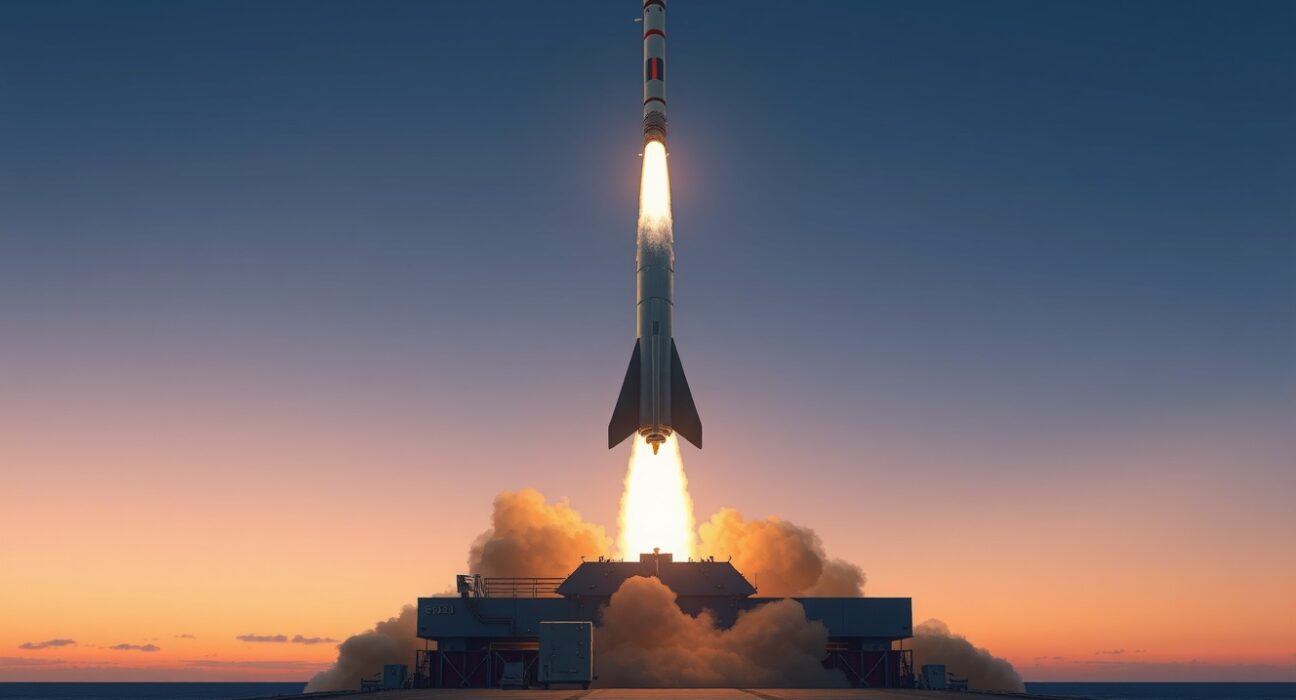
In a significant escalation of regional tensions, Iran has officially confirmed launching two ballistic missiles toward the strategic joint U.S.-UK military base on Diego Garcia in the central Indian Ocean on March 21, 2025. This provocative act, targeting a key Western military asset thousands of kilometers away, marks a dangerous expansion in Tehran’s demonstrated strike capabilities. However, initial U.S. military assessments indicate both projectiles failed to hit their intended target, raising immediate questions about the operation’s intent and technical execution.
Iran Ballistic Missiles: Capabilities and the Diego Garcia Target
The confirmed use of ballistic missiles with a reported range exceeding 4,000 kilometers represents a serious strategic development. Consequently, this event directly challenges long-standing security assumptions in the Indian Ocean region. The targeted facility, the Diego Garcia base, serves as a critical logistics and support hub for U.S. and British forces. Furthermore, its remote location was previously considered a relative sanctuary from regional threats.
Key aspects of the Diego Garcia base include:
- Strategic Location: Positioned centrally in the Indian Ocean, enabling power projection across the Middle East and Asia.
- Joint Operations: A long-standing combined U.S. and United Kingdom facility under a bilateral agreement.
- Logistics Hub: Supports naval vessels, long-range bombers, and intelligence operations.
Iran’s decision to publicly claim this strike, despite its apparent failure, sends a clear political message. Therefore, analysts are scrutinizing the specific missile type used, potentially linking it to Iran’s Sejjil or newer Khorramshahr series.
Analysis of the Failed Missile Strike
U.S. defense sources quickly reported that both missiles missed the Diego Garcia atoll. This failure invites technical and strategic analysis. Modern ballistic missile strikes require precise guidance, navigation, and terminal phase control. A failure to impact such a large, fixed target suggests potential issues in one or more of these systems.
Potential Reasons for the Miss
Military experts point to several plausible explanations. First, intentional targeting inaccuracies could signal a demonstration of capability without seeking a catastrophic kinetic impact. Second, technical failures in the missile’s guidance system or final stage are a common challenge for long-range projects. Third, potential interception by undisclosed base defenses, though unconfirmed, remains a consideration. The U.S. military’s prompt disclosure of the failure itself acts as a counter-message, highlighting the limitations of Iran’s threat.
The following table contrasts the stated capability with the observed outcome:
| Aspect | Claimed/Intended | Observed Outcome |
|---|---|---|
| Target | Diego Garcia Military Base | Open Ocean (Missed) |
| Number of Missiles | Two Fired | Two Failed |
| Political Objective | Signal Strategic Reach | Revealed Technical or Operational Gap |
Geopolitical Context and Escalating Tensions
This incident does not occur in a vacuum. It follows years of heightened friction between Iran and Western powers over its nuclear program, regional activities, and support for proxy groups. The choice of Diego Garcia, a symbol of enduring Anglo-American military partnership, is profoundly symbolic. Moreover, conducting a strike in the Indian Ocean represents a geographic widening of Iran’s military posture, traditionally focused on the Persian Gulf and the Strait of Hormuz.
Regional powers are monitoring the response closely. For instance, a muted Western reaction could be interpreted as weakness. Conversely, a strong response risks a dangerous cycle of escalation. The United Kingdom, as a joint operator of the base, is now directly involved in this new phase of tensions. Diplomatic channels are likely active, but public statements from all sides will shape the next steps.
Historical Precedents and Modern Implications
Iran has previously used ballistic missiles against regional targets, including strikes on Iraqi bases housing U.S. forces in 2020. However, the range involved in the Diego Garcia attempt is unprecedented in its operational history. This evolution signifies a substantial investment in long-range strike assets. Consequently, it compels a reassessment of threat matrices for nations across a wider swath of the Middle East and Indian Ocean rim.
Military and Security Implications for the Region
The attempted strike carries immediate implications for regional security architecture. First, it validates long-held concerns about the proliferation of long-range missile technology. Second, it tests the resilience and alertness of U.S. and allied force posture in the Indian Ocean. Third, it may accelerate existing plans for enhanced missile defense systems among Gulf Cooperation Council (GCC) allies and other regional partners.
Naval operations in the Arabian Sea and Indian Ocean may see increased patrols and vigilance. Furthermore, intelligence, surveillance, and reconnaissance (ISR) activities will intensify to monitor Iranian launch capabilities. The event underscores the vulnerability of even remote, island-based installations to modern missile arsenals, prompting a global review of base security protocols.
Conclusion
The confirmed launch of two Iranian ballistic missiles toward the U.S.-UK base at Diego Garcia marks a grave and calculated escalation in military posturing. While the failure to hit the target provides a temporary operational relief, it does not diminish the strategic warning delivered by Tehran. The incident demonstrates an intent and a developing capability to threaten Western interests far beyond Iran’s immediate neighborhood. Moving forward, the international response, coupled with Iran’s next actions, will determine whether this event becomes a isolated demonstration or a precursor to a more volatile and geographically expansive conflict. The security calculus for the Indian Ocean region has been irrevocably altered.
FAQs
Q1: What is the Diego Garcia military base?
The Diego Garcia base is a joint United States and United Kingdom military facility located on a remote atoll in the central Indian Ocean. It serves as a critical strategic logistics hub, supporting naval, air, and communication operations across a vast region.
Q2: Why would Iran target a base so far from its borders?
Targeting Diego Garcia allows Iran to demonstrate an extended strategic reach, threatening key Western military assets outside the traditional Persian Gulf arena. It is a symbolic act meant to showcase capability and challenge U.S. and UK power projection far from Iran’s shores.
Q3: What does a 4,000 km missile range mean?
A range of 4,000 kilometers (approximately 2,485 miles) places much of the Middle East, South Asia, and the Indian Ocean within potential strike distance. It significantly expands the geographic zone that must consider Iran’s direct military capabilities.
Q4: How could both missiles have missed the target?
Potential reasons include technical failures in guidance or propulsion systems, intentional miscalibration to avoid a direct hit while demonstrating range, or possible (but unconfirmed) defensive countermeasures. Long-range ballistic missile accuracy remains a complex technical challenge.
Q5: What happens next after this incident?
The situation requires careful diplomatic and military assessment. Next steps may include private diplomatic exchanges, public condemnations, enhanced defensive postures at regional bases, potential sanctions, and increased intelligence monitoring of Iranian missile forces to gauge intent and capability.
Disclaimer: The information provided is not trading advice, Bitcoinworld.co.in holds no liability for any investments made based on the information provided on this page. We strongly recommend independent research and/or consultation with a qualified professional before making any investment decisions.