

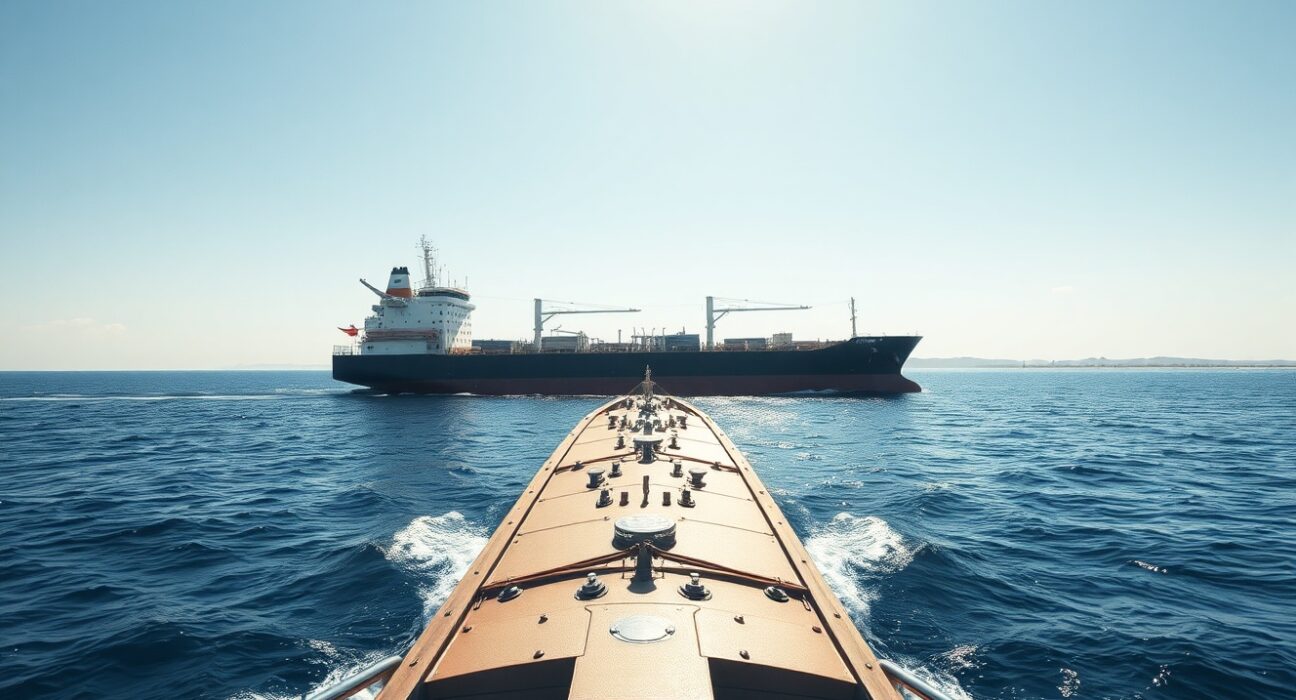
A senior Iranian military adviser has declared that the United States cannot block the country’s oil exports. This bold statement, reported by The Wall Street Journal (WSJ), signals a significant escalation in the ongoing geopolitical tensions between Tehran and Washington. The official’s remarks directly challenge the effectiveness of current U.S. sanctions aimed at crippling Iran’s primary revenue source.
Iran Oil Exports Face U.S. Sanctions Challenge
The core of the dispute centers on Iran’s ability to sell its crude oil on global markets. For years, the United States has imposed stringent sanctions. These measures target buyers, insurers, and shippers who facilitate Iranian oil trade. The senior military adviser’s comments suggest that Tehran believes it has developed effective countermeasures. These methods, they claim, render the U.S. blockade ineffective. Consequently, this assertion raises critical questions about the real-world impact of American economic pressure.
Analysts point to several factors supporting Iran’s confidence. First, Iran has cultivated a network of alternative buyers. China remains the largest and most consistent purchaser of Iranian crude. Second, Tehran employs various tactics to evade sanctions. These include ship-to-ship transfers, disabling tracking transponders, and using intermediary companies. Third, global oil demand remains high. This creates a market for discounted Iranian oil, which often trades below the official price. Therefore, the U.S. faces a complex enforcement challenge.
Geopolitical Tensions and Oil Market Impact
The statement from the Iranian official arrives amid heightened regional instability. The ongoing conflict in Gaza and tensions with Israel add another layer of complexity. Any disruption to oil flows from the Persian Gulf could have immediate and severe consequences. The Strait of Hormuz, a critical chokepoint, sees about 20% of the world’s oil transit daily. Consequently, markets react nervously to any hint of confrontation.
Key impacts on the oil market include:
- Price volatility: The uncertainty surrounding Iranian exports contributes to price swings. Traders factor in the risk of supply disruptions.
- Supply concerns: Iran’s potential to increase exports could ease global supply constraints. Conversely, tighter enforcement could remove barrels from the market.
- Geopolitical risk premium: The standoff adds a risk premium to oil prices. This premium reflects the chance of a broader conflict.
Furthermore, the U.S. strategic position is complex. Washington wants to pressure Iran. However, it also seeks to avoid a sharp rise in oil prices that could fuel inflation. This balancing act limits the tools available to the U.S. government.
Expert Analysis on Sanctions Effectiveness
Energy security experts offer mixed views on the U.S. sanctions regime. Some argue that the sanctions have significantly reduced Iran’s oil revenue. Official data shows Iranian exports dropped from over 2.5 million barrels per day (bpd) in 2018 to under 500,000 bpd in 2020. However, recent estimates suggest exports have rebounded. Independent tracking groups now report exports between 1.0 and 1.5 million bpd.
This rebound demonstrates the difficulty of enforcing a total blockade. The global oil market is vast and opaque. Many transactions occur through private channels. Furthermore, the U.S. lacks the naval resources to inspect every vessel in the Persian Gulf. Therefore, Iran retains significant capacity to sell its oil.
Timeline of U.S.-Iran Oil Sanctions
A brief timeline highlights the key events:
| Year | Event |
|---|---|
| 2015 | Joint Comprehensive Plan of Action (JCPOA) signed. Sanctions lifted. |
| 2018 | U.S. withdraws from JCPOA. Reimposes sanctions on Iran oil exports. |
| 2020 | U.S. intensifies enforcement. Iranian exports hit a low point. |
| 2021 | Indirect talks begin. Iranian exports start to recover. |
| 2023 | Exports rise to estimated 1.5 million bpd. Iran bypasses sanctions. |
| 2025 | Senior military official claims U.S. cannot block exports. |
This timeline shows the cyclical nature of the conflict. Each phase brings new tactics from both sides. The current period appears favorable for Iran.
Energy Security and Global Implications
The standoff has broader implications for global energy security. Countries heavily reliant on oil imports face a dilemma. They must balance their energy needs against their diplomatic relationships. For example, European nations have reduced Iranian imports. However, they now seek alternative supplies from the U.S. and OPEC. Meanwhile, Asian buyers, particularly in China, continue to purchase Iranian oil.
Key factors shaping future outcomes include:
- U.S. election cycles: Changes in U.S. administration could alter sanctions policy. A new president might pursue diplomacy or escalate pressure.
- OPEC+ decisions: The OPEC+ group’s production quotas affect global oil supply. Higher quotas could reduce the demand for Iranian oil.
- Technological advancements: Better satellite tracking and AI analytics help monitor ship movements. This could improve sanctions enforcement.
Iran’s Military Posture and Oil Defense
The Iranian military’s role in protecting oil exports is crucial. The Islamic Revolutionary Guard Corps (IRGC) oversees the security of key facilities. It also manages covert export operations. The senior adviser’s statement reflects the IRGC’s confidence. They believe their asymmetric capabilities can deter any U.S. interdiction attempt. For instance, Iran has invested in fast attack boats, anti-ship missiles, and naval mines. These assets make any potential blockade a high-risk operation for the U.S. Navy.
Conclusion
The senior Iranian military official’s assertion that the U.S. cannot block Iran oil exports highlights a fundamental shift in the geopolitical landscape. Despite years of intense sanctions, Iran has maintained and even increased its oil sales. The U.S. faces significant challenges in enforcing a total blockade. These challenges include a complex global market, determined Iranian countermeasures, and competing policy objectives. Consequently, the future of Iran’s oil exports will remain a central issue in global energy security. Markets, policymakers, and analysts will closely watch for any further developments in this ongoing standoff.
FAQs
Q1: Can the U.S. completely stop Iran’s oil exports?
A1: No, complete cessation is highly unlikely. Iran uses various evasion tactics, and global demand for discounted oil remains strong. The U.S. can reduce but not fully eliminate exports.
Q2: Who is the largest buyer of Iranian oil?
A2: China is the largest and most consistent buyer. Chinese refineries purchase significant volumes of Iranian crude, often through intermediary companies to avoid direct sanctions.
Q3: How does Iran bypass oil sanctions?
A3: Iran uses several methods including ship-to-ship transfers at sea, disabling Automatic Identification System (AIS) transponders, using flags of convenience, and routing payments through non-dollar channels.
Q4: What happens if Iran’s oil exports are completely blocked?
A4: A complete blockade would likely cause a sharp spike in global oil prices. It could also trigger a military confrontation in the Persian Gulf, disrupting a much larger volume of oil transit.
Q5: How do oil markets react to these tensions?
A5: Oil markets react with increased volatility. Traders add a geopolitical risk premium to prices. Futures contracts often see increased trading volume and wider bid-ask spreads during such periods.
Disclaimer: The information provided is not trading advice, Bitcoinworld.co.in holds no liability for any investments made based on the information provided on this page. We strongly recommend independent research and/or consultation with a qualified professional before making any investment decisions.
