
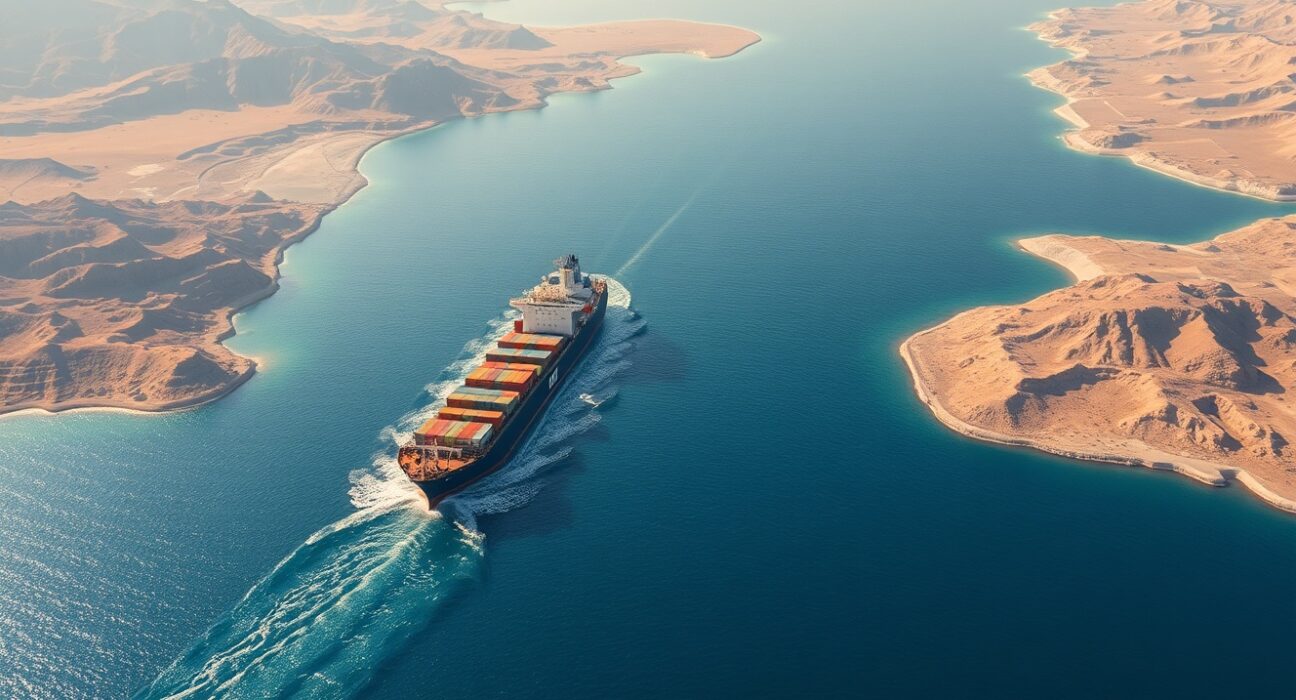
TEHRAN, Iran – March 15, 2025 – In a move with profound implications for global energy markets, regional officials confirm a new ceasefire proposal includes a provision allowing Iran and Oman to levy passage fees on vessels transiting the Strait of Hormuz. This strategic waterway funnels roughly one-fifth of the world’s seaborne oil. Consequently, the plan could fundamentally alter the economics and security of maritime trade in the Middle East.
Strait of Hormuz Tolls: The Ceasefire Provision
The Associated Press first reported the development, citing a regional official familiar with the negotiations. The provision forms part of a broader two-week ceasefire framework. Significantly, it seeks to establish a legal mechanism for the two littoral states to charge fees. This initiative directly challenges the long-standing principle of innocent passage under international maritime law.
For decades, the United Nations Convention on the Law of the Sea (UNCLOS) has governed transit. It guarantees passage through such straits used for international navigation. However, Iran is not a party to UNCLOS. Oman, while a signatory, shares control of the territorial waters. The proposed tolls would represent a novel application of state sovereignty over a global commons.
- Legal Precedent: Few major international straits have direct transit fees.
- Economic Impact: Costs would ripple through global supply chains.
- Security Dimension: Fees could fund coastal surveillance and safety services.
Geopolitical Context and Historical Tensions
The Strait of Hormuz is a narrow chokepoint, only 21 nautical miles wide at its narrowest. Iran controls the northern coast, while Oman’s Musandam Peninsula dominates the southern shore. Historically, the area has been a flashpoint. Notably, Iran has repeatedly threatened to close the strait during periods of heightened tension.
Furthermore, attacks on tankers have occurred in recent years. These incidents have underscored the waterway’s vulnerability. The new proposal emerges against this backdrop of instability. It reframes the conversation from military control to economic stewardship. Analysts suggest it could be a tactic to gain leverage and recognition.
Expert Analysis on Maritime Law
International law experts point to a complex legal landscape. “The right of transit passage is well-established,” notes Dr. Elena Vance, a maritime law scholar. “However, states may argue for fees related to safety, environmental protection, or navigation aids. The key test is whether charges are non-discriminatory and reasonable.” She emphasizes that any unilateral move would likely face immediate legal challenges. The International Tribunal for the Law of the Sea could become involved.
| Chokepoint | Daily Oil Flow (Million Barrels) | Governing Principle | Tolls/Fees? |
|---|---|---|---|
| Strait of Hormuz | ~20.7 | Transit Passage (UNCLOS) | Proposed |
| Strait of Malacca | ~16.0 | Innocent Passage | No |
| Suez Canal | ~5.5 | Man-made Canal | Yes (Egypt) |
| Panama Canal | ~0.8 | Man-made Canal | Yes (Panama) |
Potential Impacts on Global Energy and Trade
The implementation of tolls would have immediate and far-reaching consequences. First, shipping companies would face increased operational costs. These costs would inevitably be passed on to consumers. The price of crude oil and liquefied natural gas (LNG) could see a direct premium. Second, it could incentivize the search for alternative routes or energy sources.
For instance, pipeline networks bypassing the strait might see renewed investment. Land routes across the Arabian Peninsula could gain prominence. Additionally, the proposal could accelerate the global energy transition. Renewable energy sources become more competitive as fossil fuel logistics costs rise. The global shipping industry has already voiced strong concerns.
The Road Ahead: Negotiations and Implementation
The two-week ceasefire plan serves as a preliminary framework. Detailed negotiations on fee structure, collection, and revenue sharing would follow. Key questions remain unanswered. What would be the fee per ton or per vessel? How would payments be enforced and monitored? Would naval vessels be exempt? Oman’s role as a traditionally neutral mediator adds a layer of complexity.
Moreover, the international community’s response will be critical. The United States Fifth Fleet, based in Bahrain, patrols the area. European and Asian nations reliant on Hormuz oil will likely engage diplomatically. The proposal tests the limits of national sovereignty versus globalized trade. It also places Oman in a delicate position between its Gulf neighbors and Iran.
Conclusion
The proposal for Strait of Hormuz tolls marks a pivotal moment in maritime geopolitics. It moves the dispute from the military to the economic and legal spheres. While the ceasefire provision is just a starting point, its implications are vast. The plan challenges foundational norms of global trade. It also highlights the enduring strategic importance of this narrow waterway. The world will watch closely as Iran and Oman navigate the turbulent waters of this unprecedented proposal.
FAQs
Q1: What is the Strait of Hormuz?
The Strait of Hormuz is a narrow sea passage between the Gulf of Oman and the Persian Gulf. It is bordered by Iran to the north and the Musandam Peninsula of Oman to the south. It is the world’s most important oil transit chokepoint.
Q2: Can Iran and Oman legally charge tolls?
The legal situation is contested. International law, specifically the UN Convention on the Law of the Sea (UNCLOS), generally guarantees free transit through such international straits. However, states may have arguments for reasonable fees related to safety and navigation services. Iran is not a party to UNCLOS.
Q3: How would tolls affect oil prices?
Tolls would add a direct cost to shipping oil through the strait. Shipping companies would pass this cost along the supply chain, likely resulting in a small but persistent premium on global oil prices, particularly for crude sourced from the Persian Gulf.
Q4: What are the alternatives to the Strait of Hormuz?
Alternatives are limited. Major pipelines, like the East-West Pipeline in Saudi Arabia, can carry some oil to Red Sea ports. The UAE has a pipeline from Habshan to Fujairah that bypasses the strait. However, these alternatives lack the capacity to replace maritime transit fully.
Q5: What happens next with this proposal?
The toll provision is part of a proposed two-week ceasefire framework. If the ceasefire holds, detailed negotiations on the mechanics, legality, and economics of the toll system would begin. The proposal would also likely face diplomatic and legal challenges from the international community.
Disclaimer: The information provided is not trading advice, Bitcoinworld.co.in holds no liability for any investments made based on the information provided on this page. We strongly recommend independent research and/or consultation with a qualified professional before making any investment decisions.