

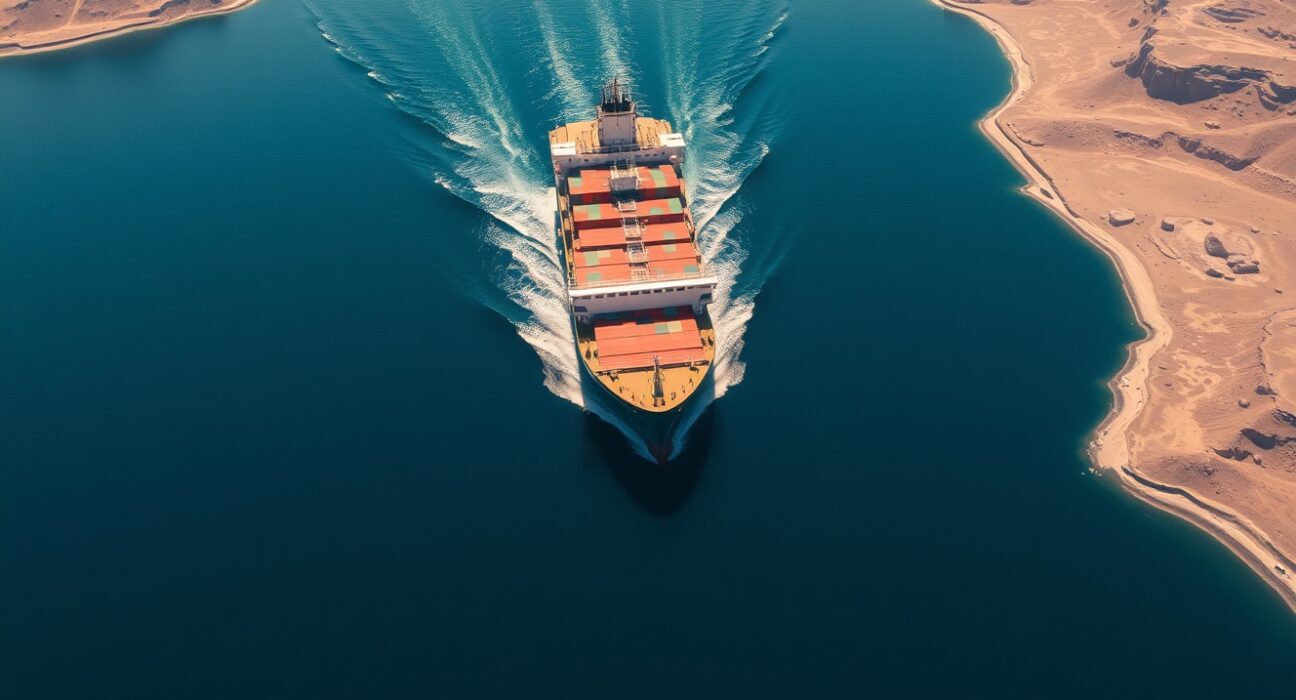
TEHRAN, Iran – March 2025: Iran has announced a dramatic new maritime policy that will reshape global energy security and regional geopolitics. The Islamic Republic will permit non-hostile commercial vessels to transit the strategic Strait of Hormuz while systematically denying passage to ships associated with the United States, Israel, and nations Tehran deems “aggressive.” This unprecedented declaration, first reported by Bloomberg, represents a significant escalation in Iran’s approach to controlling the world’s most important oil transit chokepoint.
Strait of Hormuz Becomes Geopolitical Flashpoint
The Strait of Hormuz serves as the gateway between the Persian Gulf and the Gulf of Oman. Approximately 21 million barrels of oil pass through this narrow waterway daily. This represents about 21% of global petroleum consumption. Iran controls the northern side of the strait while Oman controls the southern coastline. The Islamic Revolutionary Guard Corps Navy maintains significant military assets along Iran’s coast.
Historically, Iran has threatened to close the strait during periods of heightened tension. However, this new policy represents a more sophisticated approach. Rather than threatening complete closure, Tehran is implementing selective access. This strategy allows Iran to maintain economic relationships with trading partners like China and India while targeting specific adversaries.
Defining “Non-Hostile” and “Aggressive” Vessels
Iran’s announcement leaves crucial questions about implementation. The terminology “non-hostile ships” and “vessels associated with aggression” requires precise definition. Maritime experts anticipate several classification criteria:
- Flag state registration: Ships registered in the United States, Israel, United Kingdom, and certain Gulf states
- Ownership and operation: Vessels owned or operated by companies headquartered in targeted nations
- Cargo destination: Ships carrying goods to military facilities in targeted countries
- Insurance and certification: Vessels using Western insurance providers or classification societies
The policy creates immediate complications for global shipping. Many vessels use flags of convenience from countries like Panama or Liberia. Determining ultimate ownership requires sophisticated intelligence capabilities. Furthermore, multinational corporations often have complex ownership structures spanning multiple jurisdictions.
Historical Context of Strait Tensions
Iran’s relationship with international shipping through the strait has evolved through several phases. During the 1980s Tanker War, both Iran and Iraq attacked commercial vessels. The United States responded by reflagging Kuwaiti tankers and providing naval escorts. More recently, Iran has seized foreign tankers and conducted harassment operations against commercial shipping.
The current policy represents a strategic evolution. Rather than random seizures or harassment, Iran is establishing formal criteria for access denial. This approach provides clearer rules while maintaining plausible deniability for economic disruption. The policy also aligns with Iran’s “axis of resistance” strategy against Western influence in the region.
Immediate Economic and Energy Market Impacts
Global energy markets reacted swiftly to the announcement. Brent crude futures jumped 4.2% in early trading. Shipping insurance premiums for Persian Gulf routes increased by approximately 15%. Major oil companies began rerouting some vessels while assessing the practical implications.
The policy creates particular challenges for several key stakeholders:
| Stakeholder | Primary Concern | Potential Response |
|---|---|---|
| US Fifth Fleet | Freedom of navigation operations | Enhanced patrols and escort missions |
| Asian Importers | Energy security and pricing | Diversification of supply routes |
| Global Shippers | Insurance costs and route safety | Alternative routing via Cape of Good Hope |
| Gulf Producers | Export revenue stability | Pipeline expansion and storage capacity |
Approximately 76% of Japan’s oil imports and 61% of China’s pass through the strait. Both nations maintain significant economic relationships with Iran while depending on security cooperation with the United States. This creates complex diplomatic balancing challenges for energy-dependent economies.
Legal and International Navigation Framework
The United Nations Convention on the Law of the Sea establishes important principles for straits used for international navigation. Article 38 guarantees transit passage through such straits. This means all ships and aircraft enjoy the right of continuous and expeditious transit. Coastal states cannot suspend or impede this right.
However, Iran has never ratified UNCLOS. The country maintains that the strait constitutes its territorial waters. Tehran argues it can regulate passage according to its national security interests. This legal ambiguity creates potential for miscalculation and escalation. Previous incidents have demonstrated how quickly maritime confrontations can spiral into broader conflicts.
International maritime law expert Dr. Elena Martinez notes, “The principle of innocent passage through territorial seas differs significantly from transit passage through international straits. Iran’s policy tests these legal boundaries while challenging established norms of global maritime commerce.”
Military and Security Implications
The United States maintains approximately 8,000 military personnel and 20 ships in the region through the Fifth Fleet based in Bahrain. This includes guided-missile destroyers, cruisers, and aircraft carriers. The U.S. Navy has conducted freedom of navigation operations in the region for decades.
Iran’s Islamic Revolutionary Guard Corps Navy operates fast attack craft, missile boats, and coastal defense systems. These asymmetric capabilities allow Iran to harass commercial shipping while avoiding direct confrontation with superior U.S. naval forces. The new policy formalizes what was previously informal harassment into declared policy.
Regional security analyst James Chen observes, “This represents a calculated escalation. Iran is weaponizing geography without technically closing the strait. The policy creates uncertainty while allowing Tehran to claim it’s maintaining international commerce. It’s a sophisticated form of economic coercion.”
Alternative Routes and Energy Security Strategies
Major energy importers have developed contingency plans for strait disruptions. These alternatives involve significant trade-offs in cost, capacity, and security:
- Pipeline networks: Existing pipelines from Saudi Arabia to the Red Sea carry approximately 5 million barrels daily
- Cape of Good Hope routing: Adds 15-20 days to Asia-Europe shipping routes and increases fuel costs by 30%
- Strategic petroleum reserves: IEA members maintain 90 days of import coverage for emergency situations
- Regional storage facilities: Fujairah in the UAE offers storage and transshipment outside the strait
The United Arab Emirates completed the Habshan-Fujairah pipeline in 2012. This 380-kilometer pipeline bypasses the strait entirely. It carries approximately 1.5 million barrels daily from Abu Dhabi’s oil fields to Fujairah on the Gulf of Oman. Saudi Arabia’s East-West Pipeline carries another 5 million barrels daily to Yanbu on the Red Sea.
Diplomatic Responses and Regional Dynamics
Initial diplomatic reactions followed predictable patterns. The United States Department of State condemned the policy as “illegal and destabilizing.” European Union officials expressed concern about energy security. Gulf Cooperation Council members called for international mediation. China and Russia urged restraint from all parties.
The policy occurs within broader regional realignments. Recent normalization agreements between Israel and several Arab states have shifted regional dynamics. Iran perceives these developments as encirclement by hostile powers. The maritime policy represents both a defensive measure and a demonstration of regional influence.
Middle East scholar Dr. Fatima Al-Mansoori explains, “This isn’t merely about shipping lanes. It’s about Iran asserting regional leadership while challenging U.S. hegemony. The strait represents both economic leverage and symbolic sovereignty for Tehran’s leadership.”
Conclusion
Iran’s new Strait of Hormuz policy represents a significant escalation in maritime geopolitics. The selective access approach allows Tehran to pressure adversaries while maintaining economic relationships with neutral parties. Global energy markets face increased volatility and shipping costs. Regional military forces prepare for potential confrontations. The international community must navigate complex legal and diplomatic challenges. Ultimately, the policy tests the resilience of global energy infrastructure and the international rules-based order. The Strait of Hormuz remains the world’s most critical maritime chokepoint, and its stability affects every energy consumer globally.
FAQs
Q1: What percentage of global oil passes through the Strait of Hormuz?
Approximately 21% of global petroleum consumption, or about 21 million barrels per day, transits the Strait of Hormuz. This represents nearly one-third of all seaborne traded oil.
Q2: How will Iran enforce this new shipping policy?
Iran will likely use a combination of naval patrols, coastal monitoring systems, and intelligence gathering. The Islamic Revolutionary Guard Corps Navy maintains significant assets in the region including fast attack craft, submarines, and missile systems.
Q3: What are the immediate alternatives for oil transportation?
Existing pipelines from Saudi Arabia to the Red Sea and from the UAE to Fujairah bypass the strait. Shipping can also reroute around Africa’s Cape of Good Hope, though this adds significant time and cost.
Q4: How does international law address passage through straits?
The United Nations Convention on the Law of the Sea guarantees transit passage through straits used for international navigation. However, Iran has not ratified UNCLOS and considers the strait its territorial waters.
Q5: What countries are most affected by this policy?
Asian economies like Japan, China, South Korea, and India depend heavily on Persian Gulf oil imports. Gulf producers like Saudi Arabia, the UAE, and Qatar rely on the strait for export revenue. The United States and its allies face strategic challenges to freedom of navigation.
Disclaimer: The information provided is not trading advice, Bitcoinworld.co.in holds no liability for any investments made based on the information provided on this page. We strongly recommend independent research and/or consultation with a qualified professional before making any investment decisions.