

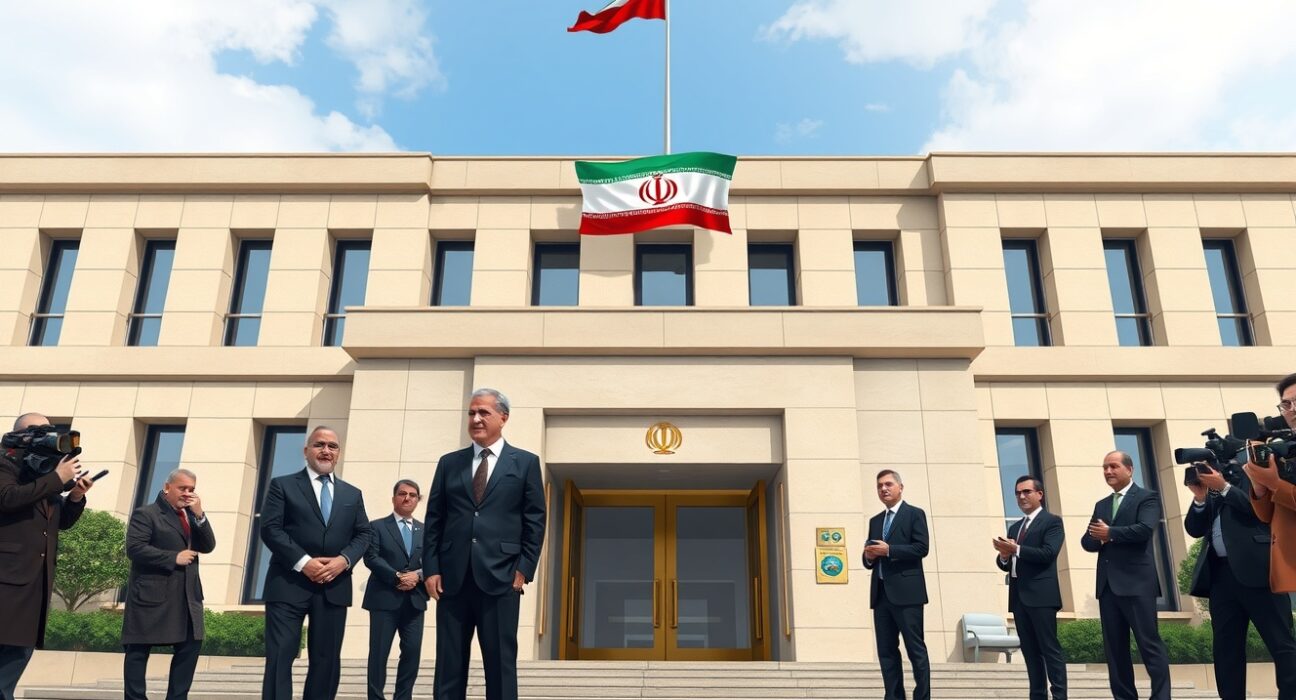
Iran’s Tasnim News Agency has officially denied recent Western media reports claiming that Parliament Speaker Mohammad Bagher Qalibaf will not accompany Foreign Minister Abbas Araghchi on upcoming diplomatic engagements. The denial, issued on April 8, 2025, in Tehran, comes amid heightened scrutiny of Iran’s internal political dynamics and its foreign policy posture.
Iran Tasnim Denies Qalibaf Report: What Western Media Got Wrong
Western outlets, including Reuters and The Associated Press, had earlier reported that Qalibaf would skip a planned joint delegation with Araghchi. Tasnim, however, categorically refuted these claims. The agency stated that no such decision exists. It also clarified that Iranian officials have not held any negotiations with the United States in Islamabad. This clarification directly contradicts earlier speculation about backchannel talks.
Background of the Denial
Rumors about Qalibaf’s absence first surfaced after a series of unverified social media posts. These posts suggested a rift between the Parliament and the Foreign Ministry. Tasnim’s denial serves to restore unity within Iran’s leadership. It also aims to counter disinformation that could undermine public trust.
Tasnim News Agency Denial: Key Details and Context
Tasnim is a semi-official news outlet closely aligned with Iran’s Islamic Revolutionary Guard Corps (IRGC). Its denial carries significant weight. The agency’s report emphasized that both Qalibaf and Araghchi continue to coordinate closely. No schedule changes have been approved. Furthermore, Tasnim dismissed any notion of U.S.-Iran talks in Islamabad as baseless.
Why This Matters for Iran’s Foreign Policy
Iran’s diplomatic strategy remains a cornerstone of its regional influence. Any perceived division between the Parliament and the Foreign Ministry could weaken Tehran’s negotiating position. Tasnim’s denial helps preserve a unified front. It also signals that Iran’s leadership remains committed to its stated policies.
Iran Speaker Foreign Minister: Analyzing the Coordination
Mohammad Bagher Qalibaf and Abbas Araghchi represent two key pillars of Iran’s governance. Qalibaf, as Speaker, oversees legislative affairs. Araghchi, as Foreign Minister, handles international relations. Their joint appearances are rare but symbolic. Tasnim’s denial reinforces that their partnership remains intact.
Historical Context of Similar Denials
This is not the first time Tasnim has denied Western reports. In 2023, the agency refuted claims about IRGC involvement in Syria. In 2024, it dismissed rumors of internal splits over nuclear negotiations. Each denial follows a pattern: quick, authoritative, and aimed at controlling the narrative.
Iran US Negotiations Islamabad: The Facts vs. Fiction
Speculation about U.S.-Iran talks in Islamabad emerged after a Pakistani diplomatic source leaked unconfirmed details. Tasnim’s denial is unequivocal. No meetings occurred. No agenda was set. This aligns with Iran’s public stance that it will not negotiate under pressure. The denial also protects Pakistan from being drawn into regional tensions.
Regional Implications of the Denial
Pakistan has historically served as a mediator between Iran and the U.S. However, recent escalations have complicated this role. Tasnim’s statement reduces the risk of misinterpretation. It also prevents any false claims from gaining traction in the region.
Tasnim News Agency Denial: Expert Analysis and Reactions
Political analysts in Tehran view Tasnim’s denial as a strategic move. Dr. Reza Nasr, an Iran expert at Johns Hopkins University, noted that “such denials are common when internal divisions are exaggerated by foreign media.” He added that “Tasnim’s credibility is high among domestic audiences.” Other experts point out that the denial serves to reassure allies and confuse adversaries.
Timeline of Events Leading to the Denial
- April 5, 2025: Western media reports claim Qalibaf will not accompany Araghchi.
- April 6, 2025: Social media amplifies rumors of U.S.-Iran talks in Islamabad.
- April 7, 2025: Tasnim begins internal verification.
- April 8, 2025: Tasnim issues official denial.
Conclusion
Iran’s Tasnim denies Qalibaf report, effectively shutting down unfounded claims about a rift between the Parliament and Foreign Ministry. The agency also clarified that no U.S. negotiations occurred in Islamabad. This denial reinforces Iran’s commitment to a unified foreign policy. It also highlights the importance of verifying news from credible sources. For readers, this story underscores the complexity of Iran’s political landscape. It also demonstrates how state-affiliated media shape public perception in real time.
FAQs
Q1: What did Tasnim News Agency deny?
A1: Tasnim denied Western media reports that Parliament Speaker Qalibaf will not accompany Foreign Minister Araghchi. It also denied any U.S.-Iran negotiations in Islamabad.
Q2: Why is Tasnim’s denial significant?
A2: Tasnim is a semi-official agency with close ties to Iran’s IRGC. Its denial carries authority and helps counter disinformation about internal divisions.
Q3: Did any U.S.-Iran talks take place in Islamabad?
A3: No. Tasnim confirmed that no negotiations occurred. This aligns with Iran’s public stance against talks under pressure.
Q4: How does this affect Iran’s foreign policy?
A4: The denial preserves a unified front between the Parliament and Foreign Ministry. It prevents false narratives from weakening Iran’s diplomatic position.
Q5: Should readers trust Tasnim’s denials?
A5: Tasnim is a credible source within Iran, but readers should cross-check with other outlets. Its denials are often accurate but serve state interests.
Disclaimer: The information provided is not trading advice, Bitcoinworld.co.in holds no liability for any investments made based on the information provided on this page. We strongly recommend independent research and/or consultation with a qualified professional before making any investment decisions.
