

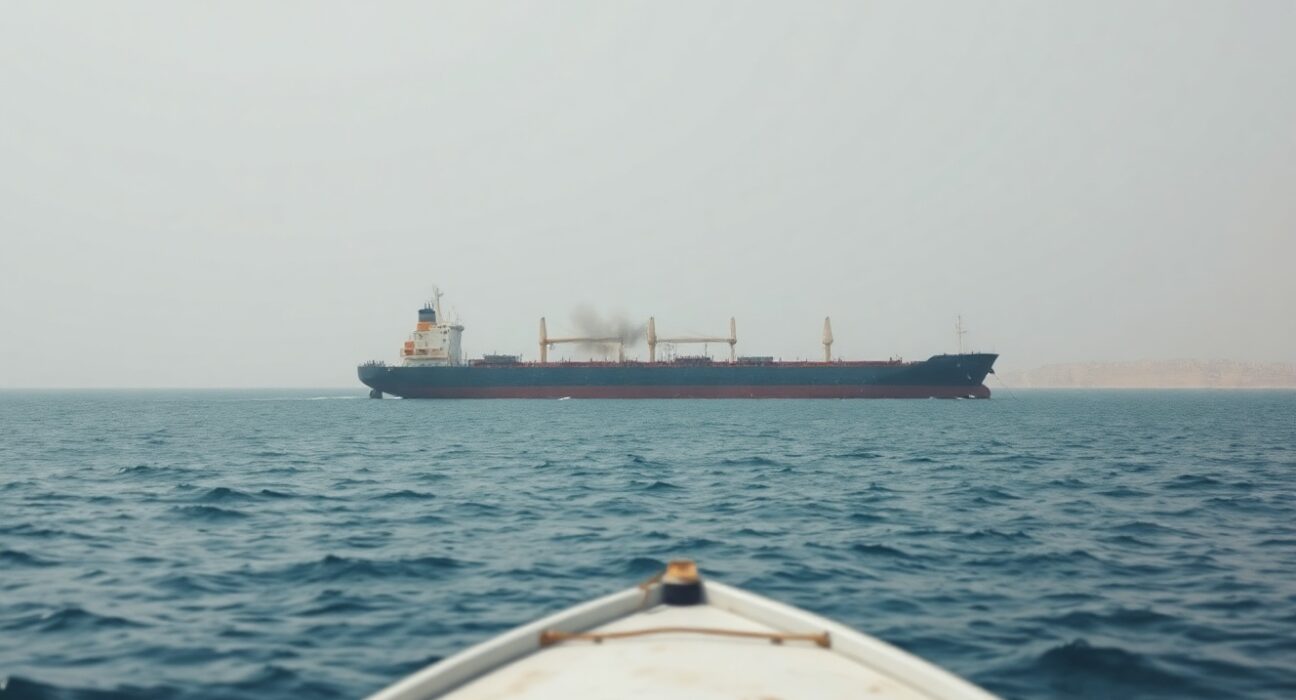
Iranian authorities have reported that a United States projectile struck one of its cargo vessels operating in the Gulf of Oman, an incident that threatens to further inflame already tense relations between the two nations. The claim, which emerged on Tuesday, has not been independently verified, and US military officials have not issued an immediate public response. The Gulf of Oman, a critical chokepoint for global oil shipments, has been a flashpoint for maritime incidents in recent years.
Details of the Incident
According to Iranian state media, the cargo boat was traveling in international waters when it was hit by what Tehran described as a US-launched projectile. The report did not specify the extent of damage or casualties, and the vessel’s name and cargo were not immediately disclosed. Maritime tracking data from open sources shows no unusual disruptions in commercial shipping lanes near the reported location, though analysts caution that smaller vessels often operate without continuous radar coverage. The lack of independent confirmation underscores the fog of war that often surrounds such incidents in the region.
Regional Context and Escalation Risks
The Gulf of Oman sits at the mouth of the Strait of Hormuz, through which roughly one-fifth of the world’s petroleum passes. Any disruption to shipping in this area carries significant economic and security implications. This incident follows a pattern of tit-for-tat maritime actions between Iran and the United States, including the 2019 seizure of oil tankers and a series of explosions on commercial vessels that Washington attributed to Iranian mines. Iran has consistently denied involvement in those attacks. The latest allegation could complicate ongoing diplomatic efforts, including indirect talks over Iran’s nuclear program.
What This Means for Global Shipping
Insurance premiums for vessels transiting the Gulf of Oman have already risen in recent years due to the elevated risk profile. A confirmed military strike on a merchant vessel would likely trigger a further spike in war risk insurance costs and could prompt shipping companies to reroute cargo, adding days to transit times and increasing costs for consumers worldwide. The International Maritime Security Construct, a US-led coalition that patrols the region, has not yet issued a statement regarding the reported incident.
Conclusion
While details remain scarce, the Iranian allegation of a US strike on its cargo boat in the Gulf of Oman represents a serious development in an already volatile region. The coming days will be critical for verifying the claim and assessing its impact on maritime security, oil markets, and broader US-Iran relations. Readers should treat early reports with caution until official sources provide corroborating evidence.
FAQs
Q1: Has the United States confirmed or denied striking an Iranian cargo boat?
As of publication, US military and State Department officials have not publicly commented on the Iranian allegation. The claim remains unverified.
Q2: Why is the Gulf of Oman strategically important?
The Gulf of Oman is a key maritime corridor connecting the Indian Ocean to the Strait of Hormuz. It is a vital route for oil tankers and commercial shipping, making it a strategic chokepoint for global energy supplies.
Q3: Could this incident affect oil prices?
Historically, any disruption or perceived threat to shipping in the Strait of Hormuz or Gulf of Oman has led to short-term volatility in oil prices. If the incident escalates, traders may price in a risk premium for crude oil shipments from the Middle East.
Disclaimer: The information provided is not trading advice, Bitcoinworld.co.in holds no liability for any investments made based on the information provided on this page. We strongly recommend independent research and/or consultation with a qualified professional before making any investment decisions.
