

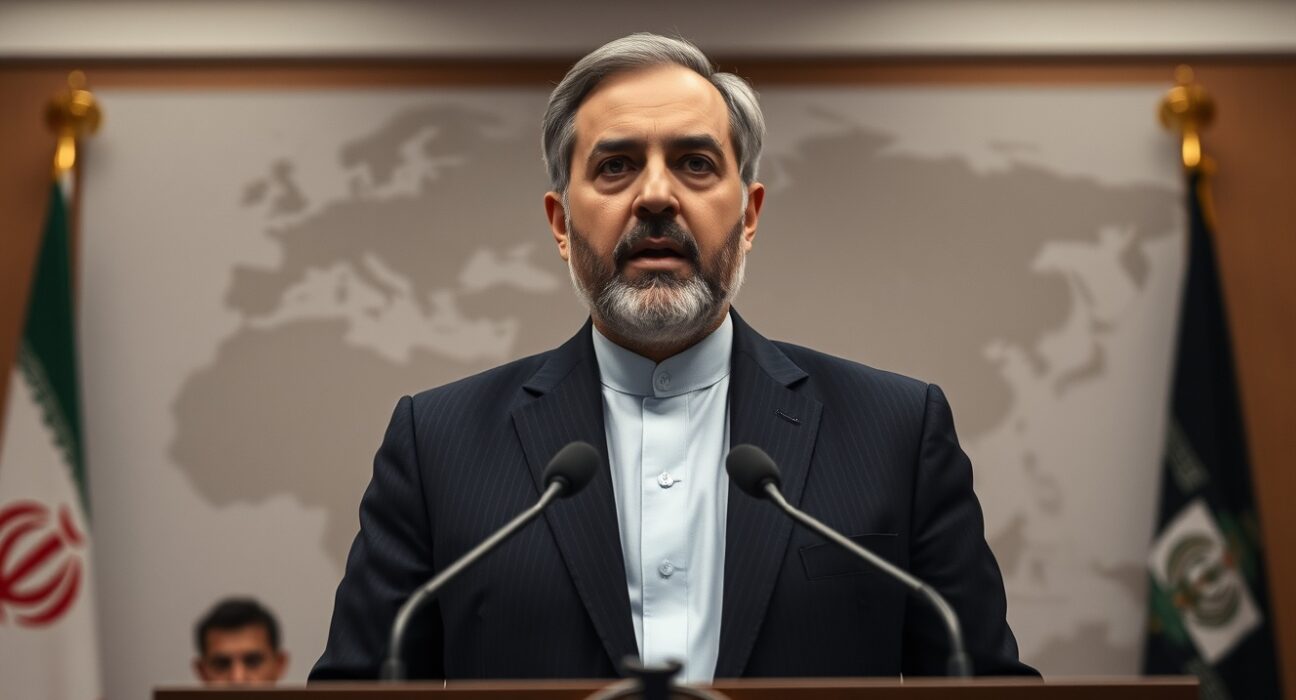
Iranian Foreign Minister Abbas Araghchi will embark on a regional tour to discuss ending the war with the United States and Israel. A spokesperson for the Iranian Foreign Ministry confirmed this to Iranian state media on Tuesday, March 11, 2025, in Tehran. The announcement marks a significant diplomatic move amid escalating tensions in the Middle East.
Iranian FM Regional Tour: Key Objectives and Stakes
The primary goal of the tour involves consultations on the latest efforts by the U.S. and Israel to end the war against Iran. This development comes after months of heightened military activity and cyberattacks between the nations. The spokesperson did not specify the exact countries on the itinerary. However, analysts expect stops in key regional capitals, including Baghdad, Damascus, and Doha.
Iran seeks to leverage its diplomatic relationships to de-escalate the conflict. The U.S. and Israel have maintained a policy of maximum pressure. They have also conducted targeted strikes on Iranian assets in Syria and Iraq. This tour represents a proactive effort by Tehran to shift the narrative. It also aims to secure guarantees for its national security.
This diplomatic push follows a series of back-channel communications. These talks have not yielded a breakthrough. The Iranian FM regional tour signals a shift toward open diplomacy. It also tests the willingness of neighboring states to mediate.
Background of the Iran-US-Israel Conflict
The conflict between Iran, the U.S., and Israel has deep roots. It dates back to the 1979 Iranian Revolution. Key flashpoints include the Iran-Iraq War, the nuclear program, and proxy wars across the region. The U.S. withdrawal from the Joint Comprehensive Plan of Action (JCPOA) in 2018 escalated tensions.
Israel views Iran as an existential threat. It has conducted numerous airstrikes on Iranian-linked targets in Syria. The U.S. has provided military and intelligence support. In 2024, a series of direct confrontations occurred. These included drone strikes and naval skirmishes in the Persian Gulf.
The current war phase began in late 2024. A cyberattack on Iran’s nuclear facilities triggered a retaliatory missile strike on a U.S. base in Iraq. Since then, the conflict has remained in a gray zone. It involves limited kinetic actions and economic warfare. The Iranian FM regional tour aims to break this cycle.
Key Events Leading to the Current Crisis
- 2018: U.S. withdraws from the JCPOA and reimposes sanctions.
- 2020: U.S. kills Iranian General Qasem Soleimani in a drone strike.
- 2023: Iran enriches uranium to 60% purity, near weapons-grade.
- 2024: Israel strikes Iranian consulate in Damascus, killing IRGC commanders.
- 2025: Cyberattack on Natanz facility triggers direct military exchanges.
This timeline shows a steady escalation. Each event has reduced the space for diplomacy. The Iranian FM regional tour represents a potential turning point.
Regional Reactions and Mediation Efforts
Regional powers have reacted cautiously to the tour announcement. Saudi Arabia has not issued an official statement. However, sources indicate Riyadh supports de-escalation. The United Arab Emirates and Qatar have offered to mediate. Iraq, which hosts Iranian-backed militias and U.S. troops, is a crucial stop.
Turkey has also expressed willingness to host talks. President Erdogan has maintained communication with both Tehran and Washington. Oman, a traditional mediator, may play a role behind the scenes. The success of the Iranian FM regional tour depends on these countries’ ability to bridge gaps.
The U.S. and Israel have not publicly commented on the tour. Privately, U.S. officials have signaled openness to negotiations. However, they insist on Iran’s complete compliance with nuclear restrictions. Israel demands an end to Iran’s missile program and support for proxies. These positions create a significant gap.
Impact on Global Energy Markets and Security
The conflict has already affected global oil prices. Brent crude has fluctuated between $85 and $95 per barrel since January 2025. The Iranian FM regional tour could stabilize markets if it leads to a ceasefire. Conversely, failure could trigger a price spike above $100.
Shipping lanes in the Strait of Hormuz remain vulnerable. Iran has threatened to close the strait in the past. Any disruption would impact 20% of the world’s oil supply. The tour aims to reduce such risks. It also addresses broader security concerns, including cyber threats and terrorism.
European nations have urged restraint. They have also imposed new sanctions on Iran for its nuclear activities. The tour offers an opportunity for Iran to engage with European mediators. This could create a parallel track to U.S.-led talks.
Expert Analysis: Can Diplomacy Succeed?
Experts remain divided on the tour’s prospects. Dr. Fatima Al-Sayed, a Middle East scholar at Georgetown University, notes that “Iran has a history of using diplomacy to buy time.” She points to the 2015 nuclear deal as an example. However, she also acknowledges that “the current situation is different. Both sides are exhausted.”
Retired U.S. General David Petraeus has argued that “military options are limited.” He believes a diplomatic solution is the only viable path. However, he warns that “trust is at an all-time low.” The Iranian FM regional tour must rebuild this trust.
Iranian political analyst Reza Hosseini states that “the tour is a signal to the Iranian public.” It shows the government is taking action. It also puts pressure on the U.S. to respond. Hosseini warns that “if the tour fails, hardliners in Tehran will gain influence.” This could lead to further escalation.
Timeline of the Tour and Expected Outcomes
The Iranian FM regional tour is expected to last two weeks. It will begin in Baghdad, followed by Damascus and Doha. The final stop may be in Muscat, Oman. Each stop will involve bilateral meetings and possibly multilateral sessions.
| Stop | Country | Expected Focus |
|---|---|---|
| 1 | Iraq | Security guarantees and militia disarmament |
| 2 | Syria | Iranian military presence and Israeli strikes |
| 3 | Qatar | Energy cooperation and mediation channels |
| 4 | Oman | Nuclear talks and U.S. backchannel |
Outcomes could range from a ceasefire agreement to a framework for broader negotiations. A failure could lead to increased military operations. The tour’s success hinges on concrete commitments from all parties.
Humanitarian and Economic Consequences
The war has caused significant humanitarian suffering. Over 10,000 civilians have been displaced in Iraq and Syria. Sanctions have crippled Iran’s economy. Inflation exceeds 40%, and unemployment is high. The Iranian FM regional tour addresses these issues indirectly.
Ending the war would allow for sanctions relief. It would also enable reconstruction efforts. Iran needs foreign investment to modernize its oil industry. Regional stability would boost trade and tourism. These economic incentives provide a strong motivation for peace.
However, hardliners in Iran view concessions as weakness. They argue that the U.S. cannot be trusted. The tour must navigate these internal political dynamics. Supreme Leader Khamenei has the final say. His support is essential for any agreement.
Conclusion
The Iranian FM regional tour represents a critical diplomatic effort to end the war with the US and Israel. It reflects Tehran’s recognition that military escalation is unsustainable. The tour’s success depends on regional mediation, U.S. willingness to negotiate, and internal Iranian politics. A breakthrough could reshape Middle East security. A failure risks a wider conflict. The world watches closely as Araghchi begins his journey.
FAQs
Q1: What is the purpose of the Iranian FM regional tour?
A1: The tour aims to discuss ending the war with the US and Israel through diplomatic consultations with regional allies.
Q2: Which countries will the Iranian foreign minister visit?
A2: Expected stops include Iraq, Syria, Qatar, and Oman, though the full itinerary has not been confirmed.
Q3: How does this tour affect the Iran-US-Israel conflict?
A3: It signals a shift toward open diplomacy, potentially de-escalating tensions if successful, or increasing pressure if it fails.
Q4: What are the main obstacles to peace?
A4: Key obstacles include mutual distrust, Iran’s nuclear program, Israel’s security demands, and U.S. sanctions policy.
Q5: How could the tour impact global oil prices?
A5: Success could stabilize prices around $85-95 per barrel, while failure could push prices above $100 due to supply disruption risks.
Disclaimer: The information provided is not trading advice, Bitcoinworld.co.in holds no liability for any investments made based on the information provided on this page. We strongly recommend independent research and/or consultation with a qualified professional before making any investment decisions.
