

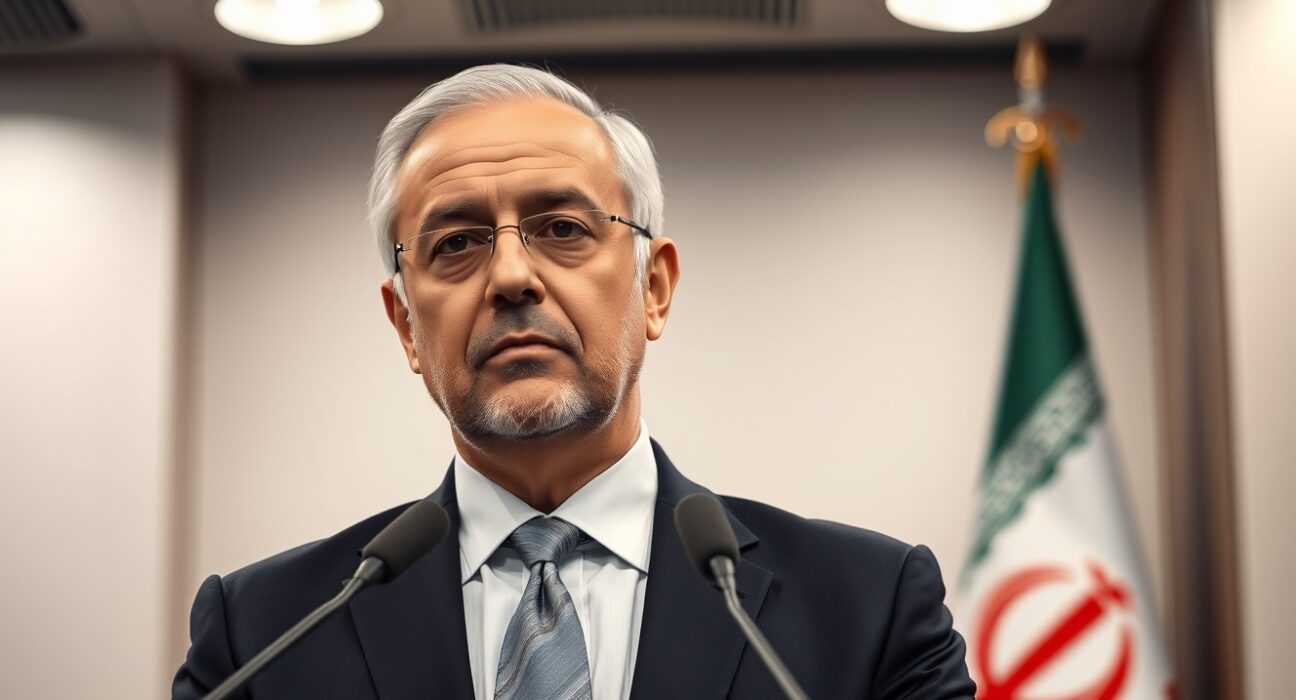
In a significant diplomatic statement from Tehran, Iranian President Masoud Pezeshkian has forcefully declared that the United States government continues to send “negative and contradictory signals” aimed at forcing Iran into a position of submission, thereby highlighting the persistent and profound historical distrust between the two nations.
Iranian President Condemns US Pressure Tactics
President Masoud Pezeshkian’s remarks underscore a long-standing geopolitical rift. Furthermore, his statement directly addresses the core of the bilateral stalemate. The Iranian leader articulated that Washington’s approach conveys an “unpleasant message.” Consequently, this perception frames US policy as inherently coercive. Historical context is crucial here. The relationship has been fraught since the 1979 Islamic Revolution. Subsequently, decades of sanctions, diplomatic isolation, and mutual accusations have solidified this adversarial dynamic.
Analysts point to several recent events as potential catalysts for this statement. For instance, the stalled negotiations regarding the Joint Comprehensive Plan of Action (JCPOA), commonly known as the Iran nuclear deal, remain a primary point of contention. Additionally, ongoing US sanctions continue to exert significant economic pressure on Iran. The table below outlines key recent friction points:
| Issue | Iranian Perspective | US Perspective |
|---|---|---|
| Nuclear Program | Peaceful energy rights under NPT | Preventing nuclear weapons capability |
| Regional Influence | Legitimate support for allies | Destabilizing proxy activities |
| Sanctions | Illegal economic warfare | Necessary pressure for policy change |
Pezeshkian’s rhetoric, therefore, is not an isolated comment. Instead, it represents a consistent theme in Iranian diplomatic communication. The president stressed a foundational principle. He asserted that the Iranian people “will not yield to force.” This phrase resonates deeply within Iran’s political identity. It echoes sentiments from the Iran-Iraq War and the long-standing resistance to external pressure.
Historical Roots of the US-Iran Distrust
The “deep-rooted historical distrust” cited by President Pezeshkian has specific origins. Understanding this history is essential for contextualizing current statements. The 1953 CIA-backed coup against Prime Minister Mohammad Mosaddegh remains a pivotal event in the collective Iranian memory. This operation reinstated the Shah. Subsequently, it created lasting resentment toward US interventionism. The 1979 hostage crisis at the US Embassy in Tehran then cemented the adversarial relationship for Americans.
Several key periods define this troubled history:
- The 1953 Coup: A foundational moment creating suspicion of US intentions.
- The 1979 Revolution & Hostage Crisis: A complete rupture in formal diplomatic ties.
- The 1980-88 Iran-Iraq War: Perceived US support for Saddam Hussein.
- The “Axis of Evil” Designation (2002): Framing Iran as a primary security threat.
- The JCPOA & Subsequent Withdrawal (2015-2018): A cycle of engagement and abandonment.
Each event layers onto the next, creating a complex narrative of betrayal and hostility. Consequently, statements from any Iranian leader must navigate this historical weight. Pezeshkian, a reformist figure who took office in 2024, operates within these constraints. His administration seeks diplomatic engagement but faces immense domestic pressure to not appear weak. The “contradictory signals” he mentions likely refer to mixed messages from different US administrations and agencies. For example, one branch may suggest openness to dialogue while another imposes new sanctions.
Expert Analysis on Diplomatic Signaling
Foreign policy experts note that the language of “submission” is highly charged. Dr. Anahita Mir, a senior fellow at the Center for International Studies, explains the significance. “In the lexicon of Iran-US relations, the term ‘submission’ is a red line,” she states. “It frames any compromise not as diplomacy but as capitulation to an imperial power. This makes pragmatic negotiation extraordinarily difficult for any Iranian politician.” This perspective highlights the domestic audience for Pezeshkian’s words. He must reassure hardliners of his resolve while potentially keeping a door open for future talks.
The economic impacts of this stalemate are severe for Iran. International sanctions have crippled its oil exports and access to global financial systems. However, the government has developed workarounds, including barter trade and regional alliances. The psychological impact of resisting US pressure also serves as a source of national pride for some segments of the population. This creates a paradox where economic pain reinforces political defiance.
Regional and Global Implications of the Stalemate
The ongoing tension has far-reaching consequences beyond bilateral relations. The Middle East remains a volatile region where US and Iranian interests directly clash. Several conflict zones serve as proxies for this larger competition:
- Yemen: Iranian support for Houthi rebels versus US backing for Saudi Arabia.
- Syria: Iranian military presence supporting the Assad regime versus US sanctions.
- Iraq: Competition for influence within the Iraqi government.
- Maritime Security: Incidents in the Persian Gulf and Strait of Hormuz.
Moreover, the global non-proliferation regime is directly affected. The collapse of the JCPOA has led Iran to gradually increase its uranium enrichment levels. International Atomic Energy Agency (IAEA) reports now indicate Iran has enriched uranium to 60% purity. This level is a significant technical step toward weapons-grade material. However, Iranian officials consistently deny any intention to build a nuclear weapon. They maintain the program is for peaceful civilian purposes. The US and European allies view this advancement with extreme alarm. Consequently, they seek to rebuild a coalition to contain Iran’s nuclear progress.
The human cost of this geopolitical struggle is often overlooked. Sanctions have contributed to shortages of medicine and medical equipment in Iran. They have also devalued the Iranian rial, devastating the savings of ordinary citizens. Meanwhile, US policy faces criticism for its failure to achieve stated objectives. A strategy of “maximum pressure” has not led to a new nuclear deal or a change in Iran’s regional behavior. Instead, it has pushed Iran closer to other US adversaries like Russia and China.
Conclusion
President Masoud Pezeshkian’s statement accusing the United States of seeking to force Iran into submission is a powerful reflection of entrenched historical grievances and current geopolitical deadlock. It serves both as a diplomatic position and a domestic political necessity. The deep-rooted distrust between Tehran and Washington continues to shape the security architecture of the Middle East and challenge global non-proliferation efforts. Ultimately, breaking this cycle requires more than rhetorical defiance or maximum pressure. It demands a fundamental recalibration of strategy and a willingness to address core security concerns on both sides, a prospect that remains elusive as contradictory signals persist.
FAQs
Q1: What specifically did President Pezeshkian say about the US?
President Masoud Pezeshkian stated that “negative and contradictory signals” from US officials convey a message that Washington is trying to force Iran into submission, and he stressed that the Iranian people will not yield to force.
Q2: Why does Iran have such deep historical distrust of the United States?
The distrust stems from pivotal events like the 1953 CIA-backed coup, the 1979 Revolution, US support for Iraq during the Iran-Iraq War, and the US withdrawal from the 2015 nuclear deal, creating a narrative of persistent intervention and betrayal.
Q3: What are the ‘contradictory signals’ from the US that Pezeshkian mentioned?
These likely refer to mixed messages, such as public statements about being open to diplomacy while simultaneously imposing new sanctions or taking military actions perceived as hostile, creating an unclear and inconsistent US policy stance.
Q4: How does this statement affect the possibility of reviving the Iran nuclear deal (JCPOA)?
Such rhetoric hardens positions, making compromise politically difficult. Framing diplomacy as “submission” raises the domestic cost for Iranian leaders to engage, thereby complicating and likely delaying any return to negotiations.
Q5: What is the regional impact of continued US-Iran tensions?
The tensions exacerbate conflicts in Yemen, Syria, and Iraq, where both nations support opposing factions. They also increase the risk of direct or proxy military confrontation, destabilizing the entire Middle East and threatening global energy supplies.
Disclaimer: The information provided is not trading advice, Bitcoinworld.co.in holds no liability for any investments made based on the information provided on this page. We strongly recommend independent research and/or consultation with a qualified professional before making any investment decisions.
