

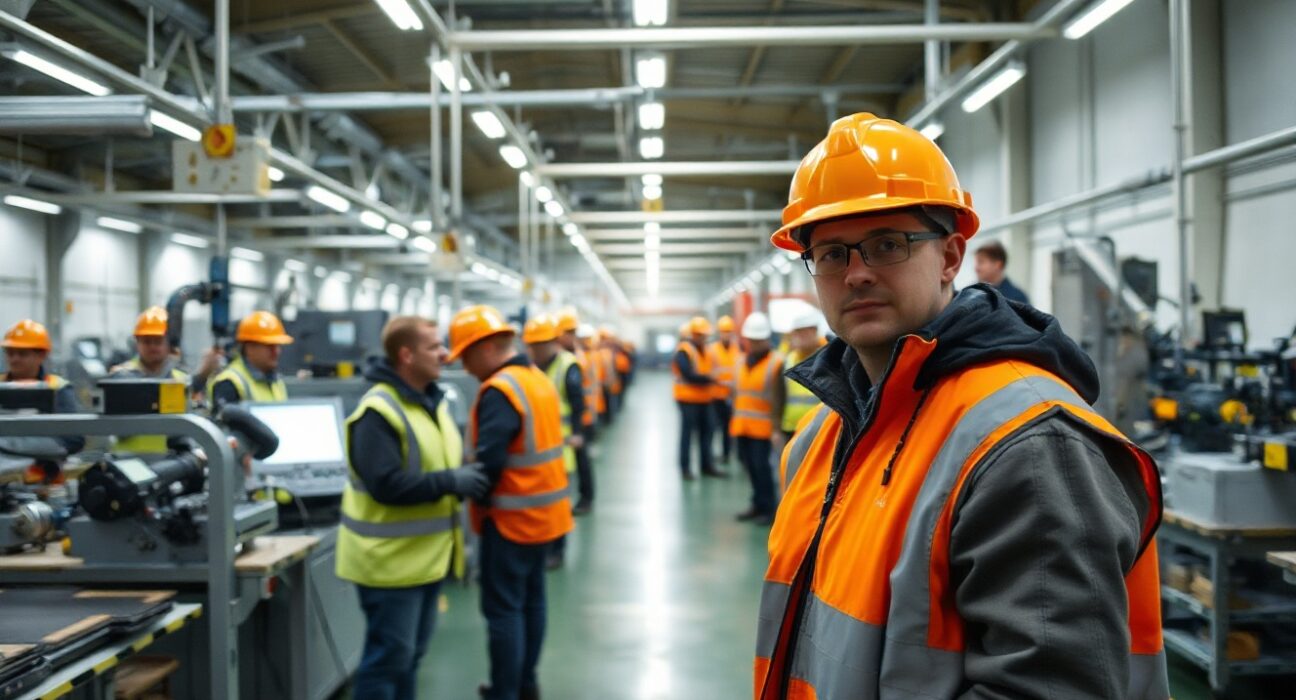
The latest data from AIB indicates a slight cooling in Ireland’s manufacturing sector, with the Purchasing Managers’ Index (PMI) declining from 55.9 in May to 54.9 in June. While the reading remains above the 50.0 threshold that separates expansion from contraction, the dip signals a moderation in the pace of growth for Irish manufacturers.
Understanding the PMI Shift
The AIB Manufacturing PMI is a composite index based on survey responses from purchasing managers across the Irish manufacturing sector. A reading above 50 indicates expansion, while below 50 signals contraction. The June figure of 54.9, while still positive, represents a noticeable deceleration from the previous month’s stronger performance. This trend aligns with broader European manufacturing data, which has shown mixed signals amid ongoing global supply chain adjustments and fluctuating demand.
Key Factors Behind the Slowdown
Several factors likely contributed to the June dip. Global economic uncertainty, persistent inflationary pressures on input costs, and cautious inventory management by businesses may have tempered production growth. Additionally, the strong performance of the Irish economy in recent quarters, driven by multinational sectors, may be normalizing as export markets face headwinds. The PMI sub-indices, including new orders and output, are expected to provide further clarity when detailed data is released.
Implications for the Irish Economy
Ireland’s manufacturing sector is a critical component of its export-driven economy. While the PMI dip is modest, it warrants attention from policymakers and investors. A sustained decline could signal broader economic softening, particularly if it coincides with weakening demand from key trading partners like the United States and the European Union. However, the current reading still indicates growth, and the sector remains resilient compared to some peers in the eurozone.
Conclusion
The June AIB Manufacturing PMI of 54.9 reflects a tempered but still positive growth trajectory for Irish manufacturers. While the decline from 55.9 is notable, it does not yet signal a downturn. Close monitoring of future PMI releases and related economic indicators will be essential to assess whether this is a temporary adjustment or the start of a broader trend.
FAQs
Q1: What does a PMI reading of 54.9 mean for the Irish economy?
A1: A PMI above 50 indicates expansion in the manufacturing sector. A reading of 54.9 means the sector is still growing, but at a slower pace than the previous month’s 55.9. It suggests continued economic activity, though at a more moderate rate.
Q2: How does the AIB Manufacturing PMI affect consumers and businesses?
A2: For consumers, a stable or growing PMI can signal job security and steady economic conditions. For businesses, it provides insight into demand trends, helping with inventory and investment decisions. A slowdown may prompt more cautious spending.
Q3: What are the main drivers of changes in the Irish Manufacturing PMI?
A3: Key drivers include global demand for Irish exports, input costs (such as energy and raw materials), supply chain efficiency, and domestic economic conditions. Exchange rates and geopolitical factors also play a role.
Disclaimer: The information provided is not trading advice, Bitcoinworld.co.in holds no liability for any investments made based on the information provided on this page. We strongly recommend independent research and/or consultation with a qualified professional before making any investment decisions.
