

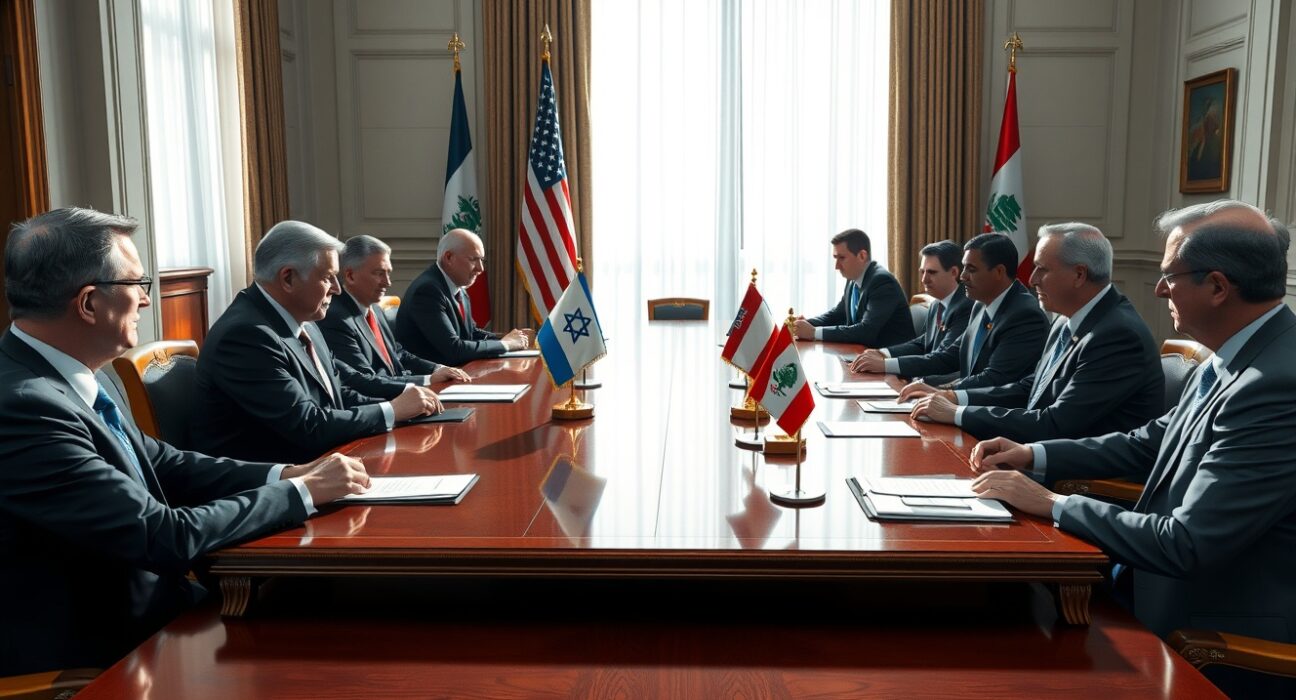
WASHINGTON, D.C. — In a significant diplomatic development, Israeli and Lebanese officials have initiated direct talks at the U.S. Department of State, marking a potentially historic moment for regional stability. Consequently, this engagement represents the most substantial bilateral dialogue between the two nations in recent years. The United States is actively facilitating these discussions, which aim to address longstanding disputes. Moreover, the talks come amid heightened regional tensions and complex geopolitical calculations. This development follows months of quiet diplomacy and backchannel communications. Therefore, analysts are closely monitoring the proceedings for any signs of substantive progress.
Israel and Lebanon Talks: A Diplomatic Milestone
The commencement of Israel and Lebanon talks at the U.S. State Department signifies a major diplomatic initiative. Importantly, these discussions are occurring under American auspices, reflecting Washington’s continued role as a key mediator. The talks reportedly focus on several critical issues, including maritime boundary disputes in the Eastern Mediterranean. Additionally, security concerns along the shared border represent another primary agenda item. The negotiations build upon indirect talks that have occurred through third parties over the past decade. For instance, U.N. officials have previously facilitated communication between the two sides on technical matters. However, this represents a more formal and direct engagement channel.
Historical context provides essential background for understanding these negotiations. Israel and Lebanon have technically remained in a state of conflict since 1948. Furthermore, the last major Israeli military operation in Lebanon concluded in 2006. Since then, the border region has experienced periods of both tension and relative calm. The United Nations Interim Force in Lebanon (UNIFIL) maintains a presence in southern Lebanon. This force monitors the cessation of hostilities and supports the Lebanese Armed Forces. Diplomatic relations between the two countries have been virtually nonexistent for decades. Therefore, these State Department talks represent a notable departure from past practice.
Geopolitical Context and Regional Implications
The timing of these negotiations carries significant geopolitical weight. Regional power dynamics are currently in a state of considerable flux. For example, normalization agreements between Israel and several Arab states have reshaped the Middle Eastern landscape. Meanwhile, Lebanon faces profound economic and political crises. The country’s financial collapse represents one of the most severe globally in modern history. Consequently, Lebanese officials may view economic incentives, particularly related to offshore energy resources, as a compelling reason to engage. Simultaneously, Israel seeks to secure its northern border and unlock valuable natural gas reserves.
Expert Analysis on Negotiation Dynamics
Regional experts emphasize the complex dynamics at play in these discussions. Dr. Amira Hassan, a senior fellow at the Middle East Institute, provided context in a recent briefing. “These talks are not occurring in a vacuum,” Hassan noted. “They are deeply intertwined with Lebanon’s desperate need for economic relief and Israel’s strategic interest in regional integration.” She further explained that maritime boundary demarcation could unlock significant hydrocarbon resources for both nations. The disputed area, known as Block 9, is estimated to contain substantial natural gas reserves. A resolution would allow for exploration and development, providing Lebanon with a potential economic lifeline. For Israel, it would provide legal certainty for adjacent drilling operations.
The U.S. role as mediator is also critical to the process. American diplomats have invested considerable effort in laying the groundwork for these discussions. Secretary of State’s special energy envoy, Amos Hochstein, has been a key figure in the preliminary shuttle diplomacy. His efforts focused on the technical aspects of the maritime dispute. The current talks at the State Department aim to elevate these discussions to a political level. Success would represent a tangible foreign policy achievement for the Biden administration. It would also reinforce America’s position as an indispensable diplomatic actor in the region.
Key Issues on the Negotiating Table
The agenda for the Israel and Lebanon talks encompasses several interconnected issues. Negotiators are addressing these points with careful attention to detail and historical sensitivity.
- Maritime Boundary Delimitation: This is the most immediate and technically complex issue. It involves defining the exclusive economic zones (EEZ) in the Mediterranean Sea. The dispute centers on an area of approximately 860 square kilometers.
- Land Border Points: Discussions may touch on 13 disputed border points along the Blue Line, the U.N.-drawn boundary. These are often small, tactical areas but carry symbolic weight.
- Security Arrangements: Ensuring stability along the frontier is a priority for both sides. This includes addressing the presence of non-state actors and coordinating through UNIFIL.
- Economic Cooperation: Potential future collaboration, particularly in the energy sector, is a longer-term topic. It remains highly sensitive given political realities in Lebanon.
The following table outlines the core positions as understood from public statements and expert analysis:
| Issue | Israeli Position (Reported) | Lebanese Position (Reported) |
|---|---|---|
| Maritime Line | Seeks line based on equidistance principle | Argues for line angled further west (Line 29) |
| Negotiation Format | Prefers direct, state-to-state talks | Initially preferred U.N.-led indirect talks |
| Security Focus | Demilitarization of southern Lebanon | Sovereign control by Lebanese Armed Forces |
Potential Impacts and Pathways Forward
The potential impacts of successful Israel and Lebanon talks are multifaceted. Economically, a maritime agreement could be transformative for Lebanon. The country could finally begin offshore gas exploration, attracting vital foreign investment. For Israel, it would remove legal uncertainty for its Karish gas field and future projects. Politically, any agreement would require careful domestic navigation in both capitals. The Lebanese government would need to frame any deal as a victory for national sovereignty. Meanwhile, the Israeli government would emphasize enhanced security and economic benefits. Regionally, a deal could subtly alter alliances and create new economic interdependencies.
The pathway to an agreement remains fraught with challenges. Domestic opposition exists on both sides. In Lebanon, factions opposed to any normalization with Israel could attempt to derail the process. In Israel, some political elements view concessions as unnecessary. The shadow of Hezbollah’s military presence in southern Lebanon also looms large. The group is not a party to the talks but remains a dominant security actor. Ultimately, the success of these State Department-mediated discussions may hinge on crafting a package that addresses core interests while allowing for politically palatable framing. The U.S. may also need to provide guarantees or incentives to bridge final gaps.
Conclusion
The initiation of Israel and Lebanon talks at the U.S. State Department marks a cautiously optimistic moment in Middle Eastern diplomacy. While significant hurdles remain, the mere fact of direct dialogue represents progress. These negotiations tackle complex technical and political issues with profound implications for regional stability and economic development. The United States’ role as facilitator underscores its enduring diplomatic influence. Observers will monitor subsequent rounds for concrete outcomes, particularly on the maritime boundary issue. A resolution would not only benefit the two primary parties but could also contribute to a more stable Eastern Mediterranean. The journey toward a comprehensive agreement is long, but these talks have opened a critical new chapter.
FAQs
Q1: What is the main goal of the talks between Israel and Lebanon?
The primary immediate goal is to resolve the longstanding maritime boundary dispute in the Eastern Mediterranean, which would allow both countries to develop offshore natural gas resources with legal certainty.
Q2: Why are the talks happening at the U.S. State Department?
The United States is acting as a neutral mediator and facilitator. American diplomats, particularly Special Envoy Amos Hochstein, have been deeply involved in shuttle diplomacy leading up to these direct negotiations.
Q3: Have Israel and Lebanon held direct talks before?
While there have been indirect negotiations through U.N. channels and periods of military coordination, sustained, formal, direct talks at this level are exceptionally rare in the decades-long conflict.
Q4: What are the biggest obstacles to an agreement?
Key obstacles include domestic political opposition in both countries, the sensitive issue of national sovereignty, the security situation in southern Lebanon involving non-state actors, and the technical complexity of drawing the maritime line.
Q5: How could an agreement impact the region?
A successful agreement could unlock significant economic potential, particularly for Lebanon’s crippled economy, enhance energy security, reduce the risk of conflict over resources, and potentially create a model for resolving other regional disputes.
Disclaimer: The information provided is not trading advice, Bitcoinworld.co.in holds no liability for any investments made based on the information provided on this page. We strongly recommend independent research and/or consultation with a qualified professional before making any investment decisions.
