

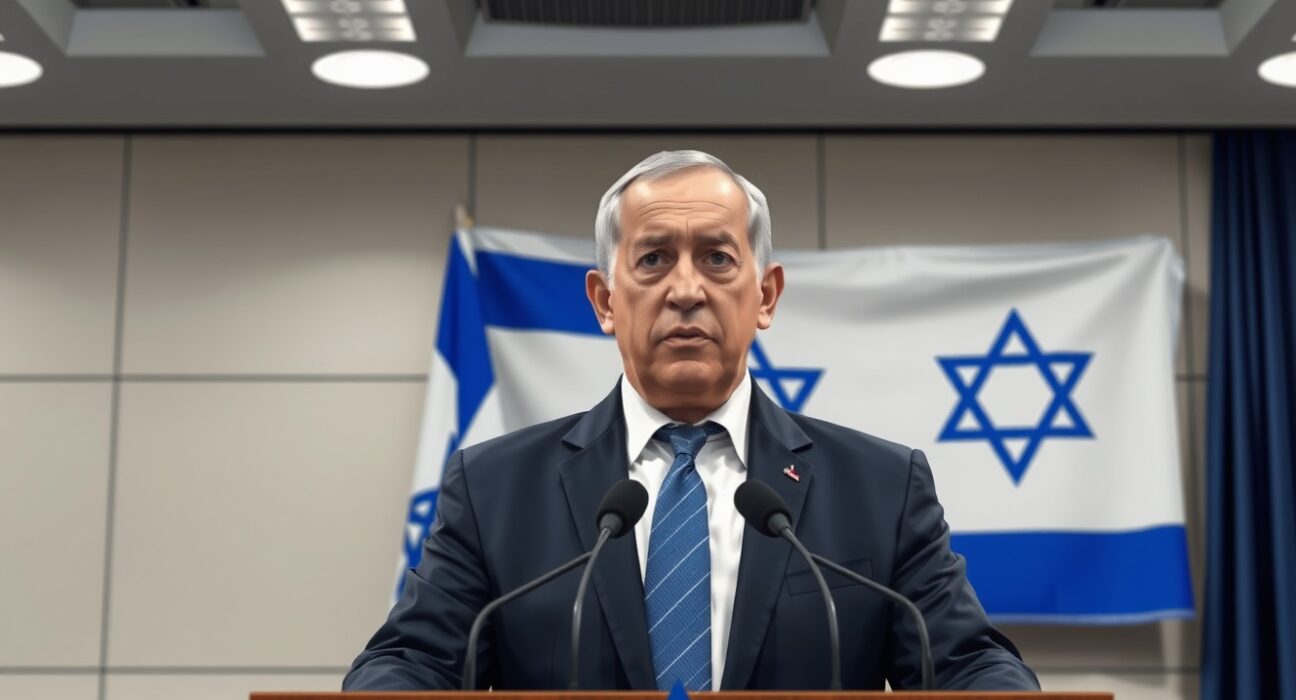
Israeli Defense Minister Israel Katz has stated that military action against Iran may become necessary soon to counter what he describes as an existential threat. The statement, reported by Israeli media on April 30, 2025, signals a potential escalation in the long-running shadow conflict between the two nations. Katz also noted that Israel supports ongoing diplomatic efforts between the United States and Iran, but emphasized that military options remain on the table.
Israel Military Action Against Iran: The Latest Warning
Speaking to reporters in Tel Aviv, Katz framed the threat from Iran as immediate and severe. He highlighted Iran’s nuclear program, ballistic missile development, and support for proxy forces as key concerns. Military action against Iran is not a first resort, Katz said, but it may become unavoidable. This marks one of the most direct warnings from a senior Israeli official in recent months.
Katz’s comments come amid heightened tensions in the region. Iran has enriched uranium to near-weapons-grade levels, according to International Atomic Energy Agency reports. Israel views a nuclear-armed Iran as a direct threat to its existence. The defense minister’s remarks underscore the urgency felt in Jerusalem.
Israel has a history of preemptive strikes. In 1981, it bombed Iraq’s Osirak reactor. In 2007, it struck a suspected Syrian nuclear site. Military action against Iran would follow this pattern, though Iran’s facilities are more dispersed and fortified. Analysts say a strike would likely target nuclear enrichment sites, missile bases, and command centers.
Diplomatic Efforts with the US and Iran
Katz acknowledged that Israel supports US-led diplomatic efforts with Iran. These talks, ongoing in Vienna and Oman, aim to curb Iran’s nuclear program in exchange for sanctions relief. However, Katz expressed skepticism about their effectiveness. He noted that Iran has used previous negotiations to advance its nuclear capabilities.
The United States has maintained a dual-track approach: diplomacy backed by military deterrence. Washington has deployed additional naval assets to the Persian Gulf. This posture aims to pressure Iran while offering a path to de-escalation. Israel’s public support for diplomacy may be strategic, allowing it to claim it exhausted peaceful options before resorting to force.
European powers, including France, Germany, and the UK, have also engaged in talks. They seek a new agreement that addresses Iran’s ballistic missile program and regional activities. Military action against Iran would likely collapse these negotiations, raising the stakes for all parties.
Timeline of Tensions: 2023–2025
- 2023: Iran accelerates uranium enrichment to 60% purity. Israel conducts covert operations against Iranian nuclear facilities.
- 2024: US and Iran hold indirect talks in Oman. Israel strikes Iranian-linked targets in Syria. Iran launches drone attacks on Israeli-linked ships.
- 2025: IAEA reports Iran has enough enriched material for multiple bombs. Katz warns of imminent military action. US deploys additional forces to the region.
This timeline shows a steady escalation. Each year has seen more direct confrontations. Military action against Iran would represent a significant escalation, potentially drawing in regional proxies and global powers.
Potential Impacts of Military Action Against Iran
A strike on Iran would have far-reaching consequences. Oil prices could spike, disrupting global markets. Iran may retaliate by attacking US bases in Iraq and Syria, or by targeting Israeli cities with missiles. Hezbollah in Lebanon could open a second front. The Strait of Hormuz, a critical chokepoint for oil shipments, could be disrupted.
Experts at the Institute for National Security Studies in Tel Aviv warn that a limited strike may not destroy Iran’s nuclear program. Iran has dispersed its facilities, buried some deep underground, and hardened others. Military action against Iran would likely require multiple waves of strikes over days or weeks.
Iran’s response could be asymmetric. It could increase attacks on US and Israeli targets via proxies in Yemen, Iraq, and Syria. It could also accelerate its nuclear program, expelling IAEA inspectors and withdrawing from the Non-Proliferation Treaty. This would make future diplomacy even harder.
Expert Analysis: Is Military Action Inevitable?
Dr. Emily Landau, a senior fellow at the Institute for National Security Studies, argues that Israel faces a strategic dilemma. Military action against Iran carries risks, but inaction may allow Iran to develop a nuclear weapon. She notes that Israel’s window for effective action is narrowing as Iran’s nuclear program matures.
Other analysts point to the success of covert operations, including cyberattacks and assassinations of Iranian nuclear scientists. These methods have delayed Iran’s progress without triggering a full-scale war. However, Katz’s statement suggests that covert means may no longer be sufficient.
The US position remains critical. Washington has not publicly endorsed Israeli military action. A strike without US approval could strain bilateral relations. However, the US has provided Israel with bunker-busting bombs and refueling aircraft, signaling tacit support for a possible operation.
Regional Reactions and Diplomatic Fallout
Arab states, including Saudi Arabia and the UAE, have normalized relations with Israel through the Abraham Accords. They view Iran as a common threat. However, they may not support open conflict. A war could destabilize their economies and provoke domestic unrest.
Russia and China have called for restraint. Both have veto power on the UN Security Council. They could block any resolution authorizing force. Military action against Iran would likely face international condemnation, especially if it causes civilian casualties.
Iran has warned of a “crushing response” to any attack. Its military doctrine emphasizes deterrence through retaliation. Iran has invested heavily in missile technology and drone warfare. It has also armed proxy forces in Lebanon, Yemen, and Syria, creating a network capable of striking Israeli and US assets.
Conclusion
Israeli Defense Minister Israel Katz’s warning that military action against Iran may be necessary soon underscores the high stakes in the Middle East. With Iran’s nuclear program advancing and diplomacy stalling, Israel faces a difficult choice. The coming weeks will reveal whether diplomatic efforts can succeed or whether the region will face a new conflict. For now, the world watches as Israel signals its readiness to act.
FAQs
Q1: Why is Israel considering military action against Iran?
Israel views Iran’s nuclear program as an existential threat. Iran has enriched uranium to near-weapons-grade levels and has the technology to build a bomb. Israel believes diplomacy has not stopped Iran’s progress.
Q2: What did Israeli Defense Minister Israel Katz say?
Katz said that military action against Iran may become necessary soon. He added that Israel supports US-led diplomatic efforts but warned that time is running out.
Q3: How would Iran respond to an Israeli attack?
Iran would likely retaliate with missile strikes on Israeli cities, attacks on US bases in the region, and disruption of oil shipping through the Strait of Hormuz. It could also escalate its nuclear program.
Q4: What is the US role in this situation?
The US is leading diplomatic efforts with Iran while also deploying military assets to the region. Washington has not publicly endorsed Israeli military action but has provided support through arms sales and intelligence sharing.
Q5: Could military action against Iran succeed?
Experts are divided. A strike could delay Iran’s nuclear program but may not destroy it entirely. Iran has hardened and dispersed its facilities. A broader conflict could have severe regional and global consequences.
Disclaimer: The information provided is not trading advice, Bitcoinworld.co.in holds no liability for any investments made based on the information provided on this page. We strongly recommend independent research and/or consultation with a qualified professional before making any investment decisions.
