
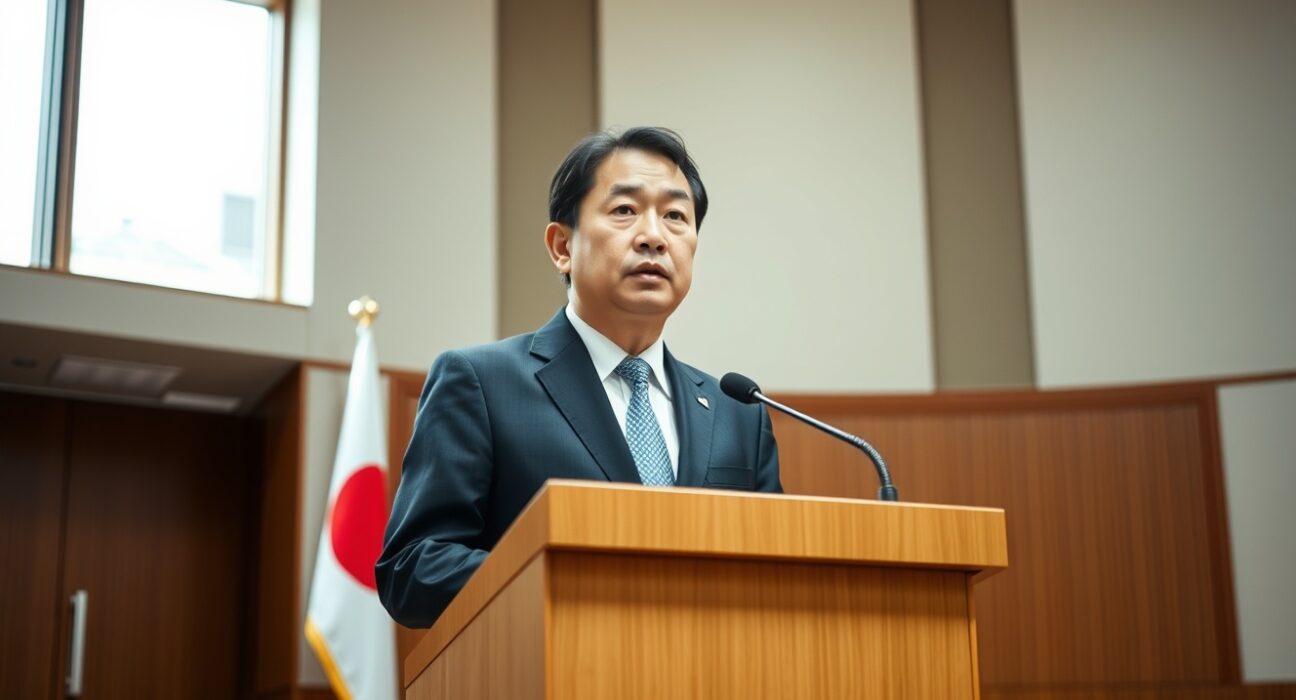
TOKYO, Japan – Finance Minister Shunichi Katayama has announced a crucial plan to compile an 11-day temporary budget, ensuring government operations continue without interruption amid legislative delays. This emergency fiscal measure represents a strategic response to parliamentary gridlock that threatens Japan’s administrative continuity. The temporary budget will cover essential government functions during a critical transition period, preventing potential shutdown scenarios that could destabilize the world’s third-largest economy.
Japan’s Temporary Budget Plan Explained
Minister Katayama’s proposal addresses an immediate fiscal challenge facing the Japanese government. The 11-day temporary budget, often called a “stopgap” or “continuing resolution,” will maintain funding for essential services. This measure becomes necessary when the regular annual budget faces approval delays in the National Diet. Consequently, government agencies can continue operations without legal or financial interruption. The Finance Ministry has prepared detailed allocation charts showing how funds will be distributed across ministries during this brief period.
Historically, Japan has utilized temporary budgets during political transitions or legislative impasses. However, the specific 11-day duration indicates precise parliamentary scheduling considerations. Government officials emphasize that this measure represents standard fiscal management rather than crisis response. Meanwhile, opposition parties are reviewing the proposal’s specific allocations before providing their position on the temporary funding mechanism.
Political Context and Legislative Process
The need for temporary budgeting stems from Japan’s complex legislative calendar and political dynamics. The regular budget process involves multiple committees, debates, and votes in both parliamentary chambers. When consensus proves elusive or scheduling conflicts emerge, temporary measures ensure governmental stability. Minister Katayama, a seasoned fiscal policy expert, has previously managed similar situations during his tenure. His announcement follows extensive consultations with ruling coalition partners and opposition representatives.
Expert Analysis of Fiscal Implications
Economic analysts note that temporary budgets typically maintain existing spending levels without introducing new policy initiatives. “This 11-day measure represents procedural necessity rather than substantive fiscal change,” explains Dr. Kenji Tanaka, professor of public finance at Tokyo University. “The Japanese system has well-established mechanisms for such interim funding, ensuring minimal disruption to public services and economic stability.” Government data shows Japan has implemented 15 similar temporary budgets since 2000, with durations ranging from 5 to 30 days.
Comparative analysis reveals Japan’s approach aligns with international practices. For instance, the United States frequently uses continuing resolutions during budget negotiations. However, Japan’s parliamentary system typically produces faster resolutions than the American congressional process. The charts accompanying Katayama’s announcement detail specific allocations across key areas:
- Social Security: Full continuity of pension and healthcare payments
- Public Safety: Uninterrupted police and emergency services
- Infrastructure: Maintenance of transportation and utilities
- Education: Continued operation of public schools
- Defense: Standard military and security operations
Economic Impact and Market Response
Financial markets have responded neutrally to the temporary budget announcement. The Nikkei index showed minimal movement following Katayama’s statement, indicating investor confidence in Japan’s fiscal management. Bond markets similarly maintained stability, with 10-year government bond yields remaining within normal ranges. This calm response reflects market understanding of Japan’s institutional strength in managing budgetary transitions.
International observers note that Japan’s fiscal credibility remains intact despite the temporary measure. Credit rating agencies have previously affirmed Japan’s sovereign ratings, citing strong institutional frameworks. The temporary budget’s limited duration and specific purpose prevent concerns about long-term fiscal discipline. Furthermore, the Bank of Japan’s monetary policy coordination ensures financial system stability during such transitions.
Historical Precedents and Comparative Context
Japan’s current situation mirrors previous episodes where legislative processes required interim funding solutions. In 2019, a 15-day temporary budget facilitated smooth transition between fiscal years. Similarly, 2008 saw a 10-day measure during global financial crisis responses. Each instance maintained government operations without significant disruption. Comparative analysis shows Japan’s approach proves more streamlined than many parliamentary democracies, where temporary budgets sometimes extend for months.
The following table illustrates recent Japanese temporary budgets:
| Year | Duration | Primary Reason |
|---|---|---|
| 2025 | 11 days | Legislative scheduling |
| 2019 | 15 days | Fiscal year transition |
| 2014 | 8 days | Election period |
| 2008 | 10 days | Crisis response |
Administrative Implementation Challenges
Government agencies have prepared detailed implementation plans for the 11-day period. These plans ensure seamless service delivery despite the temporary funding mechanism. Ministry officials report standard operating procedures exist for such scenarios, minimizing administrative burden. Additionally, the Finance Ministry has established communication channels with all departments to address any implementation questions promptly.
Local governments also receive guidance regarding national funding during the temporary budget period. Prefectural governors have confirmed readiness to maintain services using existing resources and anticipated allocations. This coordinated approach reflects Japan’s strong intergovernmental coordination mechanisms. Moreover, public communication strategies ensure citizens understand service continuity throughout the temporary funding period.
Conclusion
Finance Minister Katayama’s 11-day temporary budget plan demonstrates Japan’s institutional resilience in maintaining governmental continuity. This measured response to legislative scheduling challenges ensures stable public services and economic operations. The temporary budget represents standard fiscal management within Japan’s democratic processes rather than emergency measures. As the National Diet continues deliberating the full annual budget, this interim solution provides necessary stability for the world’s third-largest economy. Japan’s temporary budget approach offers valuable insights for other democracies managing similar legislative-executive coordination challenges.
FAQs
Q1: Why does Japan need an 11-day temporary budget?
The temporary budget ensures government operations continue without interruption while the National Diet completes deliberations on the full annual budget. This prevents potential service disruptions during legislative processes.
Q2: How does a temporary budget differ from a regular budget?
A temporary budget maintains existing spending levels for essential services without introducing new policy initiatives or significant allocation changes. It serves as a short-term funding mechanism rather than a comprehensive fiscal plan.
Q3: Will public services be affected during the 11-day period?
No, all essential public services including healthcare, education, transportation, and safety will continue normally. Government agencies have implementation plans ensuring seamless service delivery.
Q4: How often does Japan use temporary budgets?
Japan has implemented 15 temporary budgets since 2000, typically during legislative transitions or scheduling challenges. These are standard procedural tools rather than emergency measures.
Q5: What happens after the 11-day temporary budget expires?
The government expects the National Diet to approve the full annual budget before the temporary measure expires. If additional time proves necessary, another temporary budget or extension could be considered through established legislative processes.
Disclaimer: The information provided is not trading advice, Bitcoinworld.co.in holds no liability for any investments made based on the information provided on this page. We strongly recommend independent research and/or consultation with a qualified professional before making any investment decisions.