

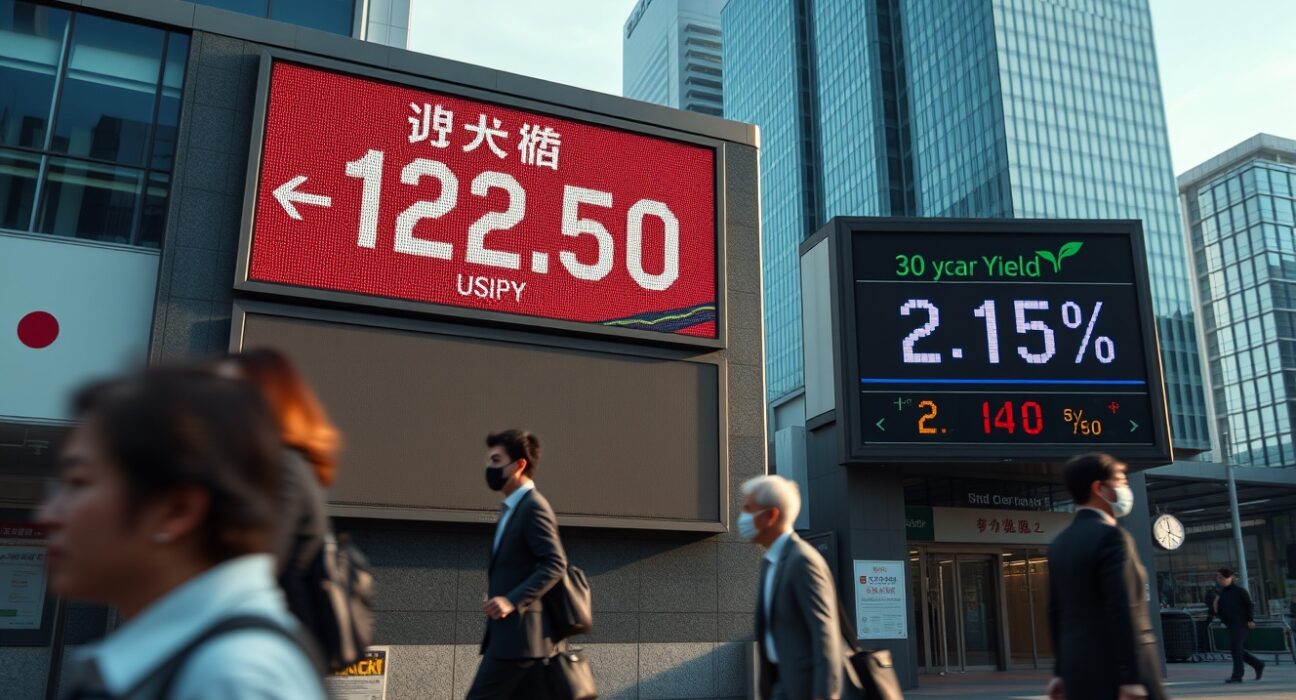
The Japanese yen continues to face downward pressure against the U.S. dollar, even as yields on 30-year Japanese government bonds (JGBs) climb to levels not seen in three decades. The divergence highlights the persistent challenge of high import costs weighing on Japan’s trade balance and currency markets.
JGB Yields Rise, But Yen Fails to Follow
On Wednesday, the yield on the 30-year JGB touched 2.15%, its highest point since 1995, reflecting expectations of further monetary policy normalization by the Bank of Japan (BOJ). However, the yen weakened past the 152 mark against the dollar, moving in the opposite direction of what traditional bond market dynamics would suggest.
Typically, rising domestic bond yields attract foreign capital and support the local currency. But in Japan’s case, the persistent current account deficit driven by soaring energy and raw material import costs is overwhelming the yield advantage. Japan imports nearly all of its fossil fuels, and the weak yen itself makes those imports more expensive, creating a self-reinforcing cycle.
Import Costs and the Trade Deficit
Japan’s trade deficit has widened sharply in recent months, with import costs surging due to elevated global commodity prices and a yen that has lost nearly 30% of its value against the dollar since early 2022. The Ministry of Finance reported that the value of imports rose 12% year-on-year in the latest data, outpacing export growth.
This structural imbalance means that Japanese corporations and households are selling yen to pay for foreign-denominated energy and raw material bills, increasing supply of the currency in global markets. The BOJ’s cautious approach to interest rate hikes—aimed at avoiding shocks to the heavily indebted government and corporate sector—has also limited the yen’s upside.
What This Means for Japanese Consumers and Businesses
For Japanese households, the weak yen translates directly into higher prices for imported food, fuel, and everyday goods. Core consumer inflation has remained above the BOJ’s 2% target for over a year, squeezing real wages and household spending. Small and medium-sized businesses, which lack the pricing power of large exporters, are particularly vulnerable to rising input costs.
Exporters like Toyota and Sony benefit from a weaker yen when repatriating overseas profits, but the broader economy is feeling the strain. The government has introduced subsidies to cushion the blow, but these are temporary measures that do not address the underlying currency dynamics.
Conclusion
The divergence between rising JGB yields and a weakening yen underscores the complexity of Japan’s current economic position. While higher yields signal market expectations of tighter BOJ policy, the overwhelming force of high import costs and a persistent trade deficit continues to drive the yen lower. Investors and policymakers are watching closely for any shift in BOJ rhetoric or intervention by the Ministry of Finance to stabilize the currency. For now, the yen’s path appears tied more to Japan’s energy bill than to its bond market.
FAQs
Q1: Why is the yen weakening if JGB yields are rising?
Rising JGB yields usually support a currency, but Japan’s large trade deficit—driven by high import costs for energy and raw materials—creates more yen-selling pressure than the yield advantage can offset.
Q2: How do high import costs affect the Japanese yen?
Japan imports most of its fossil fuels. When import costs rise, Japanese companies and consumers must sell more yen to buy foreign currency to pay for those imports, increasing supply of the yen and pushing its value down.
Q3: Could the Bank of Japan intervene to support the yen?
The BOJ and Ministry of Finance have intervened in the past when the yen moved too rapidly. However, intervention is typically used to curb volatility rather than to set a specific exchange rate level, and its effects are often temporary.
Disclaimer: The information provided is not trading advice, Bitcoinworld.co.in holds no liability for any investments made based on the information provided on this page. We strongly recommend independent research and/or consultation with a qualified professional before making any investment decisions.
