

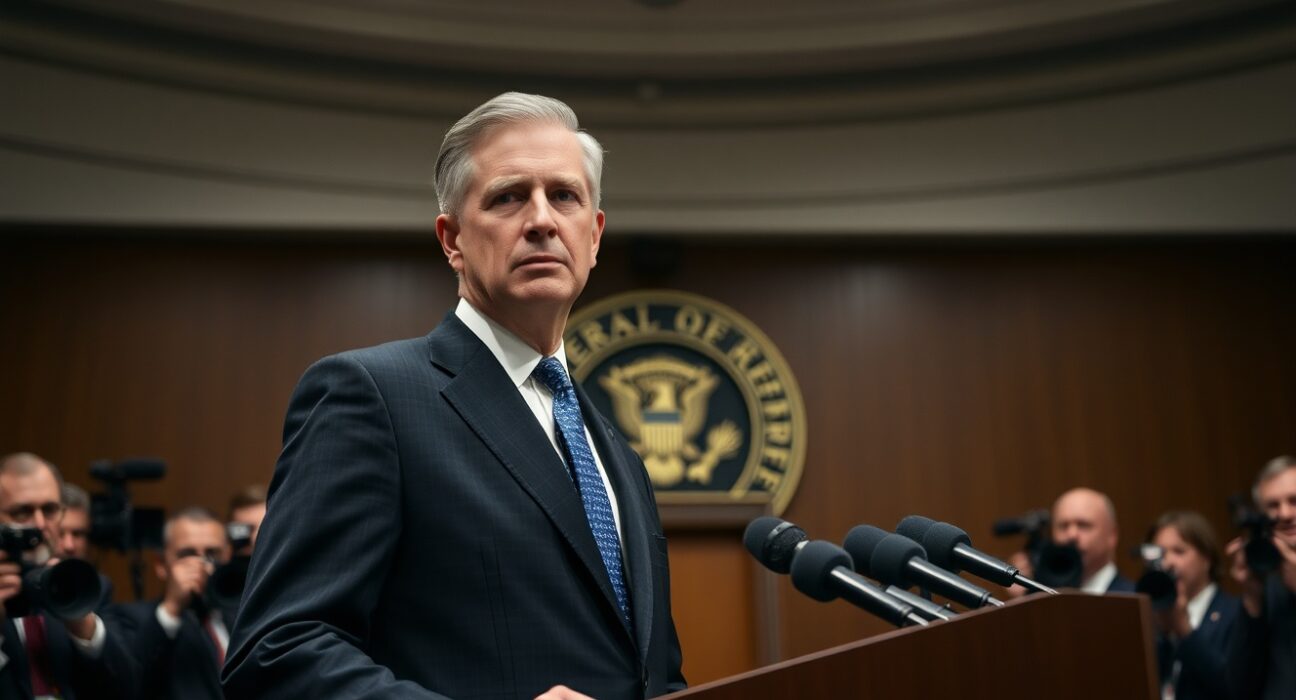
The Federal Reserve, under the leadership of Chair Jerome Powell, has decided to hold interest rates steady. This decision comes amid a complex economic landscape. The central bank signals a cautious approach to future monetary policy. Markets now focus on Powell’s outlook for inflation and growth.
Federal Reserve Holds Interest Rates Steady: A Detailed Analysis
On [Date of meeting], the Federal Open Market Committee (FOMC) voted unanimously to maintain the federal funds rate at its current range. This range sits between 5.25% and 5.50%. This marks the highest level in over two decades. The decision aligns with market expectations. Many analysts predicted a pause after aggressive rate hikes.
The central bank’s statement highlighted ongoing concerns. Inflation remains above the 2% target. Economic activity continues to expand at a solid pace. Job gains have moderated but remain strong. The Fed emphasizes it needs greater confidence that inflation is moving sustainably toward 2% before cutting rates.
Chair Powell’s press conference provided crucial context. He stated the economy is making progress. However, the path forward is not guaranteed. He noted that the risks of cutting rates too soon versus too late are now more balanced. This shift in language is significant. It suggests the Fed is moving closer to a potential rate cut later in 2024 or 2025.
Jerome Powell’s Economic Outlook: Key Takeaways
During the press conference, Chair Powell addressed several key themes. He discussed the strength of the labor market. He also touched on the trajectory of inflation. Powell emphasized that policy is well-positioned to handle various economic outcomes. He reiterated the data-dependent approach.
Key points from Powell’s remarks:
- Inflation: Recent readings show modest further progress. The Fed needs to see more good data before easing policy.
- Labor Market: The job market remains strong but is cooling gradually. Wage growth is slowing, which could help reduce service-sector inflation.
- Economic Growth: GDP growth remains solid. Consumer spending is resilient, but there are signs of strain among lower-income households.
- Rate Cuts: A rate cut at the next meeting is not likely. The Fed needs to see a sustained pattern of improving inflation data.
Powell avoided giving a specific timeline for rate cuts. He stressed the committee’s patience. This cautious tone aims to manage market expectations. It prevents premature easing of financial conditions.
Impact on Financial Markets and the Economy
The decision to hold rates steady had immediate effects on financial markets. Stock prices initially rose on the news. Bond yields fell slightly. The US dollar weakened against a basket of currencies. These moves reflect investor optimism that the Fed is done hiking.
However, Powell’s cautious outlook tempered some enthusiasm. Markets now price in a higher probability of a rate cut in September or December 2024. The timing remains uncertain. It depends entirely on incoming economic data.
Market reactions in summary:
| Asset Class | Initial Reaction | Key Driver |
|---|---|---|
| US Stocks (S&P 500) | Positive (+0.5%) | No rate hike, dovish tone |
| US Treasury 10-Year Yield | Declined to 4.30% | Lower rate expectations |
| US Dollar Index (DXY) | Fell 0.3% | Weaker rate outlook |
| Gold | Rose 0.8% | Weaker dollar, lower yields |
The broader economy faces a mixed picture. High borrowing costs continue to weigh on housing and business investment. Consumer spending remains a bright spot. However, credit card debt and delinquencies are rising. The Fed’s goal is to achieve a soft landing. This means taming inflation without causing a recession.
Historical Context of the Fed’s Rate Cycle
This current rate-hold period is the longest since the tightening cycle began in March 2022. The Fed has raised rates 11 times. Total cumulative tightening amounts to 525 basis points. This is the most aggressive cycle since the early 1980s.
Historical data shows that the Fed often holds rates at their peak for several months. This pause allows policymakers to assess the lagged effects of previous hikes. The economy often takes 12 to 18 months to fully absorb monetary tightening. The current pause reflects this standard practice.
Comparison with previous cycles:
- 1994-1995: Fed held rates for 5 months after final hike. Soft landing achieved.
- 2004-2006: Fed held rates for 12 months. Housing bubble formed.
- 2015-2018: Fed held rates for 8 months. Trade tensions emerged.
- 2022-2024: Current cycle. Outcome still uncertain.
The current situation has unique features. Post-pandemic inflation was supply-driven. Labor shortages persist. Geopolitical risks are elevated. These factors make the Fed’s job particularly challenging.
Expert Perspectives and Economic Forecasts
Economists offer a range of views on the Fed’s next move. Some argue that inflation is sticky. They believe rate cuts could reignite price pressures. Others point to slowing growth. They advocate for early easing to prevent a recession.
Former Fed officials have weighed in. Some suggest the Fed should cut rates soon. Others advise patience. The consensus among Wall Street economists is for two rate cuts in 2024. However, this forecast is highly uncertain.
Key economic indicators to watch include:
- Consumer Price Index (CPI): Next release on [Date]. Expected to show modest decline.
- Personal Consumption Expenditures (PCE): The Fed’s preferred inflation gauge.
- Nonfarm Payrolls: Monthly jobs report. Key for labor market health.
- Retail Sales: Measure of consumer spending strength.
Powell emphasized that the Fed will not be swayed by short-term data. The committee will look for a sustained trend. This data-dependent approach means every economic release will be scrutinized.
Conclusion: What the Fed’s Steady Hand Means for You
Chair Jerome Powell’s decision to hold interest rates steady signals a cautious and deliberate approach. The Federal Reserve prioritizes achieving its dual mandate: maximum employment and stable prices. The path to rate cuts remains uncertain. It hinges on consistent progress on inflation.
For consumers, this means borrowing costs will remain high. Mortgage rates, credit card rates, and auto loan rates will stay elevated. Savers benefit from higher yields on savings accounts and CDs. Investors should prepare for continued market volatility.
The Fed’s steady hand aims to balance risks. It avoids the mistake of easing too early. It also avoids keeping policy too tight for too long. The coming months will be critical. They will determine whether the economy achieves a soft landing or faces a downturn.
FAQs
Q1: Why did the Federal Reserve hold interest rates steady?
The Fed held rates steady to assess the impact of previous rate hikes. It needs more confidence that inflation is sustainably moving toward its 2% target before considering cuts.
Q2: When will the Fed start cutting interest rates?
Chair Powell did not provide a specific timeline. The timing depends on incoming economic data, particularly inflation and labor market reports. Most analysts expect cuts later in 2024 or early 2025.
Q3: How does the Fed’s decision affect mortgage rates?
Mortgage rates are influenced by the Fed’s policy but are not directly set by it. The decision to hold rates steady helps keep long-term bond yields stable. However, mortgage rates remain high, near 7% for a 30-year fixed loan.
Q4: What is the Fed’s inflation target?
The Federal Reserve targets a 2% inflation rate as measured by the Personal Consumption Expenditures (PCE) price index. Current inflation is above this target, prompting the Fed to maintain a restrictive policy stance.
Q5: Will the Fed’s decision cause a recession?
The Fed aims for a soft landing, where inflation falls without a major economic downturn. While risks of a recession exist, the economy remains resilient. The outcome depends on future data and global economic conditions.
Disclaimer: The information provided is not trading advice, Bitcoinworld.co.in holds no liability for any investments made based on the information provided on this page. We strongly recommend independent research and/or consultation with a qualified professional before making any investment decisions.
