
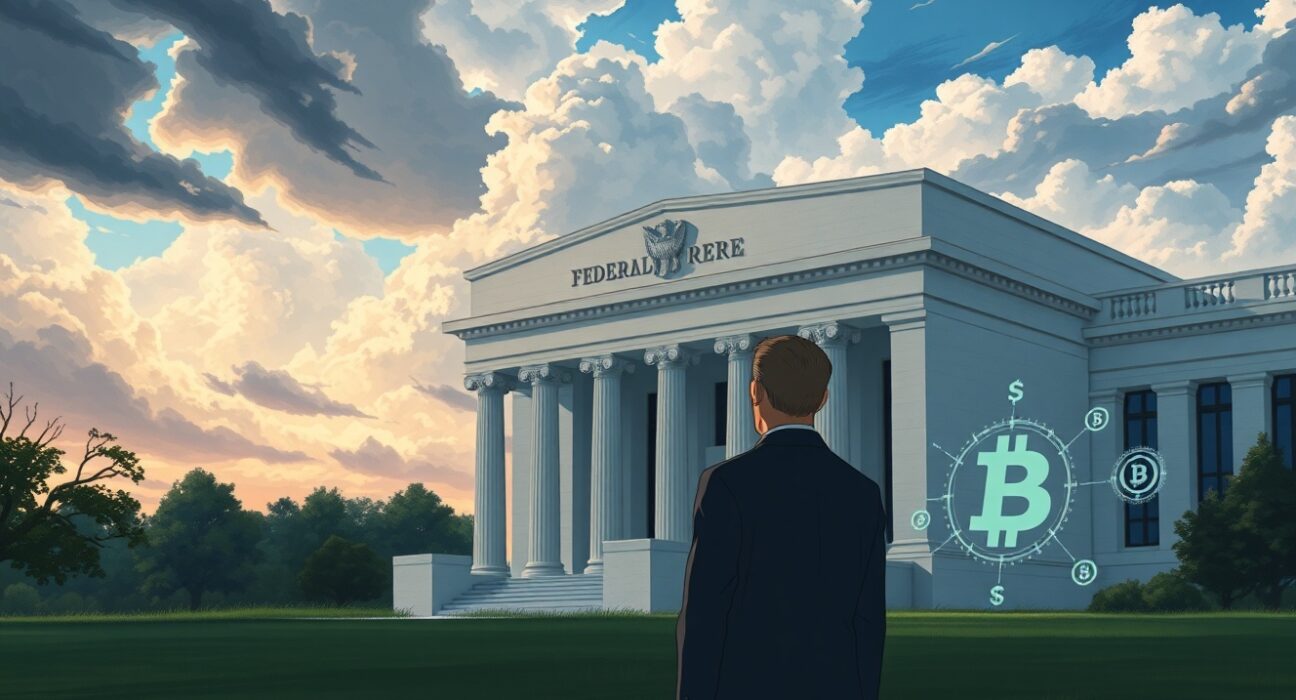
WASHINGTON, D.C. – In a move that could redefine U.S. monetary policy for years, President Donald Trump has nominated former Federal Reserve Governor Kevin Warsh to lead the central bank, immediately igniting discussions about interest rates, market liquidity, and the future of digital assets. This pivotal nomination, reported by Aggr News and announced via Truth Social, places a noted monetary hawk at the helm of the world’s most influential financial institution during a period of global economic uncertainty. Consequently, markets and policymakers are now scrutinizing Warsh’s extensive record for clues about the Fed’s next chapter.
Kevin Warsh Federal Reserve Chair Nomination: Background and Immediate Reaction
President Trump’s announcement positions Kevin Warsh for a return to the Federal Reserve, where he served as a Governor from 2006 to 2011. In his social media statement, Trump highlighted Warsh’s “extensive research background in economics and finance,” predicting he would become “one of the greatest Fed Chairs in history.” The financial community received the news with measured analysis, quickly parsing Warsh’s past speeches and policy writings. Furthermore, his reputation as a staunch advocate for central bank independence and fiscal discipline preceded the official nomination, setting the stage for a potentially significant shift in policy direction.
Market analysts immediately began assessing the implications. Historically, Warsh has consistently argued for a rules-based, transparent approach to monetary policy, often expressing concern over prolonged periods of ultra-low interest rates. His academic and professional pedigree, including roles at the White House and Morgan Stanley, provides a foundation of traditional economic expertise. However, his views have also drawn clear lines, particularly regarding newer asset classes like cryptocurrency, which he has reportedly characterized as speculative instruments dependent on loose monetary conditions.
Warsh’s Hawkish Monetary Policy Stance Explained
A deep examination of Kevin Warsh’s public commentary reveals a coherent, long-held philosophy centered on monetary restraint. His hawkish disposition primarily advocates for higher real interest rates and reduced systemic liquidity. This approach aims to combat inflation proactively and maintain the dollar’s long-term value. For instance, during the post-2008 financial crisis era, Warsh often cautioned against the extended use of quantitative easing, warning of potential market distortions and asset bubbles.
This philosophy contrasts with the more accommodative policies seen in recent years. The table below outlines the core differences between a hawkish stance, as typified by Warsh, and a more dovish approach:
| Policy Aspect | Hawkish Stance (Warsh) | Dovish Stance |
|---|---|---|
| Primary Goal | Price stability, inflation control | Maximum employment, growth support |
| Interest Rates | Prefers higher rates to cool economy | Prefers lower rates to stimulate economy |
| Balance Sheet | Advocates for reduction (quantitative tightening) | Accepts expansion (quantitative easing) |
| Risk Focus | Asset bubbles, financial instability | Economic slowdown, deflation |
Therefore, a Warsh-led Fed would likely prioritize tightening financial conditions faster than his predecessors, potentially through:
- Accelerated Rate Hikes: Moving federal funds rates higher to normalize policy.
- Aggressive Balance Sheet Runoff: Actively reducing the Fed’s holdings of Treasury and mortgage-backed securities.
- Forward Guidance Shift: Communicating a lower tolerance for inflation overshoots.
Cryptocurrency Market Braces for Regulatory Scrutiny
The nomination sends a particularly clear signal to the digital asset ecosystem. Kevin Warsh’s reported skepticism of cryptocurrencies as mere speculative vehicles poses a direct challenge to an industry accustomed to a low-rate environment. His argument suggests that digital assets flourished primarily due to abundant cheap capital and would struggle in a regime of higher real interest rates and tighter liquidity. This perspective immediately raises questions about the regulatory and philosophical stance the Fed might adopt under his leadership.
Market data often shows an inverse correlation between crypto valuations and real yield expectations. For example, during past periods of Fed tightening rhetoric, major cryptocurrencies like Bitcoin and Ethereum have frequently experienced heightened volatility. Industry advocates counter that digital assets represent a fundamental technological innovation, not merely a speculative trade. They argue that the asset class is maturing and its value proposition extends beyond monetary policy cycles. Nonetheless, the potential for a less sympathetic ear at the highest level of U.S. monetary policy introduces a new layer of uncertainty for investors and developers alike.
Expert Analysis on the Nomination’s Broader Impact
Economic historians and policy experts are contextualizing this nomination within the Fed’s century-long evolution. “The appointment of a chair with Warsh’s specific hawkish leanings often follows periods of significant monetary expansion,” notes Dr. Alisha Chen, a professor of monetary economics at Stanford University. “The critical question is whether this shift aligns with the underlying economic data on employment, productivity, and wage growth, or if it represents a pre-emptive strike against perceived inflation risks.”
Furthermore, the international dimension cannot be ignored. Other major central banks, including the European Central Bank and the Bank of Japan, may maintain more accommodative postures. A divergence where the U.S. Fed tightens policy more aggressively could lead to a stronger U.S. dollar, impacting global trade dynamics and emerging market debt. This global ripple effect underscores the profound responsibility of the Fed Chair. Past transitions, like the appointment of Paul Volcker in 1979 to combat stagflation, demonstrate how a single leader’s philosophy can reshape the global economic landscape for decades.
Conclusion
President Trump’s nomination of Kevin Warsh as Federal Reserve Chair marks a potential inflection point for American monetary policy. His well-documented hawkish philosophy, emphasizing higher interest rates and reduced liquidity, suggests a decisive move away from the accommodative policies of the recent past. While this could reinforce the Fed’s commitment to price stability and independence, it also introduces volatility for asset classes like cryptocurrencies that benefited from previous conditions. Ultimately, the Senate confirmation process and subsequent policy decisions will determine whether this nomination leads to a new era of monetary restraint and how the economy adapts to this significant change in leadership at the Federal Reserve.
FAQs
Q1: Who is Kevin Warsh and what is his background?
Kevin Warsh is a former Federal Reserve Governor who served from 2006 to 2011. He has a background in economics and law, previously worked at Morgan Stanley, and served as a special assistant to President George W. Bush on economic policy.
Q2: What does a “hawkish” monetary policy mean?
A hawkish monetary policy prioritizes controlling inflation, even at the risk of slowing economic growth. It typically involves advocating for higher interest rates and a reduction in the central bank’s balance sheet to tighten the money supply.
Q3: How could Warsh’s nomination affect the stock market?
Financial markets often react negatively to hawkish signals in the short term, as higher interest rates increase borrowing costs and can reduce corporate profits. However, long-term effects depend on whether the policy successfully ensures stability without causing a recession.
Q4: Why is the cryptocurrency community concerned about this nomination?
Warsh has expressed skepticism that cryptocurrencies have intrinsic value beyond speculation, suggesting their popularity is tied to low-interest-rate environments. His leadership could mean a less favorable regulatory and philosophical stance from the Fed towards digital assets.
Q5: What is the next step in the process for Kevin Warsh to become Fed Chair?
The nomination must be reviewed and confirmed by the U.S. Senate. This involves hearings before the Senate Banking Committee, followed by a vote in the full Senate, where he would need a simple majority to be confirmed.
Disclaimer: The information provided is not trading advice, Bitcoinworld.co.in holds no liability for any investments made based on the information provided on this page. We strongly recommend independent research and/or consultation with a qualified professional before making any investment decisions.