

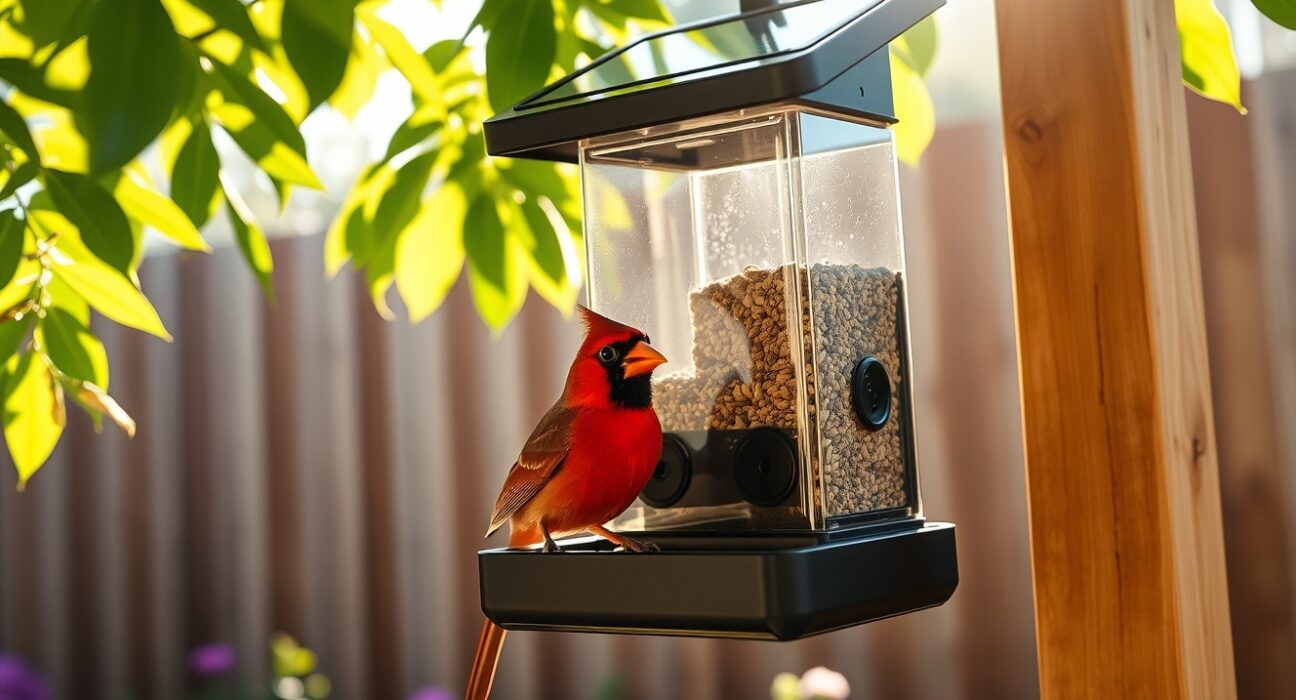
Earlier this month, I installed the Kiwibit Bird Feeder Pro 4K AI Camera in my backyard, and it has quickly become the most anticipated device on my property. Unlike typical bird feeders that simply dispense seed, this one uses artificial intelligence to identify visitors, track activity, and send real-time notifications to your phone. After several weeks of daily use, the experience has been both entertaining and surprisingly educational.
Setup and hardware
Getting the feeder operational took less than 20 minutes. Kiwibit includes multiple mounting options: a pole mount, a window bracket, and a tree strap. I chose a pole near a flowering bush, which attracted birds within hours. The feeder has two separate seed compartments, each with a clear plastic window to monitor levels. Refilling is straightforward — the top lid lifts off, and the compartments slide out for cleaning.
The integrated solar panel on the roof keeps the internal battery charged, so I haven’t had to plug it in once. The camera records in 4K resolution with a 130-degree wide-angle lens, and the housing feels rugged enough to withstand rain and heat. Connectivity relies on 2.4 GHz Wi-Fi, which worked reliably from about 30 feet away through a brick wall. Two-way audio is built in, though I mostly used it to scare away squirrels.
App experience and bird identification
The companion Kiwibit app is where the magic happens. After pairing via QR code, the app began cataloging every bird that landed on the feeder. Within the first week, my phone buzzed with notifications for house sparrows, blue jays, mourning doves, and a striking northern cardinal that now visits every morning like clockwork. As of this writing, the device has recorded six distinct species.
The AI identification engine claims to recognize over 10,000 species, pulling descriptions from Wikipedia. I tested it against a few common birds I could identify myself, and it was accurate each time. The Activity tab provides a running tally of visits, videos, and species observed, with a calendar view to browse past days. The Birds tab offers detailed profiles, including habitat, diet, and song recordings.
One quirk: the system sometimes counts a single bird feeding for several minutes as multiple visits. A house sparrow lingering at the tray might trigger two or three separate notifications, even if it barely moves. This inflates the visit count but doesn’t detract from the overall experience.
Squirrel detection and other surprises
The app includes a ‘nuisance animal detected’ alert, which I receive several times daily. Squirrels have learned to leap onto the feeder from a nearby branch, and the camera captures their acrobatics in crisp 4K. While the two-way audio lets me shoo them away, they usually return within minutes. The detection system works well enough to distinguish between birds and mammals, though it occasionally flags a large blue jay as a potential nuisance.
Why this matters for backyard birdwatching
Smart bird feeders are not new, but the Kiwibit model brings a level of polish that makes the hobby more accessible. For casual users, the app transforms passive observation into an interactive game of species collection. For more serious birders, the detailed logs and identification data could supplement citizen science efforts. The solar panel removes the friction of battery changes, and the 4K footage is clear enough to identify subtle plumage details.
The broader implication is that AI-powered devices are lowering the barrier to entry for nature engagement. People who might never buy binoculars or a field guide are now eagerly checking their phones for the next visitor. That shift could foster greater appreciation for local wildlife, especially in urban and suburban areas where green space is limited.
Conclusion
The Kiwibit Bird Feeder Pro 4K AI Camera delivers on its promise: it is easy to set up, reliable in varied weather, and genuinely fun to use. The AI identification is accurate enough for casual enthusiasts, and the app’s design encourages daily engagement. If you have a backyard, a Wi-Fi signal, and a curiosity about the birds in your neighborhood, this feeder is worth the investment. Just be prepared for the squirrels — they will find it, too.
FAQs
Q1: Does the Kiwibit Bird Feeder Pro require a subscription?
No, the feeder works without a subscription. Cloud storage for videos is included, though Kiwibit offers a premium plan for extended history and additional features.
Q2: How long does the battery last without sunlight?
The solar panel keeps the battery topped up during the day. In overcast conditions or winter months, the battery lasts approximately 5–7 days before needing a manual charge via USB-C.
Q3: Can the camera see birds at night?
The Kiwibit Bird Feeder Pro does not include night vision. It records only during daylight hours. The camera relies on natural light, so early morning and late evening visits may appear dark.
Disclaimer: The information provided is not trading advice, Bitcoinworld.co.in holds no liability for any investments made based on the information provided on this page. We strongly recommend independent research and/or consultation with a qualified professional before making any investment decisions.
