

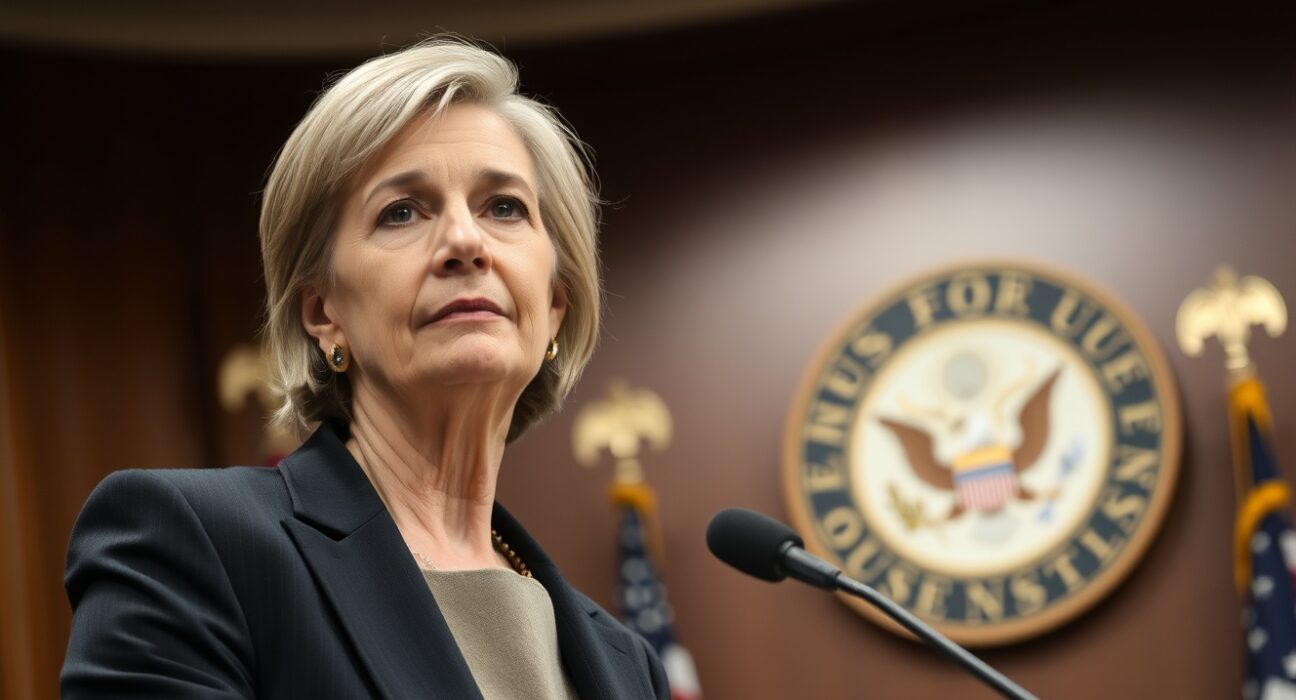
Rep. Maxine Waters, the ranking Democrat on the U.S. House Financial Services Committee, has formally urged the Department of Labor to reconsider a proposed rule that would allow cryptocurrency investments within 401(k) retirement plans. In an 11-page comment letter submitted to the department, Waters argued that permitting digital assets in retirement accounts contradicts the Securities and Exchange Commission’s ongoing efforts to establish investor protections for the crypto market.
Waters Raises Systemic Concerns Beyond Volatility
Waters’ letter, reported by CoinDesk, highlights that the risks associated with crypto assets extend well beyond the price swings of individual tokens. She described a deteriorating situation across the broader crypto ecosystem, citing a collapse in trading volumes, a decline in developer activity, and reduced user engagement. These factors, she argued, create an unpredictable environment unsuitable for the long-term savings of average American workers.
The timing of Waters’ intervention is notable. She is widely viewed as a leading candidate to reclaim the chair of the House Financial Services Committee should Democrats perform well in the November elections. Her position on this issue could signal a more aggressive regulatory posture toward crypto in retirement accounts if her party regains control of the chamber.
Regulatory Clash Over Retirement Protections
The core tension in this debate lies between two federal agencies with overlapping but distinct mandates. The Department of Labor oversees retirement plan fiduciaries and is tasked with ensuring that investment options in 401(k) plans are prudent and in the best interest of participants. The SEC, meanwhile, is responsible for investor protection and market integrity, and has yet to finalize comprehensive rules for crypto assets.
Waters’ argument centers on the inconsistency of approving crypto for retirement plans before the SEC has completed its rulemaking. She contends that allowing such investments now would expose ordinary savers to risks that regulators have not yet addressed, including fraud, custody failures, and market manipulation.
What This Means for Retirement Savers
For the millions of Americans who rely on 401(k) plans as their primary retirement savings vehicle, the outcome of this regulatory dispute carries real consequences. If the Department of Labor proceeds with the rule, plan sponsors could face pressure to offer crypto options, potentially exposing participants to significant losses. If the rule is withdrawn or modified, the pace of crypto adoption in mainstream retirement investing could slow considerably.
The broader implication is that the regulatory framework for digital assets remains fragmented, leaving both investors and plan fiduciaries in a state of uncertainty until the SEC and the Department of Labor align their approaches.
Conclusion
Maxine Waters’ formal objection adds significant political weight to the growing opposition against allowing crypto in 401(k) plans. As the regulatory landscape continues to evolve, the tension between innovation and investor protection remains at the forefront of the debate. The Department of Labor’s response to Waters’ letter will be closely watched by the retirement industry, crypto advocates, and consumer protection groups alike.
FAQs
Q1: What exactly did Maxine Waters ask the Department of Labor to do?
She urged the department to withdraw its proposed rule that would permit cryptocurrency investments in 401(k) retirement plans, arguing it is premature and inconsistent with SEC efforts to protect investors.
Q2: Why does Waters believe crypto is too risky for retirement accounts?
She points to extreme volatility in individual tokens, a broader collapse in trading activity and developer participation, and the lack of finalized SEC protections against fraud and market manipulation.
Q3: How might this affect the average 401(k) participant?
If the rule proceeds, plan sponsors may offer crypto options, exposing participants to high-risk assets. If withdrawn, crypto adoption in retirement plans could slow, preserving more traditional, lower-risk investment choices.
Disclaimer: The information provided is not trading advice, Bitcoinworld.co.in holds no liability for any investments made based on the information provided on this page. We strongly recommend independent research and/or consultation with a qualified professional before making any investment decisions.
