
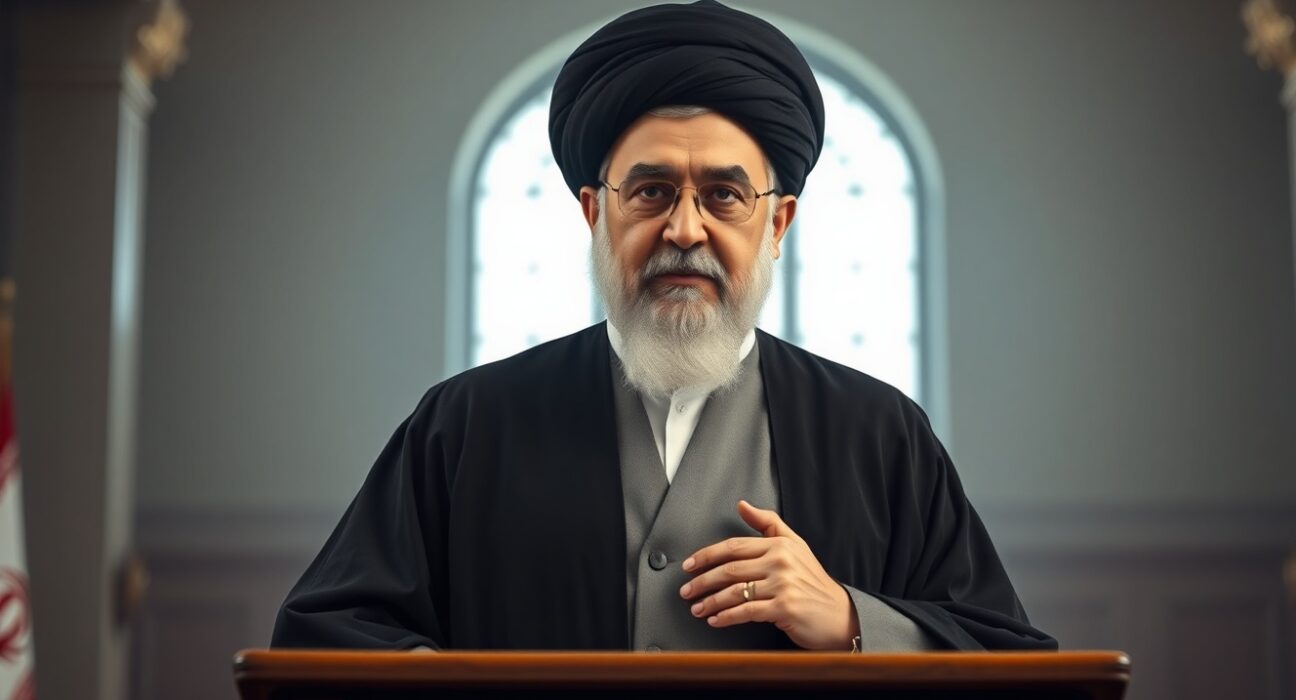
TEHRAN, Iran – Supreme Leader Mojtaba Khamenei will soon deliver a pivotal national address, confirmed by the Tasnim News Agency. This speech will directly cover the recent war situation and solemnly mark the 40th day of mourning for a deceased high-ranking revolutionary figure. Consequently, regional observers and analysts await the address with intense focus. The announcement arrives during a period of significant regional tension and internal reflection for the Islamic Republic.
Mojtaba Khamenei Speech: Context and Immediate Significance
The impending address by Supreme Leader Mojtaba Khamenei carries substantial weight for both domestic and international audiences. Firstly, the Tasnim News Agency, known for its close ties to Iran’s Islamic Revolutionary Guard Corps (IRGC), broke the initial news. Therefore, the announcement itself signals the speech’s official importance. Traditionally, major policy statements and strategic directions emanate from the Supreme Leader’s office. Furthermore, the explicit mention of the “recent war situation” suggests the speech will provide Iran’s authoritative stance on ongoing regional conflicts. These conflicts potentially involve proxy engagements or direct confrontations impacting Iranian strategic interests.
Simultaneously, the commemoration of the 40th day of mourning, known as “Arba’een” in Shia Islamic tradition, adds a profound cultural and religious layer. This period represents a significant milestone for remembrance. The deceased figure’s high rank within the revolutionary establishment implies the event will fuse national security discourse with revolutionary legacy. Such a combination often reinforces ideological continuity for the state.
Analyzing the Recent War Situation in Regional Context
To understand the potential content of Khamenei’s address, one must examine the broader regional landscape. The term “recent war situation” remains deliberately broad in official statements. However, analysts typically reference several active theaters. For instance, the ongoing tensions between Israel and Iranian-aligned groups in Syria and Lebanon represent a persistent flashpoint. Additionally, the conflict in Yemen, where Iran supports the Houthi movement, continues to affect regional shipping and diplomacy. Moreover, sporadic exchanges between Iran and Israel, including alleged covert actions and cyber operations, contribute to a volatile environment.
The following table outlines key regional conflicts where Iran holds a stated or operational interest:
| Conflict Theater | Primary Iranian-Aligned Actors | Recent Developments (2024-2025) |
|---|---|---|
| Israel-Hezbollah Front | Hezbollah (Lebanon) | Cross-border strikes have increased in frequency and scale. |
| Yemen Civil War | Houthi Movement (Ansar Allah) | Houthi attacks on shipping in the Red Sea continue despite international pressure. |
| Syrian Conflict | IRGC Quds Force, Syrian Government | Israeli airstrikes on IRGC positions have reportedly intensified. |
Khamenei’s speech will likely address these theaters. It may reaffirm Iran’s support for its “Axis of Resistance” partners. Conversely, it could signal a desire for calibrated de-escalation, depending on internal assessments. The international community will parse his wording for signals regarding diplomatic overtures or military posture.
Historical Precedent and Strategic Messaging
Historically, speeches by Iran’s Supreme Leader during times of conflict serve multiple strategic purposes. They are designed to:
- Unify Domestic Audiences: They often rally national sentiment and present external threats as challenges to the revolution’s ideals.
- Signal to Allies: They reassure proxy and allied groups of Tehran’s continued political and material support.
- Deter Adversaries: The rhetoric can communicate red lines and the potential costs of confrontation.
- Legitimize Policy: They provide the ideological and strategic rationale for state actions, linking them to revolutionary principles.
Therefore, Khamenei’s upcoming address is not merely a commentary. It is a core instrument of statecraft. The fusion with a mourning ceremony deepens its emotional resonance for the domestic population. It connects current geopolitical struggles to a legacy of sacrifice, a recurring theme in Iranian revolutionary narrative.
The Significance of the 40th Day Mourning Ritual
The 40th-day memorial, or “Chehelom,” holds deep significance in Shia Islam, particularly within Iranian culture. It marks the end of the primary mourning period. Commemorations for senior revolutionary figures are inherently political events. They reinforce the foundational narratives of the Islamic Republic. The identity of the deceased figure, while not named in the initial Tasnim report, is crucial. High-ranking figures could include senior IRGC commanders, influential clerics, or founders of the revolutionary state. Their passing represents a tangible link to the 1979 revolution’s generation.
By incorporating this mourning rite into a speech about war, Khamenei performs a symbolic act. He links contemporary military and strategic challenges to the eternal values of the revolution. This act serves to:
- Frame current conflicts as extensions of the original revolutionary struggle.
- Honor the chain of leadership and sacrifice.
- Mobilize public sentiment by appealing to shared religious and national grief.
Such ceremonies often feature public processions and widespread media coverage. They solidify collective memory. Consequently, the speech will likely balance strategic analysis with commemorative reverence. This duality makes the address a multifaceted political event.
Potential Domestic and International Impacts
The ramifications of Supreme Leader Khamenei’s address will unfold across several domains. Domestically, the speech will set the tone for state media and public discourse for weeks. It may influence:
- Economic Policy: Addressing war can impact market confidence and government spending priorities.
- Military Posture: Commands or strategic guidance for the IRGC and regular armed forces.
- Social Cohesion: Calls for unity in the face of external pressure or internal challenges.
Internationally, foreign ministries and intelligence agencies will analyze the transcript meticulously. Key areas of focus will include:
- Tone towards Diplomacy: Is the language confrontational or does it leave room for negotiation?
- Specific Threats or Reassurances: Are any nations or actors named directly?
- Commitment to Proxies: Does the speech promise continued or increased support for allied groups?
The address occurs within a complex global environment. Factors like nuclear negotiations, international sanctions, and shifting alliances form the backdrop. Therefore, Khamenei’s words will be measured against these broader diplomatic and economic contexts. Analysts will seek clues about Iran’s strategic patience or its appetite for risk in the coming months.
Conclusion
The upcoming Mojtaba Khamenei speech represents a critical moment for Iran and the wider Middle East. By addressing the recent war situation alongside a major mourning ceremony, the Supreme Leader will blend strategic directive with ideological commemoration. This speech will provide the most authoritative insight into Iran’s current threat perception and regional strategy. Observers must listen closely not only to the stated policy positions but also to the symbolic and historical references woven throughout. The address will undoubtedly shape the geopolitical landscape, influencing both Iran’s domestic trajectory and its interactions on the world stage. The fusion of immediate security concerns with enduring revolutionary legacy will be its defining feature.
FAQs
Q1: Who is Mojtaba Khamenei?
Mojtaba Khamenei is the Supreme Leader of Iran, the highest political and religious authority in the country. He succeeded his father in the role and holds ultimate command over the armed forces and foreign policy.
Q2: What is the significance of the 40th day of mourning in Iran?
In Shia Islamic tradition, the 40th day after a death (Arba’een or Chehelom) is a major commemorative event. It marks the end of the primary mourning period and is often observed with large gatherings, prayers, and speeches honoring the deceased, especially for prominent figures.
Q3: What is the Tasnim News Agency?
Tasnim News Agency is a semi-official Iranian news outlet known for its close affiliation with the Islamic Revolutionary Guard Corps (IRGC). It is often used to disseminate official announcements and perspectives aligned with the security establishment.
Q4: What “recent war situation” might the speech address?
While unspecified, analysts believe it likely refers to ongoing regional conflicts involving Iranian interests, such as tensions between Israel and Hezbollah, the war in Yemen involving Houthi forces, or the persistent conflict in Syria where Iranian advisors are present.
Q5: How do Supreme Leader speeches influence Iranian policy?
Speeches by the Supreme Leader are considered directives that set the strategic framework for all branches of the Iranian government, including the military, diplomacy, and media. They establish red lines, signal priorities, and provide ideological justification for state actions.
Disclaimer: The information provided is not trading advice, Bitcoinworld.co.in holds no liability for any investments made based on the information provided on this page. We strongly recommend independent research and/or consultation with a qualified professional before making any investment decisions.