
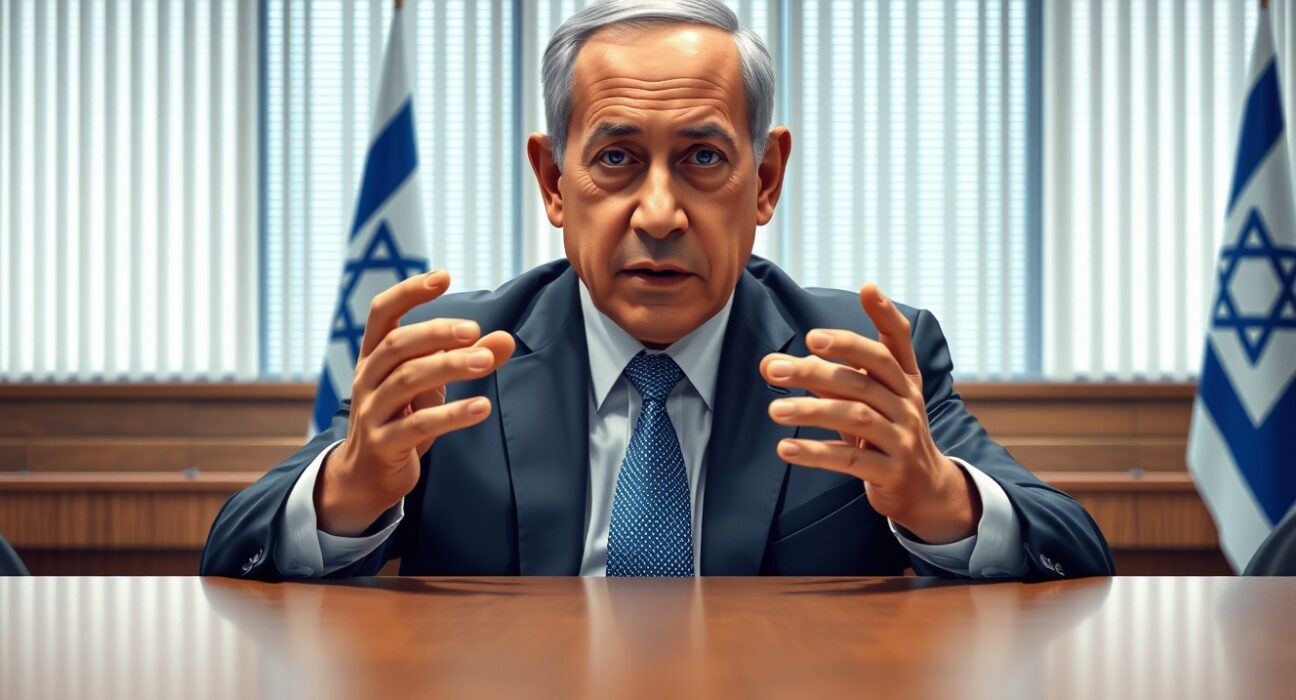
JERUSALEM, March 15, 2025 — Israeli Prime Minister Benjamin Netanyahu has disclosed what he describes as the “core U.S. agenda” regarding Iran’s nuclear program, revealing a policy demanding the complete removal of all enriched nuclear material from Iranian territory. According to Netanyahu, this position was clarified by Vice President Vance and represents President Trump’s definitive approach to preventing Iranian nuclear weapon development. The announcement comes amid heightened regional tensions and represents a significant hardening of Western demands on Tehran’s nuclear activities.
Netanyahu’s Revelation on US Iran Nuclear Policy
During a security briefing in Jerusalem, Prime Minister Netanyahu provided detailed insights into recent communications with the Trump administration. He stated that Vice President Vance explicitly outlined the United States’ primary objective regarding Iran’s nuclear capabilities. Consequently, this policy framework represents the most stringent position articulated by any U.S. administration since negotiations began with Iran over its nuclear program. The Israeli leader emphasized that this approach goes beyond previous agreements and establishes new benchmarks for nuclear non-proliferation in the Middle East.
Specifically, Netanyahu outlined two central components of the U.S. position. First, the complete removal of all enriched uranium from Iranian soil represents a non-negotiable requirement. Second, a comprehensive block on enrichment activities must remain in place for decades. Furthermore, this policy framework addresses what Western intelligence agencies have identified as Iran’s gradual expansion of its nuclear infrastructure despite existing agreements.
Historical Context of Iran Nuclear Negotiations
The current U.S. position emerges from a complex history of diplomatic engagement with Iran. Previously, the Joint Comprehensive Plan of Action (JCPOA) established in 2015 allowed Iran to maintain limited enrichment capabilities under strict monitoring. However, the Trump administration withdrew from this agreement in 2018, reinstating comprehensive sanctions against Tehran. Since that time, Iran has gradually increased its enrichment activities while reducing cooperation with international inspectors.
Several key developments have shaped the current diplomatic landscape:
- 2015: JCPOA signed, limiting Iran to 3.67% enrichment with 300kg cap
- 2018: US withdrawal from agreement and sanctions reimposition
- 2019: Iran begins incremental violations of JCPOA limits
- 2021: Iran enriches uranium to 60% purity, nearing weapons-grade levels
- 2023: IAEA reports insufficient cooperation from Iranian authorities
- 2024: Iran installs advanced centrifuges at multiple facilities
Currently, international estimates suggest Iran possesses sufficient enriched uranium for multiple nuclear weapons if further processed. Additionally, the country has developed increasingly sophisticated centrifuge technology that accelerates enrichment capabilities. These developments have prompted what Netanyahu describes as a “fundamental reassessment” of Western policy approaches.
Technical and Strategic Implications
The demand for complete removal of enriched material represents a significant technical and logistical challenge. Nuclear experts note that Iran’s current stockpile includes various enrichment levels, from 5% to 60% purity. Removing this material would require specialized containers, transportation security, and verification protocols. Moreover, the proposed decades-long enrichment block would necessitate unprecedented monitoring mechanisms and verification technologies.
Several regional security analysts have highlighted the strategic implications of this policy position. First, it establishes a clear red line regarding Iran’s nuclear ambitions. Second, it creates a framework for potential multilateral cooperation among regional actors. Third, it addresses Israel’s longstanding security concerns regarding existential threats from a nuclear-armed Iran. Finally, it represents a departure from previous incremental approaches to nuclear diplomacy.
Regional Reactions and Security Considerations
Regional responses to Netanyahu’s disclosure have varied significantly across Middle Eastern capitals. Saudi Arabia and other Gulf Cooperation Council members have generally welcomed the strengthened U.S. position, viewing it as consistent with their security interests. Conversely, Iranian officials have denounced what they describe as “maximum pressure” tactics that violate previous agreements and international norms.
The Israeli perspective, as articulated by Netanyahu, emphasizes several critical security considerations. Primarily, Israel views any Iranian nuclear capability as an existential threat given Tehran’s frequent calls for Israel’s destruction. Additionally, Israeli intelligence assessments suggest that even a latent nuclear capability could embolden Iranian proxy forces throughout the region. Furthermore, nuclear weapons development could trigger a regional arms race as neighboring states seek comparable capabilities.
| Year | Total Stockpile (kg) | Maximum Enrichment Level | Centrifuges Operating |
|---|---|---|---|
| 2020 | 2,105 | 4.5% | 5,060 |
| 2021 | 2,489 | 60% | 6,200 |
| 2022 | 3,760 | 60% | 7,850 |
| 2023 | 4,215 | 60% | 9,100 |
| 2024 | 5,120 | 60% | 10,500 |
Security experts note that these developments have occurred despite ongoing diplomatic efforts and economic sanctions. The increasing stockpile and advancing enrichment capabilities have consequently prompted what Netanyahu describes as a “necessary recalibration” of Western policy. This recalibration appears to prioritize complete denuclearization over managed containment approaches.
Diplomatic Pathways and Implementation Challenges
The practical implementation of the U.S. agenda presents substantial diplomatic and technical challenges. International nuclear agreements typically involve complex verification regimes, but complete material removal represents an unprecedented demand. Verification would require continuous monitoring of all Iranian nuclear facilities, plus tracking of any previously produced material. Additionally, establishing a decades-long enrichment block would necessitate new legal frameworks and enforcement mechanisms.
Several potential implementation scenarios have emerged from policy discussions. First, a phased removal process could address immediate proliferation concerns while establishing verification protocols. Second, third-party custody arrangements might provide interim solutions for enriched material storage. Third, technological safeguards could supplement physical removal through advanced monitoring systems. Finally, regional security guarantees might accompany nuclear restrictions to address broader stability concerns.
Diplomatic sources indicate that these discussions occur within a broader context of Middle Eastern security architecture. Recent normalization agreements between Israel and several Arab states have created new opportunities for regional cooperation. Simultaneously, concerns about Iranian regional influence continue to shape security calculations across multiple capitals. The intersection of nuclear non-proliferation and broader regional stability consequently defines the current diplomatic landscape.
Expert Analysis and Verification Requirements
Nuclear policy experts emphasize that verification represents the most challenging aspect of any agreement involving complete material removal. The International Atomic Energy Agency (IAEA) maintains extensive experience monitoring nuclear facilities, but tracking all enriched material presents unique difficulties. Historical precedents from South Africa, Libya, and Syria provide relevant case studies, though each situation involved distinct political and technical circumstances.
Verification would likely require several complementary approaches. Environmental sampling could detect undeclared enrichment activities. Satellite monitoring could track facility developments. Inventory audits could account for all nuclear material. Additionally, human intelligence would supplement technical verification measures. The comprehensive nature of the proposed restrictions would consequently demand unprecedented transparency from Iranian authorities.
Conclusion
Prime Minister Netanyahu’s disclosure regarding the U.S. agenda on Iran’s nuclear material represents a significant development in Middle Eastern security policy. The demand for complete removal of enriched uranium and a decades-long enrichment block establishes new parameters for nuclear diplomacy with Iran. This position addresses longstanding proliferation concerns while responding to Iran’s advancing nuclear capabilities. The implementation of this agenda will require complex diplomatic negotiations, robust verification mechanisms, and regional security coordination. As Middle Eastern tensions continue to evolve, the management of Iran’s nuclear program remains a critical issue for international security and regional stability.
FAQs
Q1: What exactly did Netanyahu reveal about US policy on Iran’s nuclear program?
Netanyahu stated that Vice President Vance clarified the US demands for complete removal of all Iran’s enriched nuclear material and a total block on enrichment activities for years or decades, representing President Trump’s core agenda.
Q2: How does this US position differ from previous nuclear agreements with Iran?
This position goes beyond the 2015 JCPOA, which allowed limited enrichment under monitoring, by demanding complete material removal and a long-term enrichment prohibition rather than temporary restrictions.
Q3: What is the current status of Iran’s nuclear program according to international reports?
The IAEA reports Iran has significantly expanded its enriched uranium stockpile to over 5,000 kg, with some enriched to 60% purity, while installing thousands of advanced centrifuges and reducing cooperation with inspectors.
Q4: Why does Israel consider Iran’s nuclear program an existential threat?
Israeli officials cite Iran’s frequent calls for Israel’s destruction, support for anti-Israel militant groups, and development of long-range missile systems that could deliver nuclear weapons if developed.
Q5: What are the main challenges in implementing complete removal of nuclear material?
Key challenges include verification of all material removal, preventing covert enrichment activities, establishing decades-long monitoring systems, and creating enforcement mechanisms for potential violations.
Disclaimer: The information provided is not trading advice, Bitcoinworld.co.in holds no liability for any investments made based on the information provided on this page. We strongly recommend independent research and/or consultation with a qualified professional before making any investment decisions.