
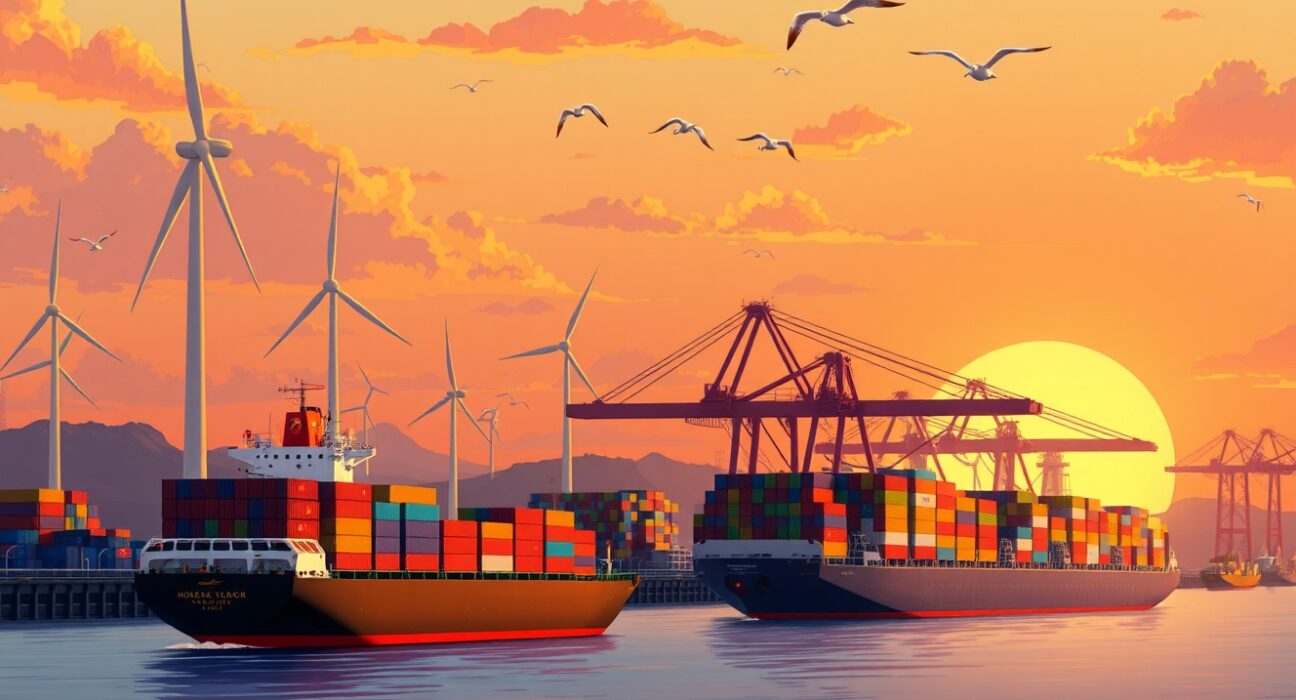
AMSTERDAM, Netherlands – March 2025: Dutch banking giant ABN AMRO has significantly upgraded its growth outlook for the Netherlands, pointing to unexpectedly robust export performance as the primary driver. This revised forecast arrives amid shifting global trade patterns and positions the Dutch economy as a relative bright spot within the Eurozone. Consequently, analysts are now scrutinizing the resilience of key sectors and the sustainability of this export momentum.
Netherlands Economic Growth: Decoding ABN AMRO’s Revised Forecast
ABN AMRO’s latest quarterly economic report presents a notably more optimistic view than previous assessments. The bank now projects the Dutch Gross Domestic Product (GDP) to expand by approximately 1.8% in 2025, a meaningful upward revision from earlier estimates. This adjustment stems primarily from stronger-than-anticipated data in the trade balance. Specifically, the Netherlands continues to leverage its strategic position as a European logistics hub. Moreover, sustained demand for Dutch high-tech agricultural products, chemicals, and machinery is fueling this growth. Therefore, the export sector is not merely recovering but demonstrating genuine strength.
The report highlights several contributing factors. First, the diversification of trade partners has mitigated risks associated with regional economic slowdowns. Second, investments in port infrastructure, particularly in Rotterdam and Amsterdam, are yielding efficiency gains. Third, the weak Euro relative to the US dollar has made Dutch goods more competitive in key markets. As a result, the traditional drivers of the Dutch economy are firing effectively. This performance provides a crucial buffer against domestic consumption headwinds, such as elevated household energy costs.
The Engine of Expansion: Analyzing Dutch Export Dynamics
Understanding this forecast requires a deep dive into the composition of Dutch exports. The Netherlands remains a global leader in several high-value sectors. For instance, it is the world’s second-largest agricultural exporter by value, a position bolstered by advanced agri-tech. Similarly, the Dutch chemical industry, centered around the Port of Rotterdam’s industrial cluster, is a cornerstone of export revenue. Furthermore, the country excels in exporting specialized machinery and electrical equipment.
A comparative table illustrates the recent performance of key export categories:
| Export Category | 2024 Growth | 2025 Projection (ABN AMRO) | Primary Markets |
|---|---|---|---|
| Food & Agricultural Products | +6.2% | +5.5% | Germany, Belgium, UK, China |
| Chemicals & Refined Fuels | +4.8% | +4.0% | Germany, France, United States |
| Machinery & Equipment | +5.1% | +4.8% | Germany, United States, Belgium |
| Services (Logistics, Tech) | +7.5% | +6.0% | EU-wide, Global |
This diversified portfolio provides stability. When one sector faces challenges, others often compensate. Additionally, the Netherlands benefits from its membership in the European Union’s single market, which facilitates seamless trade with neighboring economic powerhouses like Germany and Belgium. The nation’s extensive network of trade agreements further secures market access globally.
Expert Insight: The Sustainability Question
Economic analysts are now debating the longevity of this export-led growth. Senior economists at ABN AMRO point to structural advantages. “The Dutch economy is fundamentally built on trade,” notes one report author. “Our analysis suggests current export strength is not a fleeting anomaly but a reflection of competitive advantages in logistics, innovation, and sectoral diversity.” However, they also caution about external risks. These include potential escalation of global trade tensions, a sharper-than-expected economic contraction in major partner Germany, and fluctuations in energy prices that affect production costs. Therefore, while the outlook is positive, it remains contingent on a stable international environment.
Broader Economic Impacts and Eurozone Context
The implications of this growth revision extend beyond national borders. A stronger Dutch economy positively impacts the wider Eurozone. For example, it stimulates demand for imports from partner countries, creating a positive spillover effect. Moreover, robust Dutch public finances, partly supported by higher tax revenues from thriving exporters, provide fiscal stability within the monetary union.
Compared to its Eurozone peers, the Netherlands’ export-driven model currently offers distinct advantages. While some southern European economies struggle with tourism volatility and debt, and others face industrial transition challenges, the Dutch focus on trade and logistics provides a steady growth path. Key elements of this model include:
- Strategic Geography: The Rhine-Meuse-Scheldt delta offers unparalleled access to the European hinterland.
- Investment in Innovation: Consistent R&D spending in agri-food and tech sectors maintains competitive edges.
- Skilled Workforce: High levels of education and multilingualism facilitate international business.
- Stable Institutions: Predictable regulatory and legal frameworks attract foreign direct investment.
Nevertheless, challenges persist. The economy must navigate the energy transition, which affects its large chemical sector. It also faces labor market tightness in technical fields. Addressing these issues is crucial for maintaining export competitiveness in the long term.
Conclusion
ABN AMRO’s decision to lift the Netherlands economic growth outlook underscores the critical role of exports in the nation’s economic resilience. The forecast reflects robust performance across key industrial and agricultural sectors, driven by strategic advantages and favorable trade conditions. While external risks remain, the current trajectory suggests the Dutch economy is well-positioned for stable expansion in 2025. This export-led growth not only benefits the Netherlands but also contributes valuable stability to the broader Eurozone economic landscape. Consequently, policymakers and investors will closely monitor trade data in the coming quarters for signs of sustained momentum.
FAQs
Q1: Why did ABN AMRO raise the growth forecast for the Netherlands?
A1: ABN AMRO revised its forecast upward due to stronger-than-expected export data across multiple sectors, including agriculture, chemicals, and machinery, indicating resilient external demand and competitive advantages.
Q2: What are the main products driving Dutch export growth?
A2: Key drivers include high-tech agricultural and food products, refined petroleum and chemicals from the Rotterdam industrial complex, and specialized machinery and electrical equipment.
Q3: How does the Netherlands’ growth compare to the rest of the Eurozone?
A3: The Netherlands’ export-focused model currently positions it for stronger relative growth compared to many Eurozone peers who face challenges like high debt or reliance on domestic consumption and tourism.
Q4: What are the risks to this positive export outlook?
A4: Primary risks include a severe downturn in major trading partners like Germany, an escalation of global trade protectionism, sharp increases in energy prices, and domestic labor shortages in key industries.
Q5: How does a weak Euro affect Dutch exports?
A5: A weaker Euro makes Dutch goods and services cheaper for buyers using currencies like the US dollar, enhancing the price competitiveness of Netherlands exports in global markets.
Disclaimer: The information provided is not trading advice, Bitcoinworld.co.in holds no liability for any investments made based on the information provided on this page. We strongly recommend independent research and/or consultation with a qualified professional before making any investment decisions.