

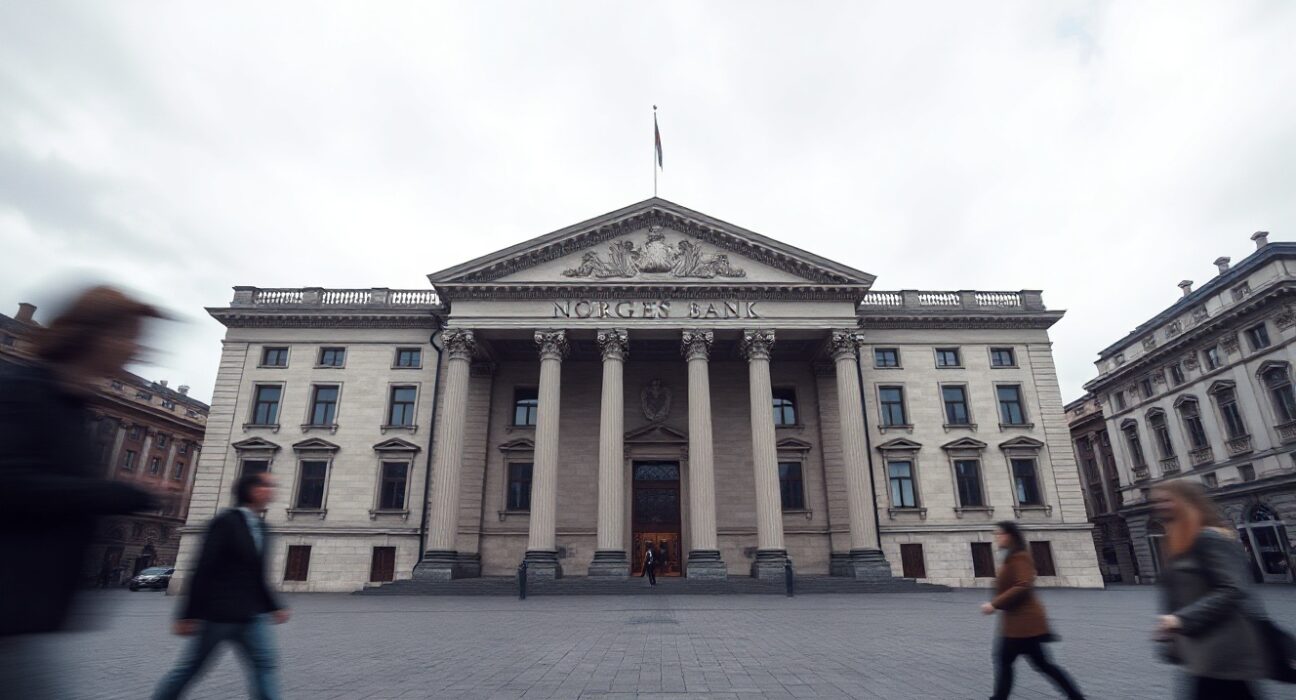
Nomura analysts indicated that the pace of disinflation in Norway is slowing, which could lead Norges Bank to adopt a more gradual approach to interest rate cuts than previously anticipated.
What is the current outlook for Norges Bank’s policy path?
The analysis from Nomura suggests that the recent economic data points to a stickier inflation environment, challenging the central bank’s assumptions. This development is crucial as it directly influences the timing and magnitude of potential rate reductions. The market’s expectation for rate cuts may need to be recalibrated if the disinflationary trend continues to lose momentum.
Nomura’s view implies that Norges Bank is likely to prioritize controlling inflation over stimulating economic growth in the near term. This stance would mean that borrowing costs could remain higher for longer, impacting both consumers and businesses in Norway.
How might this affect the Norwegian Krone?
The prospect of a delayed rate-cutting cycle typically provides support for a nation’s currency. A more hawkish central bank stance, signaled by a slower path to lower rates, could make the Norwegian Krone (NOK) more attractive to investors seeking higher yields. This potential for currency strength is a key factor for markets to watch in the coming months.
However, the currency’s trajectory will also depend on broader global risk sentiment and the price of oil, a major export for Norway. A combination of a cautious central bank and stable commodity prices could provide a solid floor for the NOK.
What does this mean for the Norwegian economy?
For the Norwegian economy, a slower pace of rate cuts means that the period of high borrowing costs will be extended. This could continue to cool down the housing market and temper consumer spending. While this is a deliberate trade-off to ensure price stability, it also poses a risk of slower economic growth. Businesses and households will need to adapt their financial planning to a longer period of restrictive monetary policy.
Conclusion
Nomura’s assessment highlights a growing concern that inflation in Norway is proving more persistent than expected. This situation is likely to keep Norges Bank on a cautious path, potentially delaying the onset of a rate-cutting cycle. The central bank’s upcoming decisions will be critical in shaping the economic landscape for the rest of the year.
FAQs
Q1: Why is the disinflation process slowing down in Norway?
The slowdown is often attributed to factors such as sticky service prices, wage growth, and the pass-through effects of a weaker currency, which can keep imported inflation elevated.
Q2: How does a slower rate cut path affect the Norwegian Krone?
A slower path typically supports the currency because it suggests interest rates will remain higher for longer, making NOK-denominated assets more attractive to yield-seeking investors.
Q3: What is the primary risk of Norges Bank keeping rates higher for longer?
The primary risk is that it could dampen economic growth and increase the risk of a sharper slowdown, especially if the global economic environment deteriorates.
Disclaimer: The information provided is not trading advice, Bitcoinworld.co.in holds no liability for any investments made based on the information provided on this page. We strongly recommend independent research and/or consultation with a qualified professional before making any investment decisions.
