

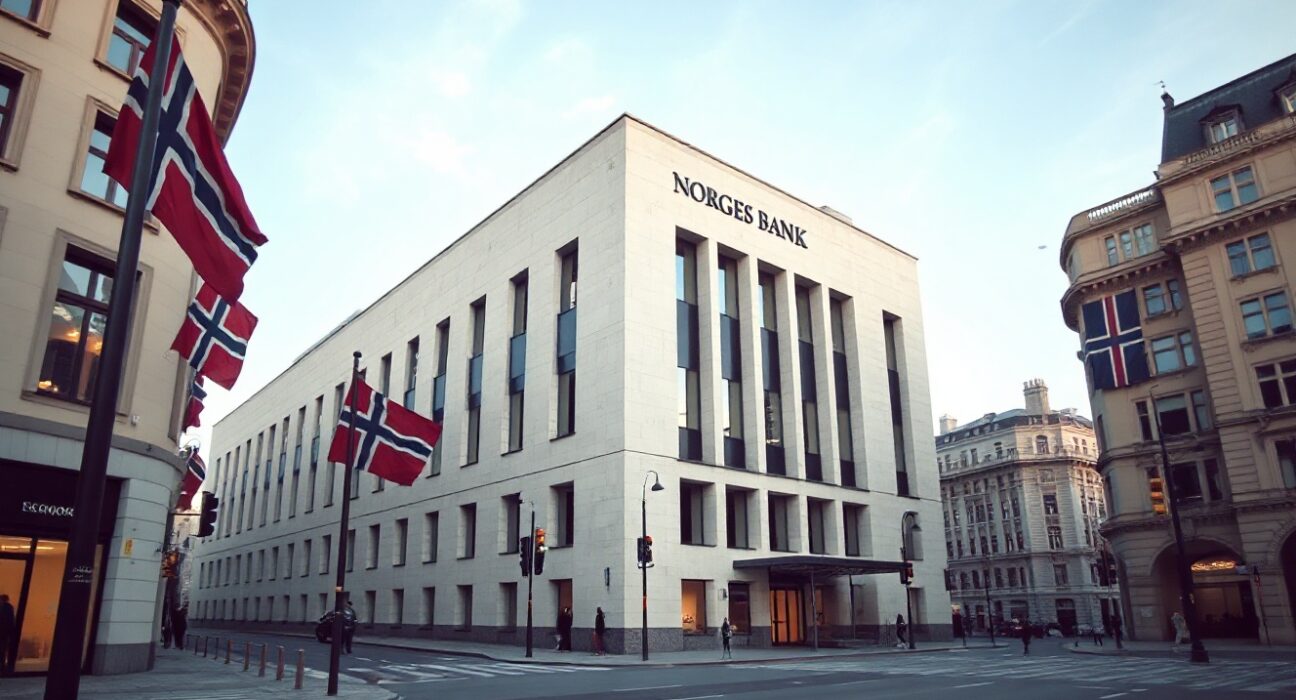
Norway’s central bank, Norges Bank, kept its key policy rate unchanged at 4.25% at its March 2025 meeting, a decision that matched the forecasts of economists and market participants. The hold extends the current pause in the bank’s tightening cycle, as officials weigh persistent domestic inflation against signs of a cooling economy.
Why the Rate Was Held Steady
Norges Bank’s decision to maintain the policy rate at 4.25% was widely anticipated, with a consensus of analysts expecting no change. The bank’s monetary policy committee has signaled that it remains cautious about easing policy too quickly, even as other central banks, such as the European Central Bank and the U.S. Federal Reserve, have begun to adjust their stances.
In its official statement, the bank emphasized that the current level of the policy rate is appropriate to bring inflation down to the 2% target within a reasonable timeframe. While headline inflation has moderated from its peaks, underlying price pressures, particularly in the services sector, remain elevated. The bank also pointed to the depreciation of the Norwegian krone, which has imported inflation by raising the cost of goods and services.
Economic Context and Market Reaction
The Norwegian economy has shown resilience, supported by strong government revenues from oil and gas exports, but growth is expected to slow in the coming quarters. The central bank’s own projections, released in December, indicated a gradual path toward rate cuts later in 2025, but the timing remains data-dependent.
Following the announcement, the Norwegian krone traded slightly stronger against the euro and the U.S. dollar, reflecting the market’s view that the bank’s hawkish hold was in line with expectations. Money markets are currently pricing in a high probability of a rate cut in the second half of 2025, but Norges Bank Governor Ida Wolden Bache has repeatedly stressed that the bank will act based on incoming data, not a pre-set schedule.
Implications for Households and Businesses
For Norwegian households with variable-rate mortgages, the hold means that borrowing costs remain at their highest level in over a decade. This continues to pressure household budgets, especially as food and energy prices have been slow to retreat. Businesses, particularly in the construction and retail sectors, are also feeling the pinch of high financing costs, which has led to a slowdown in investment and hiring.
On the positive side, the stability in rates provides some certainty for financial planning. Moreover, the bank’s commitment to fighting inflation should help preserve the purchasing power of the krone over the long term, which is crucial for an economy that relies heavily on imports.
Conclusion
Norges Bank’s decision to hold its key policy rate at 4.25% was a calculated move to balance the need to contain inflation against the risk of stifling economic growth. With the bank reiterating its data-dependent approach, the next policy meeting in May will be closely watched for any shifts in language or projections. For now, the message is clear: the bank is in no hurry to cut rates, and the path forward will be guided by the evolution of inflation and the domestic economy.
FAQs
Q1: What is Norges Bank’s current policy rate?
As of March 2025, Norges Bank’s key policy rate stands at 4.25%, following the bank’s decision to hold the rate unchanged at its latest meeting.
Q2: When is Norges Bank’s next rate decision?
The next monetary policy meeting is scheduled for May 2025, where the bank will review economic data and decide on the policy rate. The bank has emphasized that decisions will be data-dependent.
Q3: How does the rate decision affect the Norwegian krone?
The hold at 4.25% provided some support to the krone, as it signals that the bank is not easing policy prematurely. However, the currency’s value is also influenced by global market conditions, oil prices, and interest rate differentials with other major currencies.
Disclaimer: The information provided is not trading advice, Bitcoinworld.co.in holds no liability for any investments made based on the information provided on this page. We strongly recommend independent research and/or consultation with a qualified professional before making any investment decisions.
