

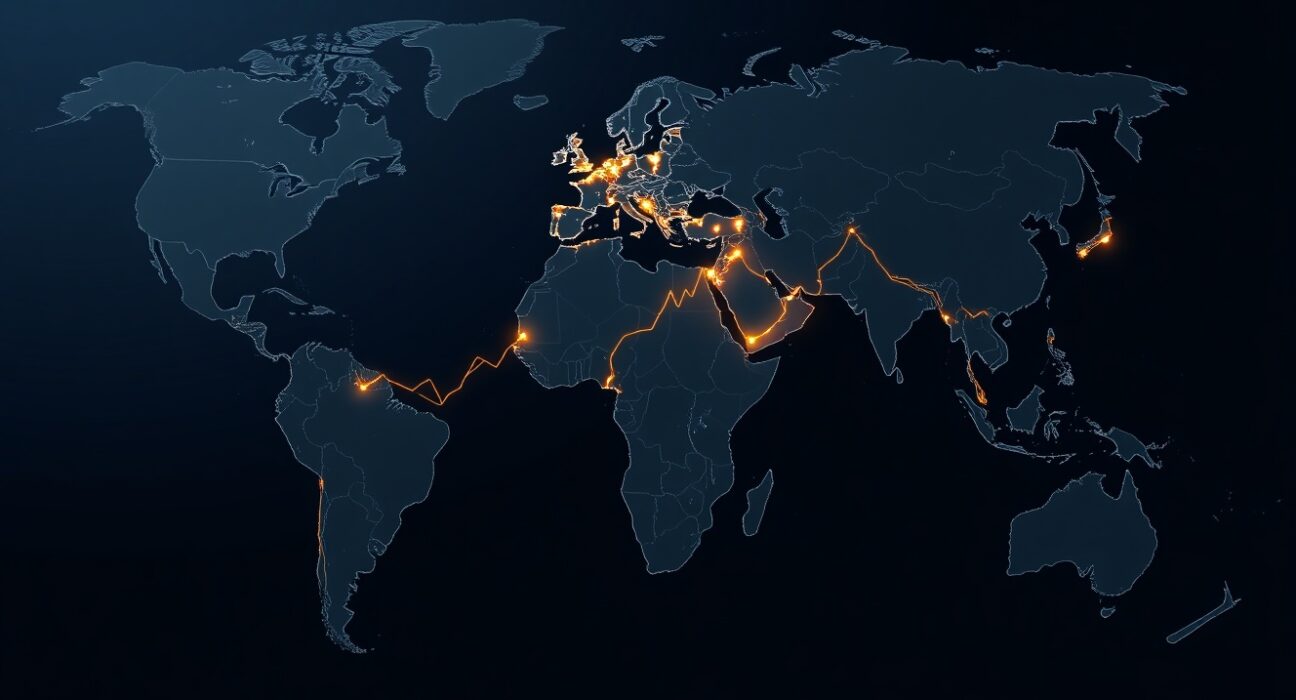
Global oil markets in 2025 face a complex convergence of forces, according to a recent analysis from HSBC. The interplay of persistent geopolitical tensions, uncertain global economic growth, and significant capital rotation within financial portfolios is creating a volatile and unpredictable landscape for the world’s most crucial commodity. This analysis delves into the mechanics of these three pillars, providing a clear-eyed view of the risks and structural shifts defining the energy sector.
Oil Market Analysis: The Geopolitical Powder Keg
Geopolitical instability remains a primary driver of oil price volatility. Furthermore, supply chain vulnerabilities are increasingly exposed. For instance, conflicts in key producing regions or sanctions on major exporters can immediately constrict global supply. Consequently, markets react with sharp price spikes. However, the geopolitical risk premium embedded in oil prices is notoriously fickle. It often dissipates as quickly as it appears.
HSBC’s research highlights several persistent flashpoints. The Middle East, a region accounting for nearly a third of global oil production, continues to experience sporadic tensions. Similarly, the aftermath of the Russia-Ukraine conflict has permanently altered European energy flows. Additionally, maritime chokepoints like the Strait of Hormuz and the Red Sea present ongoing risks. Therefore, traders must constantly assess these factors. The bank’s charts likely illustrate how specific geopolitical events have historically correlated with Brent and WTI crude price movements.
Economic Growth Risks and Oil Demand
The second critical pillar is the global economic outlook. Specifically, oil demand is intrinsically linked to industrial activity and consumer behavior. When major economies like China, the United States, and the European Union show signs of slowing growth, forecasts for oil consumption are downgraded. Conversely, stronger-than-expected economic data can boost demand projections. This creates a fundamental tension in the market.
Currently, concerns about a potential global recession in 2025 or 2026 loom large. High interest rates, designed to combat inflation, may eventually curb economic expansion. Subsequently, this would reduce demand for transportation fuels and petrochemical feedstocks. HSBC’s analysis undoubtedly examines leading indicators. These include manufacturing PMIs, freight data, and consumer sentiment surveys. The relationship between these indicators and oil inventory builds or draws is crucial for understanding price direction.
The Energy Transition as a Structural Demand Headwind
Beyond cyclical economic risks, a structural shift is underway. The global push for decarbonization and the rapid adoption of electric vehicles (EVs) are creating a long-term headwind for oil demand growth. While total demand may not peak imminently, the growth rate is demonstrably slowing. Analysts now frequently debate the timing of the peak. This secular trend influences long-term investment decisions in the oil sector. Capital is becoming more cautious.
The Great Rotation: Capital Flows and Financialization
The third force, portfolio rotation, refers to large-scale movements of investment capital. Institutional investors, such as pension funds and asset managers, are continuously rebalancing their holdings. Recently, there has been a notable shift. Many funds are reducing exposure to traditional fossil fuel equities. They are reallocating that capital towards renewable energy, technology, or other sustainable assets. This rotation exerts downward pressure on oil company valuations.
This trend is not solely ideological. It is also driven by risk assessment and regulatory changes. Stricter climate disclosure rules and potential carbon taxes are altering the risk-return profile of oil investments. The following table summarizes the key drivers of this financial rotation:
| Driver | Impact on Oil Investment |
|---|---|
| ESG Mandates | Direct capital away from high-carbon emitters. |
| Stranded Asset Risk | Fear that reserves may become unburnable, devaluing companies. |
| Superior Growth Narratives | Renewables and tech sectors often promise higher future growth. |
| Shareholder Activism | Investors push oil majors to diversify and reduce emissions. |
Consequently, the cost of capital for new oil projects can rise. This potentially limits future supply expansion. It creates a fascinating dynamic where financial markets are shaping the physical market’s future.
Synthesizing the Trifecta: A Market on Edge
The current oil market exists at the intersection of these three forces. A geopolitical shock can spike prices in the short term. However, weakening economic fundamentals may cap those gains. Simultaneously, long-term capital flight suggests a ceiling on sector valuation. HSBC’s charts likely visualize this delicate balance. They may show price bands dictated by geopolitical risk floors and economic demand ceilings. Understanding this interplay is essential for traders, policymakers, and corporate strategists navigating the 2025 energy landscape.
Conclusion
In conclusion, the HSBC oil market analysis underscores a period of unprecedented complexity. Geopolitics injects acute volatility, economic uncertainty clouds demand, and structural capital rotation challenges the sector’s financial foundation. Navigating this environment requires a disciplined focus on verifiable data, a clear understanding of interconnected risks, and an acknowledgment of the long-term energy transition. The critical trifecta of geopolitics, growth, and rotation will continue to define the oil market’s trajectory, making robust analysis more valuable than ever.
FAQs
Q1: What is the main takeaway from HSBC’s oil market analysis?
The core insight is that oil prices in 2025 are being shaped by three dominant forces: geopolitical tensions (supply risk), global economic growth prospects (demand risk), and a large-scale rotation of investment capital away from fossil fuels (financial risk).
Q2: How does the energy transition affect oil prices today?
It primarily affects long-term investment and valuation. The expectation of peak demand leads investors to demand higher returns for oil projects, raising the industry’s cost of capital. This can constrain future supply, creating a underlying tension with near-term demand.
Q3: What is a ‘geopolitical risk premium’ in oil prices?
It is the portion of the oil price attributed to the potential for supply disruptions due to political instability, conflict, or sanctions in key producing regions. This premium is intangible and can vanish quickly if tensions ease.
Q4: Why are institutional investors rotating away from oil stocks?
Reasons include adherence to ESG (Environmental, Social, and Governance) principles, concerns about ‘stranded asset’ risk as the world decarbonizes, regulatory pressures, and the pursuit of higher growth opportunities in sectors like technology and renewable energy.
Q5: Can strong economic growth completely offset the impact of the energy transition on oil?
In the short to medium term, yes. Robust economic activity can drive oil demand higher despite the growth of EVs and renewables. However, most analysts believe the energy transition represents a powerful structural headwind that will eventually overwhelm cyclical economic growth, leading to an overall peak in oil consumption.
Disclaimer: The information provided is not trading advice, Bitcoinworld.co.in holds no liability for any investments made based on the information provided on this page. We strongly recommend independent research and/or consultation with a qualified professional before making any investment decisions.
