

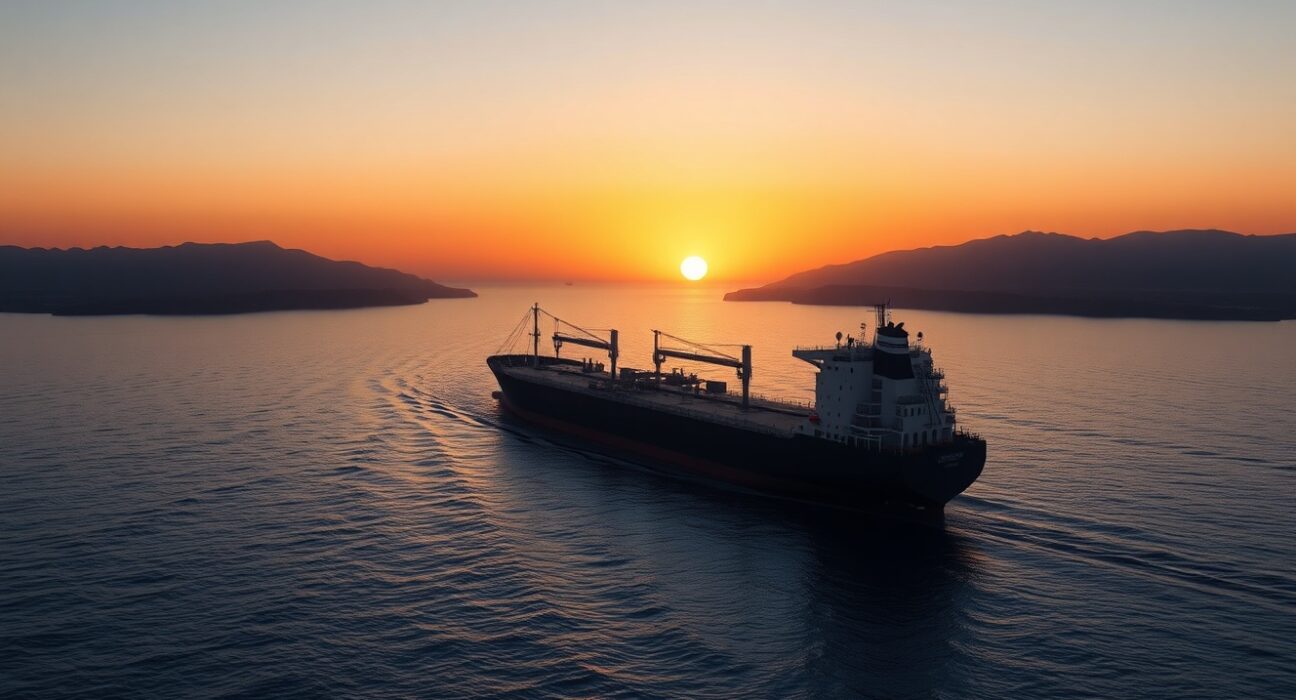
Global oil markets face a precarious balancing act in early 2025, according to a comprehensive new analysis from Rabobank. The report, released this week, meticulously examines three critical pressure points: escalating geopolitical war risks, the persistent threat of disruption at the Strait of Hormuz, and the complex policy cushions deployed by major economies. Consequently, energy traders and policymakers must navigate this volatile landscape with heightened caution.
Oil Market Analysis Confronts Rising Geopolitical Tensions
Rabobank’s research highlights how regional conflicts directly threaten global crude supplies. For instance, ongoing instability in key production zones creates significant supply-side vulnerabilities. The bank’s analysts reference verifiable data from the U.S. Energy Information Administration (EIA) showing that over 20% of the world’s daily oil consumption passes through maritime chokepoints adjacent to conflict zones. Therefore, any escalation can trigger immediate price shocks.
Furthermore, the analysis provides a timeline of recent incidents that have impacted flows. These events demonstrate the market’s acute sensitivity to regional flare-ups. The report compares current risk premiums embedded in futures prices to historical averages, noting a sustained elevation. Markets now consistently price in a tangible probability of supply interruption.
Expert Assessment of Conflict-Driven Volatility
Rabobank’s commodity strategists employ a multi-factor model to assess geopolitical risk. Their methodology incorporates military deployment data, diplomatic activity levels, and historical incident frequency. This evidence-based approach moves beyond speculation to quantify potential impacts. The model suggests that current tensions could shave between 500,000 to 2 million barrels per day from global supply under a severe escalation scenario.
The Strait of Hormuz Disruption: A Persistent Chokepoint Threat
The narrow Strait of Hormuz represents the most critical single vulnerability in global energy logistics. Rabobank’s report details the strait’s irreplaceable role: approximately 21 million barrels of oil transit this waterway daily. This volume represents nearly one-third of all seaborne traded oil and about 20% of total global consumption. A closure, even temporary, would have catastrophic consequences for global economies.
The analysis outlines the primary mechanisms of potential disruption:
- Military Blockade: A state-led closure of the strait, though historically rare, remains a worst-case scenario.
- Asymmetric Attacks: Mining, drone strikes, or fast-boat harassment against commercial shipping, as witnessed in past years.
- Navigational Accidents: Increased military traffic raises the risk of collisions or groundings in the confined channel.
- Insurance Surcharges: Rising war risk premiums can effectively price out some shipments, creating economic disruption.
Rabobank references the 2019 tanker attacks and the 2021-2022 period of heightened tensions as case studies. These events caused immediate price spikes and forced rerouting of cargoes around the Arabian Peninsula via the longer Bab el-Mandeb route, increasing costs and transit times.
Policy Cushions and Strategic Reserves as Market Stabilizers
In response to these physical risks, national policies form a crucial buffer. Rabobank’s report provides a detailed examination of strategic petroleum reserves (SPRs) held by major importers. The International Energy Agency (IEA) requires member countries to hold stocks equivalent to 90 days of net imports. Currently, collective IEA reserves stand at over 1.5 billion barrels.
The table below summarizes key reserve holdings and recent release policies:
| Country/Bloc | Estimated SPR Volume (Million Barrels) | 2024 Release Authority |
|---|---|---|
| United States | ~650 | Department of Energy |
| China | ~550 | National Food and Strategic Reserves Administration |
| IEA Europe | ~280 | Collective decision |
| Japan | ~90 | Ministry of Economy, Trade and Industry |
Rabobank analysts calculate that a coordinated release from these reserves could offset a significant supply shock for several months. However, they caution that repeated draws deplete this cushion, reducing its efficacy for future crises. Moreover, the replenishment cycle itself can create upward price pressure when governments re-enter the market as buyers.
The Dual Role of Monetary and Fiscal Policy
Beyond physical stocks, the report analyzes macroeconomic policy responses. Central bank actions on interest rates influence the U.S. dollar’s strength, a primary determinant of oil prices in global markets. Additionally, fiscal stimulus or austerity measures affect aggregate demand for transportation fuels and industrial feedstocks. Rabobank’s model integrates these policy variables to forecast their net effect on price volatility.
Market Implications and Forward-Looking Scenarios
Rabobank constructs several forward-looking scenarios based on its risk assessment. The base case assumes managed volatility with sporadic spikes but no full-scale disruption. In this scenario, policy tools successfully contain extreme price movements. An alternative high-risk case models a limited military incident near Hormuz, triggering a swift release of strategic reserves and a price surge of 30-50% before stabilization.
The report emphasizes the growing importance of alternative trade routes and energy sources. Investments in pipeline infrastructure bypassing chokepoints, such as the Abu Dhabi Crude Oil Pipeline (ADCOP) to the Fujairah terminal, gradually reduce but do not eliminate systemic risk. Similarly, the global energy transition alters long-term demand elasticity, but oil remains dominant in transport and petrochemicals for the foreseeable future.
Conclusion
Rabobank’s comprehensive oil market analysis presents a landscape defined by interconnected physical and policy risks. The triad of war risks, Hormuz disruption potential, and policy cushions creates a complex equilibrium. While strategic reserves and diplomatic channels provide important shock absorbers, the fundamental vulnerability of concentrated supply routes remains. Consequently, market participants must maintain robust risk management frameworks. The bank concludes that vigilance and scenario planning are essential for navigating the uncertain energy terrain of 2025 and beyond.
FAQs
Q1: What percentage of global oil shipments pass through the Strait of Hormuz?
Approximately 21 million barrels per day, representing about one-third of all seaborne traded oil and 20% of global daily consumption, transit the Strait of Hormuz.
Q2: How do strategic petroleum reserves (SPRs) act as a policy cushion?
SPRs are government-controlled stocks of crude oil that can be released into the market during a supply disruption. This sudden increase in available supply helps stabilize prices and ensures continued fuel availability for consumers and industry.
Q3: What are the main types of risks that could disrupt the Strait of Hormuz?
Primary risks include military blockades, asymmetric attacks (like mining or drone strikes), navigational accidents due to increased traffic, and economic disruption from soaring war risk insurance premiums for shipping.
Q4: How does Rabobank quantify geopolitical risk in its oil market analysis?
Rabobank uses a multi-factor model incorporating military deployment data, levels of diplomatic activity, historical incident frequency, and intelligence assessments to quantify the probability and potential volume impact of supply disruptions.
Q5: Can alternative energy sources eliminate oil’s vulnerability to chokepoints like Hormuz?
While the energy transition will reduce oil demand over decades, oil remains critical for transportation and petrochemicals in the near term. Infrastructure like bypass pipelines can reduce risk, but the geographic concentration of reserves means chokepoint vulnerability will persist for years.
Disclaimer: The information provided is not trading advice, Bitcoinworld.co.in holds no liability for any investments made based on the information provided on this page. We strongly recommend independent research and/or consultation with a qualified professional before making any investment decisions.
