

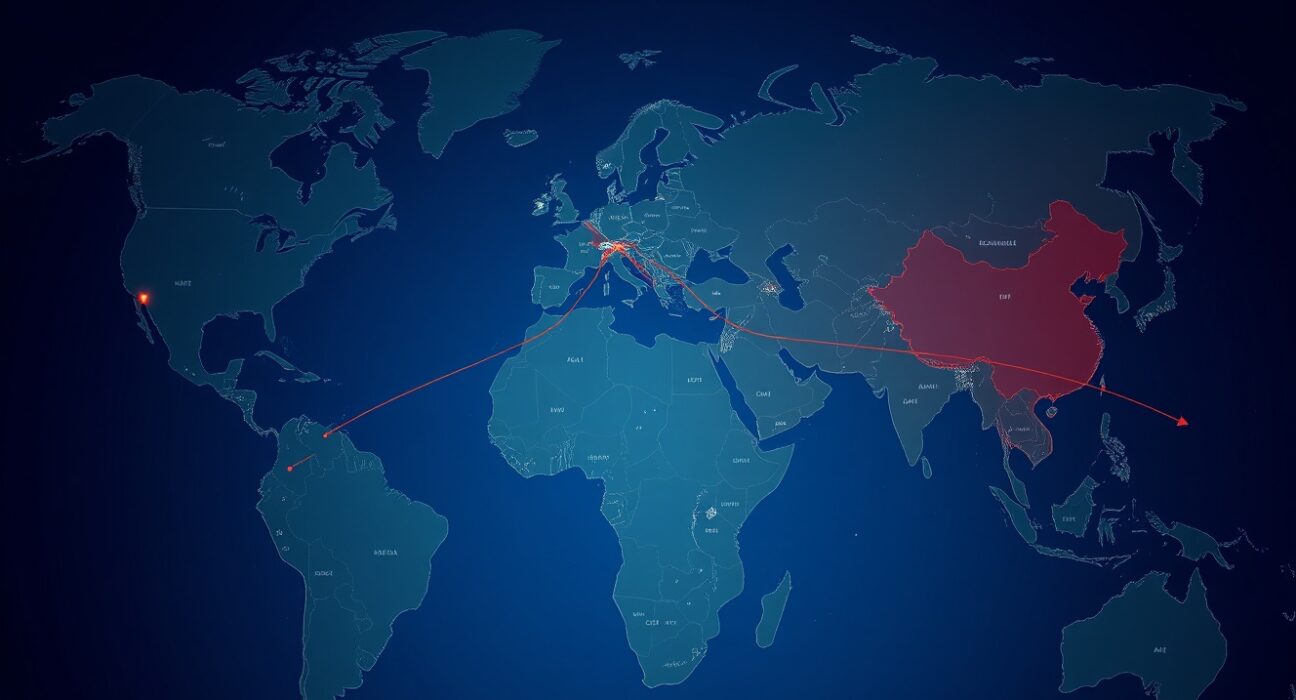
Global oil markets entered 2025 facing a dual challenge: acute price swings from persistent geopolitical conflicts and slower-burning structural shifts in energy supply and demand, according to a recent analysis by Rabobank’s commodities research team. The bank’s report, drawing on decades of market expertise, outlines how events in key regions continue to inject uncertainty into trading floors worldwide, while fundamental changes in global energy policy simultaneously reshape the long-term landscape. This combination creates a uniquely complex environment for traders, policymakers, and consumers.
Oil Price Volatility: The Immediate Geopolitical Catalyst
Geopolitical tensions remain the primary driver of short-term oil price volatility. Recent conflicts and diplomatic standoffs have repeatedly disrupted supply routes and threatened production infrastructure. For instance, tensions in the Strait of Hormuz, a chokepoint for roughly 20% of global oil trade, periodically spike insurance costs and cause shipping delays. Similarly, instability in other key producing regions directly impacts global supply balances. These events trigger rapid price adjustments as traders react to perceived risks. Consequently, market sentiment can shift within hours based on news headlines, creating a turbulent trading environment. Rabobank analysts note that this war-driven volatility often overshadows underlying supply and demand fundamentals in the short term.
Historical data supports this pattern. The bank’s research compares current price fluctuations to previous periods of conflict. The analysis reveals that volatility indices frequently surge following geopolitical incidents. However, the duration and magnitude of these spikes depend on the conflict’s proximity to major production or transit hubs. Furthermore, the globalized nature of oil markets means a disruption in one region sends ripples across the world. This interconnectedness amplifies the impact of regional instability. Therefore, traders must constantly monitor a complex web of global political developments.
Structural Risks Reshaping the Energy Backdrop
Beyond headline-driven swings, Rabobank identifies several deep-seated structural risks altering the oil market’s foundation. First, the energy transition continues to influence long-term investment decisions. Major oil companies face increasing pressure to diversify, potentially leading to underinvestment in new conventional oil projects. This scenario could tighten future supply. Second, geopolitical realignments are creating more fragmented trade flows. Nations are increasingly seeking energy security through bilateral agreements and friend-shoring, moving away from purely market-driven global trade. This fragmentation reduces market liquidity and can exacerbate regional price disparities.
Third, strategic petroleum reserves (SPRs) in major consuming countries like the United States and China have been deployed extensively in recent years. Replenishing these reserves creates a consistent, state-driven source of demand that supports price floors. Finally, the evolving role of OPEC+ as a managing cartel introduces another layer of structural complexity. The group’s production decisions now must balance revenue needs against market share preservation in a potentially peak-demand environment. These factors collectively create a less predictable, more interventionist market structure compared to previous decades.
The Rabobank Analytical Framework
Rabobank’s approach combines quantitative modeling with qualitative geopolitical assessment. Their analysts track a suite of indicators beyond simple price charts. These include shipping freight rates for oil tankers, insurance premiums for routes through conflict zones, and satellite imagery monitoring production activity at major fields. Additionally, they assess political risk scores for key producing nations. This multi-faceted methodology allows the bank to distinguish between temporary disruptions and sustained structural changes. By integrating this data, they provide clients with a nuanced view of both immediate risks and long-term trends. The bank’s long history in agri-commodities and energy financing informs this comprehensive perspective.
Comparative Impact: War Shocks vs. Structural Shifts
The following table contrasts the characteristics of war-driven volatility and structural market risks, based on Rabobank’s classification:
| Feature | War-Driven Volatility | Structural Risks |
|---|---|---|
| Primary Driver | Geopolitical events, conflicts, sanctions | Energy transition, investment cycles, policy shifts |
| Time Horizon | Short to medium term (days to months) | Long term (years to decades) |
| Market Impact | Sharp price spikes & increased trading volume | Gradual repricing & changed correlation patterns |
| Predictability | Low; event-driven and news-sensitive | Higher; analyzable through trends and data |
| Example | Sudden closure of a key shipping strait | Chronic underinvestment in upstream projects |
Understanding this distinction is crucial for market participants. For example, a hedge fund might trade short-term volatility around conflict news differently than a pension fund investing in long-term energy infrastructure. Rabobank’s analysis helps each client type identify the risks most relevant to their time horizon and strategy. Moreover, the interaction between these two risk types can be potent. A structural supply deficit can magnify the price impact of a sudden geopolitical disruption.
The Path Forward for Markets and Policy
Navigating this dual-risk environment requires adaptive strategies. For physical traders, this means diversifying supply sources and securing flexible shipping contracts. For financial participants, it necessitates robust risk management models that incorporate both geopolitical and fundamental data. On the policy front, governments face the challenge of ensuring energy affordability while managing transition goals. Strategic stockpiles remain a critical tool for buffering against acute supply shocks. However, policymakers must also create stable long-term signals to guide energy investment. Clarity on climate policy can reduce uncertainty for companies deciding between fossil fuel and renewable energy projects.
International coordination, though challenging, is another key factor. Dialogue between major consumers and producers can help prevent volatile price swings that harm global economic growth. Mechanisms for transparent data sharing on inventories and production plans contribute to market stability. Ultimately, the oil market’s evolution in 2025 and beyond will hinge on how these immediate and structural forces interact. Markets will continue to react to daily headlines, but the underlying currents will steadily reshape the playing field.
Conclusion
Rabobank’s analysis underscores a critical juncture for global oil markets. The persistent oil price volatility triggered by regional conflicts now operates within a context of deeper structural change. While geopolitical events will continue to cause sharp, unpredictable price movements, the long-term trajectory is being reshaped by investment trends, energy policies, and strategic stockpiling. Success for market participants depends on recognizing and preparing for both dimensions of risk. The bank’s expert assessment concludes that the era of simple, demand-driven oil markets is over, replaced by a far more complex system where politics, finance, and energy transition imperatives are inextricably linked.
FAQs
Q1: What is the main difference between war-driven volatility and structural risk in oil markets?
War-driven volatility refers to sharp, short-term price swings caused by geopolitical events like conflicts or sanctions. Structural risk involves long-term, fundamental changes to the market, such as shifts in investment due to the energy transition or changes in global trade patterns.
Q2: How does Rabobank analyze geopolitical risk for oil prices?
Rabobank uses a multi-faceted approach combining quantitative models with qualitative assessment. They monitor real-time data like shipping freight rates and insurance costs, use satellite imagery to track production, and assign political risk scores to producing nations to gauge stability.
Q3: Why are strategic petroleum reserves (SPRs) important in the current market?
SPRs act as a buffer against sudden supply shocks from geopolitical events. Their recent large-scale use and subsequent need for replenishment create a consistent source of government-led demand, which can establish a price floor and add a new structural element to market dynamics.
Q4: What is one key structural risk facing oil supply in the coming years?
A major structural risk is chronic underinvestment in new oil exploration and production projects. As pressure mounts for the energy transition, companies may divert capital, potentially leading to tighter supplies and higher prices in the future despite demand uncertainty.
Q5: How can traders navigate an environment with both high volatility and structural change?
Traders need adaptive strategies, including diversifying supply sources, using flexible contracts, and employing risk models that incorporate both real-time geopolitical data and long-term fundamental trends. Understanding the different time horizons of each risk type is crucial.
Disclaimer: The information provided is not trading advice, Bitcoinworld.co.in holds no liability for any investments made based on the information provided on this page. We strongly recommend independent research and/or consultation with a qualified professional before making any investment decisions.
