
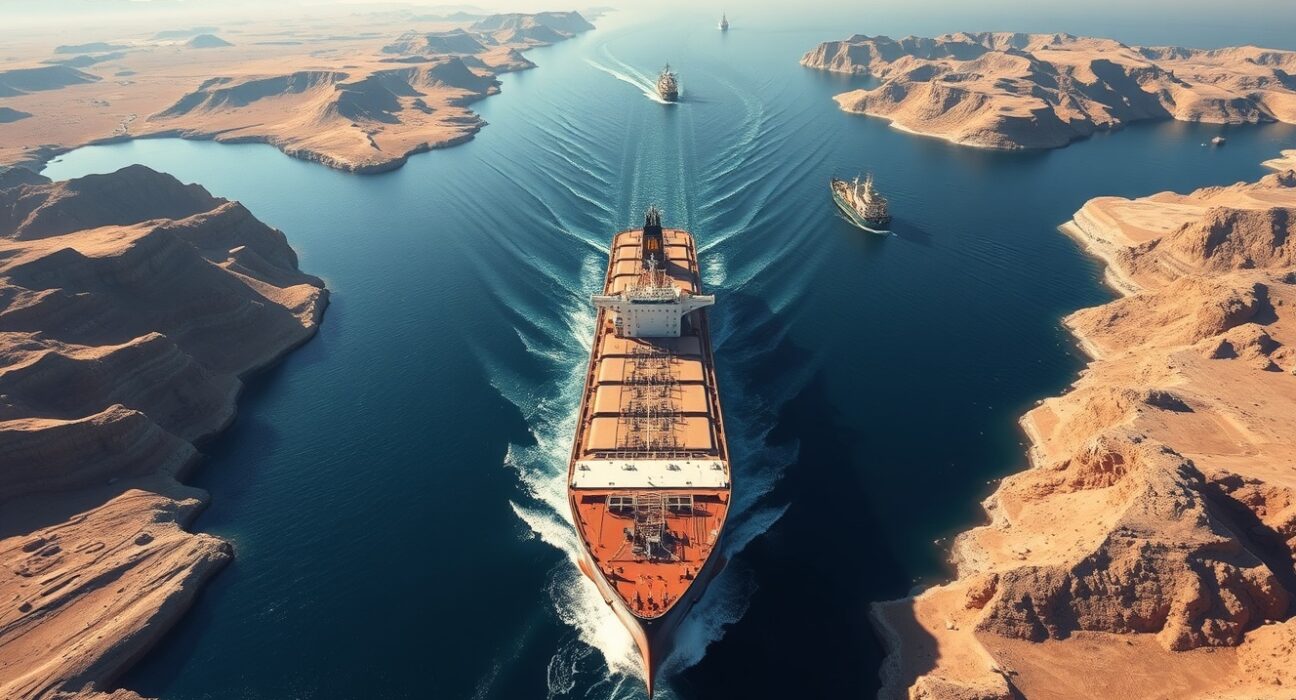
Global oil markets experienced a sharp price surge today as analysts at ING warned of a potential blockade threat to the Strait of Hormuz, the world’s most critical oil transit chokepoint. Brent crude futures jumped over 8% in early trading, reflecting immediate market anxiety about supply disruptions. This development follows escalating regional tensions that could directly impact nearly 20% of global oil consumption.
Oil Prices React to Hormuz Strait Vulnerability
Financial markets responded swiftly to ING’s assessment of the blockade threat. Brent crude climbed to $94.72 per barrel, while West Texas Intermediate reached $91.45. These price movements represent the most significant single-day increase since the 2022 energy crisis. The immediate reaction underscores the market’s sensitivity to supply chain vulnerabilities.
Historical data reveals consistent price sensitivity to Hormuz tensions. During the 2019 tanker attacks, prices spiked 15% within 48 hours. Similarly, the 2021 seizure of a commercial vessel caused a 7% immediate increase. Today’s surge follows this established pattern of market response to regional instability.
Several key factors amplify current market concerns:
- Transit volume: 21 million barrels daily pass through the strait
- Global share: This represents 21% of global petroleum liquids consumption
- Alternative routes: Limited pipeline capacity bypasses the waterway
- Strategic Petroleum Reserves: Global inventory levels remain below five-year averages
Strategic Importance of the Hormuz Shipping Lane
The Strait of Hormuz connects the Persian Gulf with the Gulf of Oman and the Arabian Sea. At its narrowest point, the channel measures just 21 miles wide. The shipping lanes within this passage reduce to only 2 miles in width each direction. This geographical constraint creates natural bottlenecks for maritime traffic.
Major oil exporters depend completely on this route. Saudi Arabia transports 90% of its exports through Hormuz. The United Arab Emirates relies on the strait for 99% of its oil shipments. Iraq and Kuwait similarly depend on this passage for nearly all exports. Even Qatar’s liquefied natural gas shipments must navigate these waters.
Regional military capabilities significantly influence security assessments. Iran maintains substantial naval assets along its coastline. These include fast attack craft, anti-ship missile batteries, and naval mining capabilities. The Islamic Revolutionary Guard Corps Navy patrols these waters regularly. International forces, including the U.S. Fifth Fleet, maintain persistent presence in the region.
Historical Context of Regional Tensions
The Strait of Hormuz has witnessed multiple security incidents over decades. During the 1980s Tanker War, over 400 commercial vessels sustained damage. More recently, between 2019 and 2023, at least 15 maritime incidents occurred in nearby waters. These events included tanker seizures, mine attacks, and drone strikes.
International law provides specific protections for transit passage. The United Nations Convention on the Law of the Sea guarantees innocent passage through international straits. However, regional states maintain differing interpretations of these provisions. This legal ambiguity occasionally contributes to confrontational situations.
Market Mechanisms and Price Discovery
Futures markets serve as primary price discovery mechanisms during supply threats. Trading volumes typically increase 40-60% during geopolitical crises. Today’s activity followed this pattern with unusually high volume in early European trading. Market participants rapidly priced in potential disruption scenarios.
Physical oil markets show parallel reactions. The Dubai crude benchmark widened its premium to Brent by $2.15 per barrel. This differential reflects regional supply concerns specifically. Asian refiners reportedly sought alternative supplies from Atlantic Basin producers. Shipping rates for Very Large Crude Carriers increased 25% on Middle East routes.
Financial instruments provide hedging opportunities during volatility. Options trading showed increased demand for call options at $100 and $105 strike prices. The volatility index for oil derivatives reached its highest level since November 2023. These indicators suggest traders anticipate continued price movements.
Global Energy Security Implications
Energy security considerations extend beyond immediate price effects. The International Energy Agency defines energy security as uninterrupted physical availability at affordable prices. A Hormuz blockade would challenge both components simultaneously. Strategic petroleum reserves would become crucial buffer mechanisms.
Major consuming nations maintain varying reserve levels. The United States holds 714 million barrels in its Strategic Petroleum Reserve. China reportedly maintains approximately 550 million barrels. Japan stores 320 million barrels, while South Korea holds 170 million. These reserves could offset approximately 45 days of Hormuz disruption collectively.
Alternative transportation routes face capacity limitations. The East-West Pipeline across Saudi Arabia carries 5 million barrels daily. The Abu Dhabi Crude Oil Pipeline transports 1.5 million barrels to the Gulf of Oman. Combined bypass capacity represents only 31% of current Hormuz flows. This limitation explains market sensitivity to disruption threats.
Economic Impacts and Inflation Concerns
Sustained oil price increases trigger broader economic consequences. Transportation costs immediately affect consumer prices. Manufacturing expenses rise for petroleum-derived products. Central banks monitor energy inflation closely when setting monetary policy. The European Central Bank specifically references energy prices in its inflation assessments.
Historical analysis reveals consistent patterns. A $10 per barrel oil price increase typically raises U.S. inflation by 0.4 percentage points. Emerging markets experience more pronounced effects due to larger energy shares in consumption baskets. India, for instance, faces particular vulnerability with 85% import dependence.
Global growth projections incorporate energy price assumptions. The International Monetary Fund estimates each 10% oil price increase reduces global GDP growth by 0.15%. This relationship becomes particularly significant during synchronized tightening cycles. Current monetary policy environments amplify these transmission mechanisms.
Conclusion
The oil price surge following ING’s Hormuz blockade warning highlights enduring market vulnerabilities. Global energy systems remain dependent on critical chokepoints despite diversification efforts. Market reactions demonstrate efficient price discovery but also systemic fragility. Energy security requires continuous attention to both physical infrastructure and geopolitical stability. The Strait of Hormuz will likely maintain its central role in global oil markets for the foreseeable future.
FAQs
Q1: What percentage of global oil passes through the Strait of Hormuz?
Approximately 21% of global petroleum liquids consumption, or about 21 million barrels per day, transits the Strait of Hormuz. This represents one-fifth of global oil demand moving through this single waterway.
Q2: How have oil prices historically reacted to Hormuz tensions?
Historical data shows consistent sensitivity, with average immediate price spikes of 7-15% following significant incidents. The 2019 tanker attacks caused a 15% increase, while the 2021 vessel seizure resulted in a 7% rise within 48 hours.
Q3: Which countries depend most on Hormuz for oil exports?
Saudi Arabia (90% of exports), United Arab Emirates (99%), Iraq (nearly 100%), Kuwait (nearly 100%), and Qatar (all LNG exports) rely heavily on the strait. These nations have limited pipeline capacity to bypass the waterway.
Q4: What alternative routes exist if Hormuz closes?
Limited pipeline capacity includes Saudi Arabia’s East-West Pipeline (5 million bpd) and the Abu Dhabi Crude Oil Pipeline (1.5 million bpd). Combined, these alternatives could handle only about 31% of current Hormuz flows.
Q5: How do strategic petroleum reserves affect market stability during crises?
Major consuming nations maintain reserves equivalent to 90-120 days of net imports. The IEA coordinates releases during supply emergencies. These reserves can offset approximately 45 days of complete Hormuz disruption based on current global inventory levels.
Disclaimer: The information provided is not trading advice, Bitcoinworld.co.in holds no liability for any investments made based on the information provided on this page. We strongly recommend independent research and/or consultation with a qualified professional before making any investment decisions.