

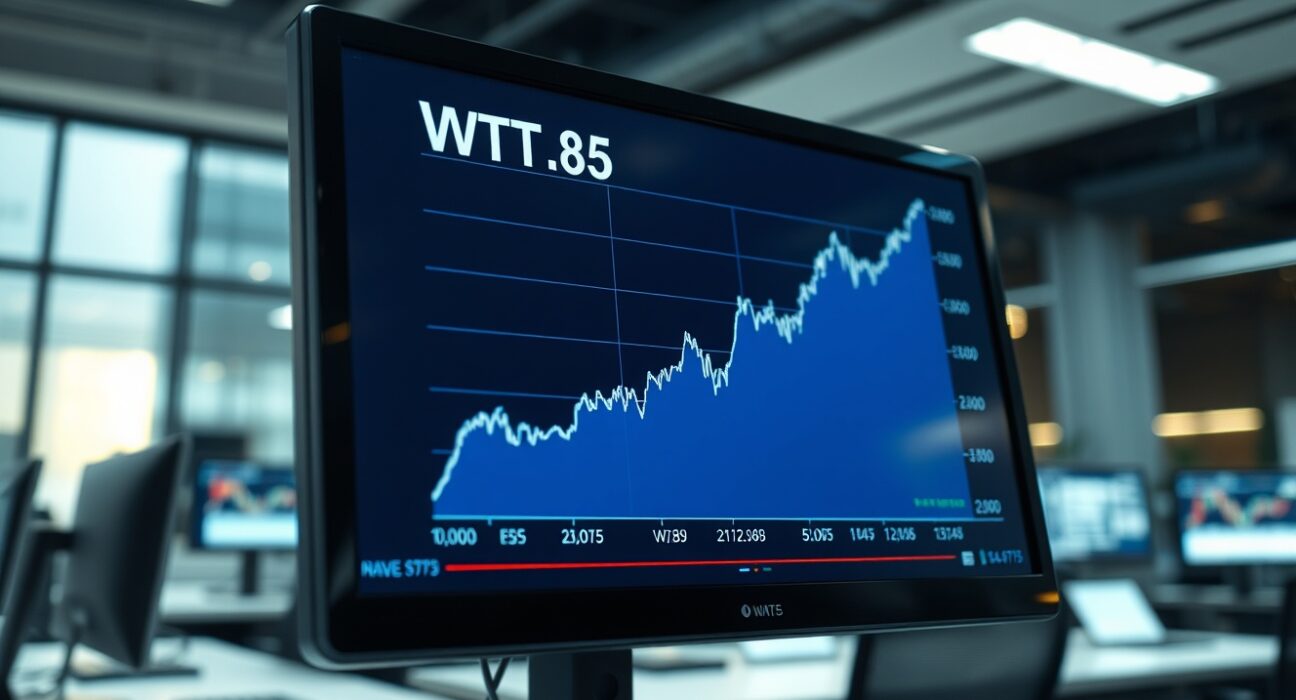
Global energy markets are facing renewed volatility as West Texas Intermediate (WTI) crude oil prices surge above $85 per barrel. This significant price movement, confirmed on trading floors worldwide, stems directly from escalating geopolitical tensions across the Middle East. Consequently, analysts are warning of potential ripple effects on inflation and economic growth.
Oil Prices Surge Amid Widening Regional Conflict
The benchmark WTI crude oil contract breached the $85 threshold in early trading. This represents its highest level in several months. Market data shows a sharp, sustained upward trajectory over the past week. Furthermore, the global benchmark Brent crude also experienced parallel gains. This synchronized movement underscores a broad-based supply risk premium entering the market. Historically, the Middle East accounts for nearly one-third of global seaborne oil trade. Therefore, any disruption in the region immediately impacts global price assessments.
Several key factors are driving this rapid price appreciation. First, direct threats to maritime shipping lanes in critical waterways have emerged. Second, production infrastructure in major exporting nations now faces elevated security risks. Third, the conflict has triggered a reassessment of spare production capacity. Major financial institutions have revised their quarterly forecasts upward in response. For instance, Goldman Sachs analysts noted the market is now pricing in a “persistent geopolitical risk premium.”
Anatomy of the Middle East Market Chaos
The current instability is not an isolated event. It represents an expansion of existing regional friction. The immediate catalyst involves targeted military actions that threaten transit routes. Specifically, the Strait of Hormuz, a chokepoint for 21% of global petroleum liquids consumption, is under scrutiny. Any operational disruption there would have immediate and severe consequences for physical supply.
Beyond immediate logistics, the chaos affects market psychology. Traders and algorithms react to headlines, creating volatile price swings. The CBOE Crude Oil Volatility Index (OVX) has spiked accordingly. This “fear gauge” for oil markets indicates traders expect continued turbulence. The following table outlines recent key price levels:
| Benchmark | Price (USD/barrel) | Weekly Change | Key Level |
|---|---|---|---|
| WTI Crude | 85.42 | +7.8% | Breached $85 |
| Brent Crude | 89.15 | +6.9% | Approaching $90 |
| Oman Crude | 88.60 | +8.1% | Regional Benchmark |
Energy analysts point to a rapid drawdown in commercial inventories as a supporting factor. The U.S. Energy Information Administration (EIA) reported a larger-than-expected drop in crude stocks. This data coincided with the geopolitical news, amplifying the bullish price signal.
Expert Analysis on Supply Chain Vulnerabilities
Dr. Anya Sharma, Lead Geopolitical Analyst at the Global Energy Security Institute, provides critical context. “The market is reacting to a tangible increase in supply-side risk,” she states. “We are observing not just a single incident, but a widening arc of instability that impacts multiple producers and transit corridors simultaneously. The system’s resilience is being tested.” Her research indicates that global spare capacity, primarily held by a few nations, is now a central focus. If disruptions persist, drawing on these reserves becomes a more likely scenario.
The historical pattern is informative. Previous Middle East crises in 1990, 2003, and 2011 led to similar price spikes. However, the current energy landscape is different. The global push for energy transition has altered investment patterns in fossil fuels. Consequently, the market’s ability to respond with new supply may be more constrained. This structural change could make today’s price spikes more persistent than in prior decades.
Global Economic Impacts and Market Reactions
The surge in oil prices transmits directly into the broader economy. Higher energy costs act as a tax on consumers and businesses. Central banks, particularly the Federal Reserve and European Central Bank, monitor this closely. Persistently high oil prices can complicate inflation management. This could potentially delay interest rate cuts, affecting global financial conditions.
Equity markets have shown a divergent response. While energy sector stocks rallied, airline and transportation stocks declined. This sector rotation reflects expectations of shifting profit margins. The U.S. dollar often strengthens during oil price shocks, as it remains the primary trading currency. This foreign exchange movement has secondary effects on emerging markets with dollar-denominated debt.
- Consumer Impact: Gasoline and diesel prices are rising at the pump, increasing household expenses.
- Corporate Impact: Manufacturing and logistics companies face higher input costs, squeezing margins.
- Government Impact: Nations that are net oil importers see their trade balances deteriorate.
- Policy Impact: Strategic petroleum reserve releases may be considered to calm markets.
Furthermore, alternative energy sources are receiving increased attention from investors. Renewable energy ETFs saw inflows as the oil news broke. This suggests some capital is seeking a hedge against traditional energy volatility. However, the scale of this shift remains limited in the short term.
Conclusion
The surge in oil prices above $85 for WTI crude is a direct consequence of widening Middle East chaos. This event highlights the enduring sensitivity of global energy markets to geopolitical risk. The immediate effects are being felt across financial markets, with longer-term implications for global inflation and economic stability. Market participants will closely monitor the region’s stability, as the path of oil prices will significantly influence central bank policies and corporate earnings in the coming quarters. The situation remains fluid, and further price volatility is expected until a clear de-escalation path emerges.
FAQs
Q1: What is WTI crude oil and why is $85 a significant price level?
WTI (West Texas Intermediate) is a major global benchmark for oil prices. The $85 level is significant as it represents a key technical and psychological resistance point. Breaching it often triggers automated buying and signals strong bullish sentiment, potentially leading to further gains.
Q2: How does Middle East instability directly affect global oil prices?
The Middle East is a crucial production and transit region. Instability threatens physical supply through potential infrastructure damage, port closures, or blocked shipping lanes. Markets price in this risk of disruption, causing prices to rise even before any actual supply is lost.
Q3: Could this price surge lead to a global economic recession?
While not a certainty, sustained high oil prices act as a drag on economic growth. They increase costs for businesses and reduce disposable income for consumers. If prices remain elevated for a prolonged period, they could contribute to slowing economic activity, particularly in oil-importing nations.
Q4: What can governments do to mitigate the impact of rising oil prices?
Governments can consider releasing oil from strategic petroleum reserves to increase immediate supply. They can also temporarily adjust fuel taxes. In the longer term, policies that encourage energy efficiency and diversify energy sources can reduce economic vulnerability to such price shocks.
Q5: How do higher oil prices affect inflation and interest rates?
Higher oil prices feed directly into transportation and production costs, raising overall inflation. Central banks, tasked with controlling inflation, may respond by maintaining or even raising interest rates for longer than previously expected, which tightens financial conditions across the economy.
Disclaimer: The information provided is not trading advice, Bitcoinworld.co.in holds no liability for any investments made based on the information provided on this page. We strongly recommend independent research and/or consultation with a qualified professional before making any investment decisions.
