
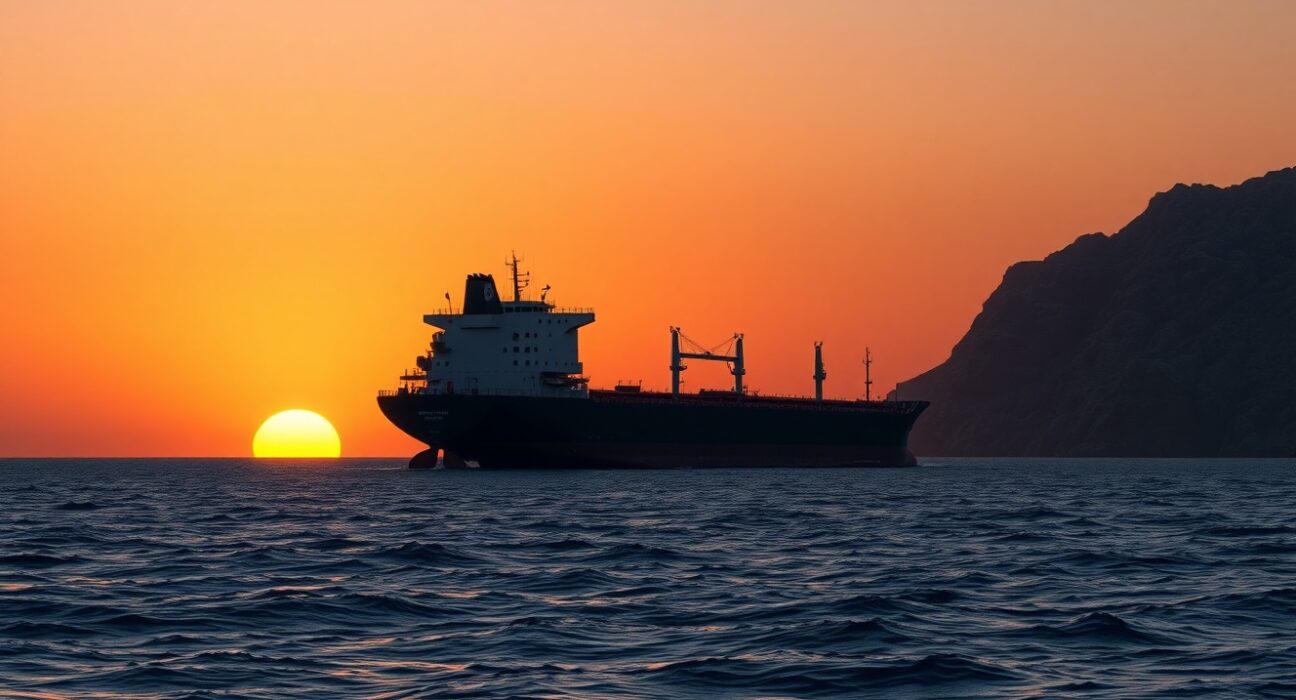
Global oil markets face a complex balancing act as governments deploy strategic petroleum reserves to stabilize prices while escalating tensions in the Strait of Hormuz threaten supply security, according to recent analysis from Mitsubishi UFJ Financial Group (MUFG). The delicate interplay between these opposing forces creates unprecedented volatility for energy traders and policymakers worldwide.
Oil Market Dynamics: Reserve Releases Versus Geopolitical Risk
Governments across major consuming nations have coordinated strategic petroleum reserve (SPR) releases throughout 2024 and early 2025. These releases aim to counteract supply constraints and moderate consumer fuel prices. However, analysts at MUFG note that the effectiveness of these measures now faces significant challenges. The primary concern centers on renewed tensions in the Middle East, particularly around the Strait of Hormuz.
This critical waterway handles approximately 21 million barrels of oil daily. That represents nearly 20% of global petroleum consumption. Any disruption to shipping through the strait would immediately impact global supply chains. Consequently, market participants must weigh temporary price relief from reserve releases against persistent geopolitical risks.
Historical Context of Strategic Reserve Deployments
Strategic petroleum reserves originated after the 1973 oil embargo. Major economies established these emergency stockpiles to mitigate supply shocks. The United States maintains the world’s largest SPR with a capacity exceeding 700 million barrels. Other significant reserves exist in China, Japan, and several European nations. Governments typically authorize releases during three scenarios:
- Supply disruptions from natural disasters or conflicts
- Price spikes threatening economic stability
- International coordination efforts among consuming nations
The current release program represents the largest coordinated effort since 2011. However, MUFG analysts emphasize that these releases provide temporary solutions. They cannot address structural supply issues or geopolitical instability.
Strait of Hormuz: The World’s Most Critical Oil Chokepoint
The Strait of Hormuz connects the Persian Gulf with the Gulf of Oman and the Arabian Sea. At its narrowest point, the waterway measures just 21 miles wide. The navigable channel for tankers reduces to only 2 miles in width. This geography creates natural bottlenecks for global oil transportation.
Several key facts illustrate the strait’s importance:
| Metric | Value | Global Share |
|---|---|---|
| Daily Oil Flow | 21 million barrels | ~20% |
| LNG Flow | 20% of global supply | One-fifth |
| Primary Exporters | Saudi Arabia, UAE, Qatar, Kuwait, Iraq | Major Gulf producers |
Recent incidents have heightened security concerns in the region. Maritime authorities reported increased harassment of commercial vessels throughout 2024. Additionally, military exercises and political rhetoric have intensified. These developments create what MUFG terms a “persistent risk premium” in oil pricing.
Market Impact Assessment from MUFG Research
MUFG’s energy analysts employ sophisticated modeling to quantify these competing forces. Their research indicates that SPR releases typically suppress prices by $3-8 per barrel in the immediate term. However, this effect diminishes rapidly as markets absorb the additional supply. Conversely, heightened Hormuz tensions can add $5-15 per barrel to prices depending on severity.
The financial institution’s models consider multiple variables:
- Release volumes and timing from various nations
- Alternative shipping routes and their capacity constraints
- Spare production capacity among OPEC+ members
- Global inventory levels across commercial and strategic reserves
- Geopolitical escalation probabilities based on historical patterns
Current analysis suggests markets have priced in approximately 60% of potential disruption scenarios. This partial pricing reflects uncertainty about both the likelihood and duration of any closure. Consequently, markets remain highly sensitive to new developments.
Global Energy Security Implications
The current situation highlights broader energy security challenges facing consuming nations. Strategic reserves provide crucial buffers during emergencies. However, their finite nature limits their effectiveness against prolonged disruptions. MUFG’s research identifies several structural vulnerabilities in global oil markets.
First, alternative shipping routes face significant limitations. The East-West pipeline across the UAE offers some bypass capacity. Similarly, the Saudi Petroline pipeline provides Red Sea access. Nevertheless, these alternatives cannot fully replace Hormuz transit. Combined bypass capacity reaches only 6-7 million barrels daily.
Second, global spare production capacity remains concentrated. Saudi Arabia and the UAE maintain most of the world’s immediately available spare capacity. This concentration creates additional geopolitical dependencies. Furthermore, bringing additional production online requires significant lead time and investment.
Third, inventory levels across the supply chain influence market resilience. Commercial inventories in consuming nations have declined from historical averages. This reduction limits the cushion available during disruptions. Consequently, markets become more volatile when facing simultaneous pressures.
Policy Responses and Market Mechanisms
Governments employ various policy tools to address these challenges. The International Energy Agency coordinates releases among member countries. This coordination aims to maximize market impact while preserving emergency reserves. Additionally, diplomatic efforts focus on maintaining freedom of navigation through critical chokepoints.
Market mechanisms also play crucial roles. Futures markets allow participants to hedge against price volatility. Similarly, insurance markets price geopolitical risks into shipping costs. These financial instruments help distribute risk across the global economy. However, they cannot prevent physical supply disruptions.
MUFG analysts emphasize the importance of diversification strategies. These include developing alternative energy sources and improving energy efficiency. Additionally, expanding strategic storage capacity in consuming regions enhances resilience. Such measures reduce dependence on any single transit route or production region.
Future Outlook and Risk Scenarios
Looking forward, MUFG identifies several potential scenarios for oil markets. The baseline scenario assumes continued SPR releases alongside managed regional tensions. This path would maintain prices within a moderate range of $75-85 per barrel. However, alternative scenarios present more extreme outcomes.
A disruption scenario involving partial Hormuz closure would trigger immediate price spikes. Models suggest prices could exceed $120 per barrel within weeks. This scenario would test the limits of strategic reserves and alternative supplies. Conversely, successful diplomatic de-escalation could reduce risk premiums substantially.
The timing of reserve replenishment presents additional considerations. Governments must eventually refill depleted strategic stocks. This future buying pressure could support prices even after immediate crises resolve. Market participants must therefore consider both current releases and future demand.
Conclusion
Global oil markets navigate complex crosscurrents between strategic reserve releases and Strait of Hormuz risks. MUFG’s analysis highlights the temporary nature of price relief from government interventions. Meanwhile, structural vulnerabilities in global supply routes create persistent geopolitical risk premiums. Market participants must monitor both policy developments and regional security dynamics. The delicate balance between these forces will determine oil price trajectories throughout 2025 and beyond.
FAQs
Q1: What are strategic petroleum reserves?
Strategic petroleum reserves are government-controlled stockpiles of crude oil maintained for emergency situations. Major consuming nations established these reserves after the 1973 oil crisis to enhance energy security during supply disruptions.
Q2: Why is the Strait of Hormuz so important for oil markets?
The Strait of Hormuz is the world’s most critical oil chokepoint, transporting approximately 21 million barrels daily. This represents about 20% of global petroleum consumption and one-third of seaborne traded oil, making it essential for global energy supplies.
Q3: How do reserve releases affect oil prices?
Coordinated strategic reserve releases typically suppress oil prices by $3-8 per barrel in the short term by increasing immediate supply. However, this effect diminishes as markets absorb the additional barrels, and prices often rebound once releases conclude.
Q4: What alternative routes exist if the Strait of Hormuz closes?
Alternative routes include the East-West Pipeline across the UAE and the Saudi Petroline pipeline to the Red Sea. However, combined bypass capacity reaches only 6-7 million barrels daily, insufficient to replace full Hormuz transit of 21 million barrels.
Q5: How do markets price geopolitical risk in oil?
Markets incorporate geopolitical risk through price premiums that reflect the probability and potential severity of disruptions. These premiums fluctuate based on regional tensions, military developments, diplomatic efforts, and historical patterns of conflict resolution.
Disclaimer: The information provided is not trading advice, Bitcoinworld.co.in holds no liability for any investments made based on the information provided on this page. We strongly recommend independent research and/or consultation with a qualified professional before making any investment decisions.