

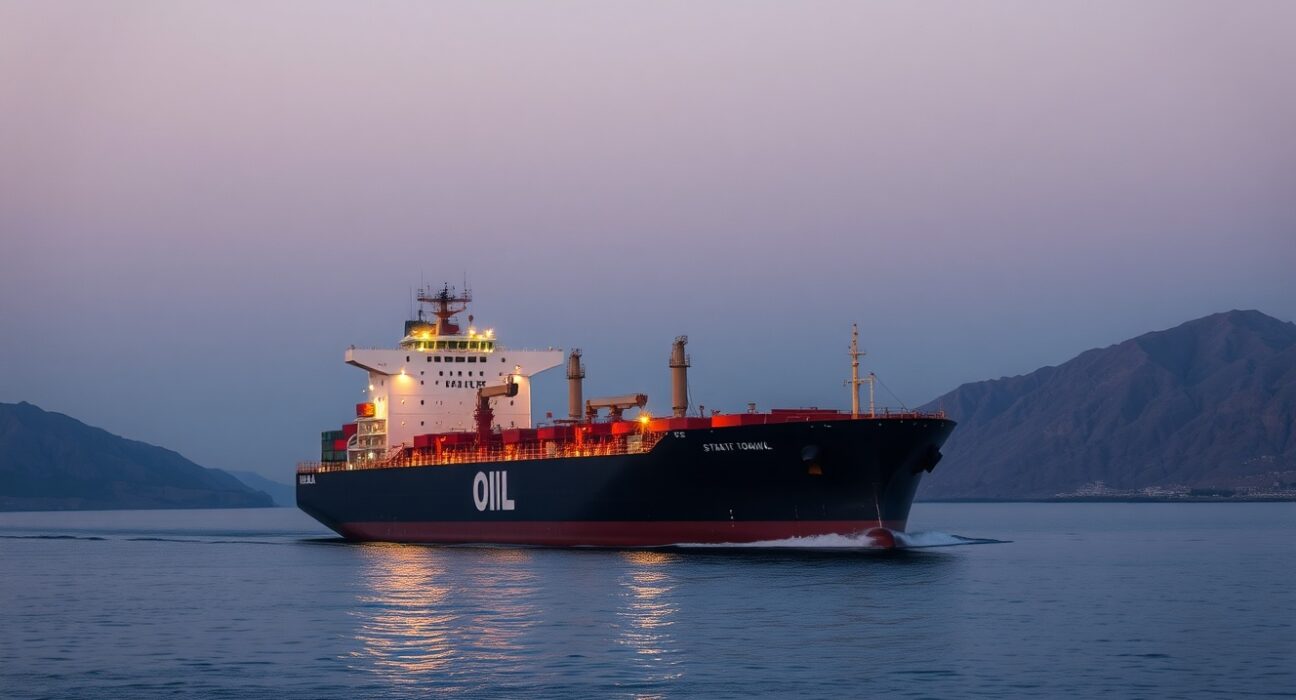
LONDON, March 2025 – A potential oil supply shock now threatens global energy stability as geopolitical tensions escalate around the Strait of Hormuz. Consequently, Rabobank analysts have issued a stark warning about the fragility of this critical maritime chokepoint. This development follows a series of regional incidents that have heightened market anxiety. Therefore, understanding the mechanics of this risk is crucial for investors and policymakers alike.
Oil Supply Shock: Anatomy of the Hormuz Crisis
The Strait of Hormuz represents the world’s most significant oil transit corridor. Every day, approximately 21 million barrels of crude oil and refined products, representing about 21% of global petroleum liquid consumption, pass through this narrow waterway. Consequently, any sustained disruption triggers immediate global price volatility. Rabobank’s latest research underscores that the current crisis differs from historical precedents due to modern market dynamics and reduced spare production capacity. For instance, the geopolitical landscape has become more multipolar, complicating diplomatic resolutions.
Several key factors amplify the current risk profile. Firstly, regional state and non-state actors possess advanced asymmetric naval capabilities. Secondly, global crude inventories remain relatively tight by historical standards. Thirdly, the strategic importance of the strait has grown with expanding Asian demand. Finally, alternative shipping routes lack the capacity to absorb a major closure. As a result, the market’s margin for error is exceptionally thin.
Rabobank’s Analytical Framework
Rabobank’s commodities team employs a multi-factor model to assess supply shock probabilities. Their analysis incorporates:
- Geopolitical Stability Index: Tracks incident frequency and severity in the Persian Gulf.
- Tanker Tracking Data: Monitors real-time shipping flows and insurance premiums.
- Strategic Petroleum Reserve Levels: Analyzes OECD nation buffer capacities.
- Producer Spare Capacity: Focuses on OPEC+ ability to offset disruptions.
Currently, their model indicates a heightened risk state not seen since 2019. Notably, insurance premiums for vessels transiting the area have surged by over 300% in the past quarter. Simultaneously, some shipping firms are voluntarily rerouting cargoes around the Cape of Good Hope, adding 15 days and significant cost to voyages.
Global Energy Markets on Edge
The potential for an oil supply shock sends ripples far beyond the crude market. Firstly, refined product markets, particularly diesel and jet fuel, face immediate pressure. Secondly, natural gas prices often correlate during periods of Middle East instability. Thirdly, equity markets, especially energy and transportation sectors, exhibit heightened sensitivity. For example, airline and shipping company stocks typically underperform during such crises.
A comparative analysis of historical Hormuz disruptions reveals instructive patterns:
| Event | Duration | Supply Loss (mb/d) | Price Impact |
|---|---|---|---|
| Tanker Wars (1984-1988) | Years | Variable | +15-25% |
| 2019 Attacks | Weeks | ~5.7 | +19% spike |
| Current Risk Scenario | Unknown | Potential 15-21 | Modeled +40-80% |
Rabobank stresses that today’s market structure could magnify price impacts. Specifically, algorithmic trading and passive commodity funds can amplify volatility. Moreover, the financialization of oil markets means price movements transmit faster to the broader economy.
Economic Impacts and Contingency Planning
A severe oil supply shock would have cascading economic consequences. Central banks would face a difficult trade-off between inflation control and growth support. Historically, oil price spikes have preceded several recessions. Consequently, governments are likely reviewing their emergency response protocols. The International Energy Agency (IEA) maintains coordinated release mechanisms for its member states’ strategic reserves. However, the scale of a potential Hormuz closure could test these systems.
Industry adaptation is already visible. Major oil companies are diversifying supply chains and increasing cybersecurity for offshore infrastructure. Meanwhile, national oil companies in consuming nations are engaging in direct government-to-government deals to secure volumes. This trend could reshape long-term oil trading relationships, potentially reducing the benchmark influence of Brent and WTI crude.
Navigating the Crisis: Expert Perspectives
Energy security experts emphasize that resolution requires multifaceted diplomacy. The narrow geography of the strait makes military protection of shipping inherently challenging. Therefore, de-escalation remains the preferred path for all major economies. Diplomatic channels are reportedly active, focusing on maritime confidence-building measures. However, the underlying regional tensions involve complex proxy dynamics and nuclear negotiations.
Market participants should prepare for continued volatility. Rabobank advises clients to:
- Stress-test portfolios for various oil price scenarios.
- Monitor tanker tracking data for early warning signs.
- Understand the nonlinear relationship between supply loss and price.
- Consider the secondary effects on currencies and bonds.
Technological solutions also offer partial mitigation. Enhanced satellite monitoring improves maritime domain awareness. Furthermore, distributed ledger technology for oil trading can increase transparency. Nevertheless, technology cannot resolve fundamental geopolitical disputes.
Conclusion
The warning from Rabobank highlights a clear and present danger to global oil supply stability. The Hormuz crisis represents a critical vulnerability in the world’s energy architecture. While markets have absorbed previous disruptions, the current confluence of tight fundamentals and heightened tensions raises the stakes significantly. Consequently, policymakers, corporations, and investors must incorporate this elevated risk of an oil supply shock into their strategic planning. The path forward demands vigilant monitoring, robust contingency planning, and sustained diplomatic engagement to safeguard this essential artery of global commerce.
FAQs
Q1: What exactly is the Strait of Hormuz, and why is it so important for oil?
The Strait of Hormuz is a narrow channel between Oman and Iran connecting the Persian Gulf to the Gulf of Oman and the open ocean. It is the world’s most important oil transit chokepoint because approximately 21 million barrels per day, or one-fifth of global supply, pass through it from producers like Saudi Arabia, Iraq, and the UAE to global markets.
Q2: How would a closure of the Strait of Hormuz actually happen?
A full, formal closure is considered unlikely. The more probable risk is a severe degradation of security leading to a de facto closure. This could result from mining campaigns, attacks on tankers, threats to navigation, or a military conflict that makes passage too risky for insurers and ship owners, effectively halting traffic.
Q3: What are the main alternative routes for oil if Hormuz is blocked?
Limited alternatives exist. Pipelines can redirect some Gulf oil to export terminals on the Red Sea (like the Petroline in Saudi Arabia) or the Mediterranean (via Iraq and Turkey). However, their combined capacity falls far short of Hormuz volumes. Shipping around the southern tip of Africa is possible but adds major cost and time.
Q4: How do strategic petroleum reserves (SPRs) help in a supply shock?
SPRs are government-controlled stockpiles of crude oil. In a major disruption, the IEA can coordinate a release of these barrels to the market, replacing missing supply temporarily. This can help stabilize prices and provide time for diplomatic or market adjustments. However, SPRs are a finite buffer, not a permanent solution.
Q5: What would be the immediate impact on gasoline prices for consumers?
An oil supply shock from a Hormuz crisis would cause a rapid and significant increase in global crude prices. This would translate into higher prices for gasoline, diesel, and jet fuel within weeks. The exact impact depends on the severity and duration of the disruption, but historical spikes have added dollars per gallon to pump prices.
Disclaimer: The information provided is not trading advice, Bitcoinworld.co.in holds no liability for any investments made based on the information provided on this page. We strongly recommend independent research and/or consultation with a qualified professional before making any investment decisions.
