
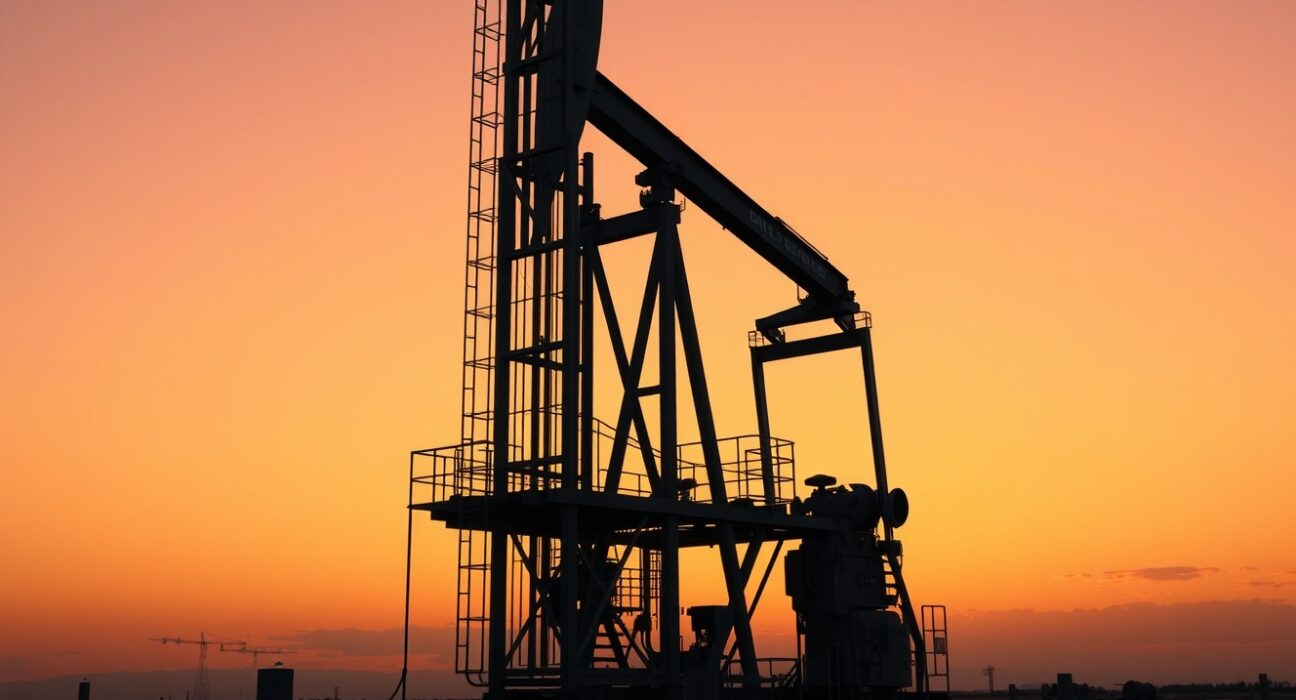
Global energy markets face renewed volatility as Standard Chartered issues a stark warning about potential oil supply shocks and their inflationary consequences. The international banking giant’s latest analysis, released this week, highlights growing vulnerabilities in the global oil supply chain that could trigger significant economic disruptions throughout 2025. These developments come amid ongoing geopolitical tensions and shifting energy policies worldwide.
Understanding Oil Supply Shock Risks
Standard Chartered’s research identifies several critical factors contributing to current supply vulnerabilities. The bank’s commodity analysts point to declining spare production capacity among major oil producers as a primary concern. Furthermore, geopolitical instability in key producing regions continues to threaten production stability. Investment in new production has remained insufficient to meet growing global demand projections.
The analysis specifically highlights three interconnected risk categories:
- Geopolitical disruptions: Ongoing conflicts and diplomatic tensions in major producing regions
- Infrastructure vulnerabilities: Aging production facilities and transportation networks
- Policy uncertainties: Shifting energy transition policies affecting investment decisions
Historical data reveals that similar supply constraints have preceded major price spikes. For instance, the 1973 oil embargo caused prices to quadruple within months. More recently, production cuts during the COVID-19 pandemic recovery created significant market imbalances. Standard Chartered’s models suggest current conditions mirror some of these historical precedents.
Inflation Focus and Economic Implications
Central banks worldwide now monitor oil price movements with heightened attention. Energy costs directly influence consumer price indices through transportation, manufacturing, and heating expenses. Standard Chartered economists calculate that every $10 increase in oil prices typically adds 0.4 percentage points to global inflation rates. This relationship remains particularly strong in developing economies where energy represents a larger portion of household budgets.
The Transmission Mechanism to Consumer Prices
Oil price increases affect inflation through multiple channels. Transportation costs immediately rise, affecting goods delivery prices. Manufacturing expenses increase as petroleum derivatives become more expensive. Energy utilities pass higher costs to consumers through electricity and heating bills. These effects typically manifest within one to three months of sustained price increases.
The following table illustrates historical correlations between oil price movements and inflation:
| Period | Oil Price Change | Inflation Impact | Duration |
|---|---|---|---|
| 2007-2008 | +$80/barrel | +2.1% global inflation | 18 months |
| 2011-2012 | +$40/barrel | +1.3% global inflation | 12 months |
| 2021-2022 | +$60/barrel | +1.8% global inflation | 15 months |
Market Dynamics and Production Challenges
Current global oil production faces structural constraints that amplify supply shock risks. The Organization of the Petroleum Exporting Countries (OPEC) and its allies maintain production cuts implemented during market downturns. Non-OPEC producers struggle with capital constraints and environmental pressures. Meanwhile, global oil inventories remain below five-year averages, providing limited buffer against supply disruptions.
Standard Chartered’s energy team notes several specific challenges:
- Declining production from mature fields exceeds new field development
- Investment in exploration has fallen 40% since 2014 peaks
- Technical constraints limit rapid production increases
- Environmental regulations complicate expansion plans
These factors combine to create what analysts term “supply inelasticity” – the inability to quickly increase production in response to price signals. This condition makes markets particularly vulnerable to unexpected disruptions.
Geopolitical Factors Amplifying Risks
Regional conflicts and diplomatic tensions significantly influence oil market stability. The Middle East, producing approximately 30% of global oil, experiences ongoing political uncertainties. Shipping routes through critical chokepoints face periodic security challenges. Additionally, sanctions regimes continue to affect production from several major producers.
Expert Analysis from Standard Chartered
Standard Chartered’s Head of Commodity Research, Paul Horsnell, emphasizes the interconnected nature of current risks. “We observe multiple pressure points simultaneously affecting global supply chains,” Horsnell states. “The convergence of geopolitical, operational, and investment challenges creates unprecedented vulnerability.” The bank’s models suggest a 35% probability of a major supply disruption within the next 18 months.
Other financial institutions echo these concerns. The International Energy Agency’s latest report notes declining global spare capacity. Investment banks including Goldman Sachs and Morgan Stanley have issued similar warnings about supply constraints. However, Standard Chartered’s analysis provides particularly detailed modeling of inflation transmission mechanisms.
Policy Responses and Market Adjustments
Governments and central banks prepare various responses to potential supply shocks. Strategic petroleum reserves in major consuming countries currently hold approximately 1.5 billion barrels. Central banks maintain contingency plans for energy-driven inflation spikes. International coordination mechanisms through the International Energy Agency provide additional response capacity.
Market participants adjust positions in anticipation of volatility. Hedge funds increase long positions in oil futures contracts. Energy companies accelerate hedging activities. Industrial consumers explore alternative energy sources and efficiency improvements. These adjustments themselves influence market dynamics, creating complex feedback loops.
Conclusion
Standard Chartered’s warning about oil supply shock risks and inflation focus highlights significant vulnerabilities in global energy markets. The convergence of geopolitical tensions, production constraints, and inventory limitations creates conditions ripe for volatility. Policymakers, investors, and consumers must prepare for potential disruptions that could affect economic stability throughout 2025 and beyond. Monitoring these developments remains crucial for informed decision-making across all economic sectors.
FAQs
Q1: What exactly constitutes an oil supply shock?
An oil supply shock refers to a sudden, unexpected reduction in global oil supply, typically caused by geopolitical events, natural disasters, or coordinated production cuts. These events cause rapid price increases and economic disruptions.
Q2: How quickly do oil price increases translate to higher consumer inflation?
Transportation and energy costs typically reflect oil price changes within one to three months. Broader consumer price effects manifest over three to six months as increased production costs work through supply chains.
Q3: Which economies are most vulnerable to oil supply shocks?
Developing economies with high energy intensity and limited alternative energy sources face greatest vulnerability. Net oil-importing nations experience more severe impacts than exporting countries.
Q4: What measures can governments take to mitigate supply shock impacts?
Governments can release strategic petroleum reserves, implement temporary fuel subsidies, encourage energy conservation, accelerate alternative energy deployment, and coordinate international responses through organizations like the IEA.
Q5: How does Standard Chartered’s warning compare to other financial institutions’ assessments?
While multiple institutions note supply constraints, Standard Chartered provides particularly detailed analysis of inflation transmission mechanisms and probability assessments. Their 35% disruption probability represents a more specific quantification than most comparable reports.
Disclaimer: The information provided is not trading advice, Bitcoinworld.co.in holds no liability for any investments made based on the information provided on this page. We strongly recommend independent research and/or consultation with a qualified professional before making any investment decisions.