
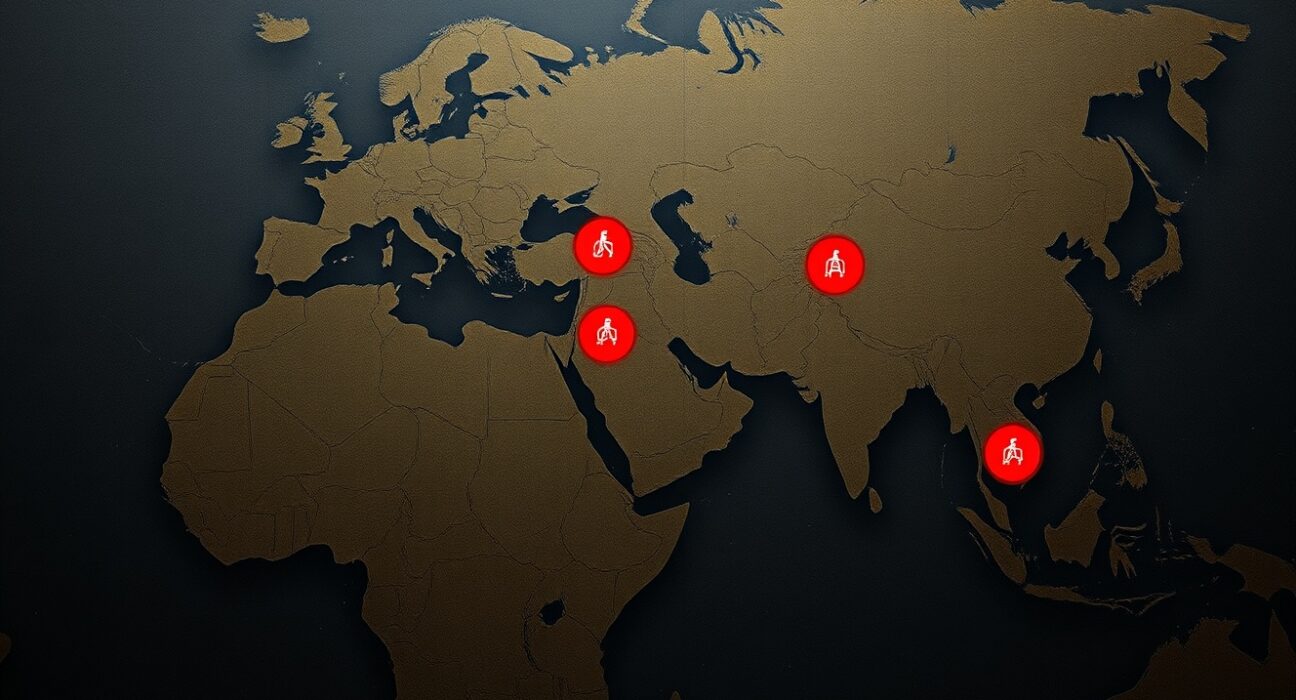
Global oil markets in 2025 face a precarious balancing act, navigating persistent geopolitical conflicts and acute supply chain vulnerabilities that threaten price stability and energy security worldwide. According to recent analysis from Rabobank, the convergence of these factors creates a high-risk environment where sudden price spikes remain a constant threat. This analysis delves into the specific flashpoints, historical precedents, and potential economic impacts shaping the current energy landscape.
Oil Market Risks in a Fractured Geopolitical Landscape
The primary driver of current oil market volatility stems from active military conflicts in key producing regions. Historically, geopolitical instability in the Middle East has triggered significant oil price shocks. For instance, the 1973 Arab oil embargo and the 1990 Gulf War each caused dramatic price increases. Today, analysts monitor several ongoing and potential conflicts with similar disruptive capacity. These conflicts directly threaten production infrastructure, export routes, and investor confidence. Consequently, markets price in a significant ‘geopolitical risk premium,’ adding several dollars to the cost of each barrel. This premium fluctuates daily based on news headlines and diplomatic developments.
Furthermore, the strategic importance of maritime chokepoints cannot be overstated. Approximately 20% of the world’s oil supply transits through the Strait of Hormuz. Any military incident in this narrow waterway could immediately halt a substantial portion of global seaborne trade. Similarly, disruptions in the Red Sea or the Bab el-Mandeb Strait have recently forced tankers onto longer, more expensive routes. These rerouting efforts increase shipping costs and delivery times, effectively tightening physical supply. Therefore, the security of these maritime corridors remains a critical, yet fragile, component of global energy flow.
Rabobank’s Analysis of Supply Chain Vulnerabilities
Rabobank’s research highlights that modern oil supply chains are surprisingly fragile. They depend on a complex network of extraction, transportation, refining, and distribution. A disruption at any single node can cascade through the entire system. For example, targeted attacks on pipeline infrastructure or export terminals can halt production from an entire field for weeks. The 2019 attacks on Saudi Arabia’s Abqaiq facility temporarily removed 5% of global supply. Such events demonstrate the asymmetric impact of targeted strikes. Modern infrastructure, while efficient, often lacks redundancy, making it vulnerable to deliberate sabotage or accidental damage.
Additionally, the global refining system faces its own constraints. Many refineries are configured for specific crude oil grades. A disruption in a particular type of oil, like light sweet crude from one region, cannot always be easily replaced by heavier sour crude from another. This logistical inflexibility can cause regional shortages and price distortions even when global supply appears adequate. The table below outlines key vulnerability points identified in recent supply chain analyses.
| Vulnerability Point | Potential Impact | Historical Example |
|---|---|---|
| Maritime Chokepoints | Blockade or attack halting tanker traffic | Strait of Hormuz tensions (2019) |
| Pipeline Networks | Sabotage causing long-term shutdowns | Nord Stream pipeline incidents (2022) |
| Export Terminals | Fire or attack stopping all exports from a country | Libyan port blockades (2020, 2022) |
| Refining Capacity | Storm or accident reducing fuel output | US Gulf Coast hurricanes (2005, 2017) |
The Economic Impact of Energy Price Volatility
Sustained high oil prices or extreme volatility act as a tax on global economic growth. They increase costs for transportation, manufacturing, and agriculture. Central banks then face a difficult dilemma: combat inflation driven by energy costs or support economic growth. For net oil-importing nations, a rising oil price worsens trade deficits and can lead to currency depreciation. This dynamic creates a feedback loop, making oil even more expensive in local currency terms. Emerging economies are often the most vulnerable to these shocks, as energy constitutes a larger share of their import bills and consumer spending.
Conversely, oil-exporting countries experience a windfall from high prices, but this revenue is often unstable. Reliance on volatile petrodollars can delay necessary economic diversification, a phenomenon known as the ‘resource curse.’ For global financial markets, oil volatility increases uncertainty, affecting everything from airline stocks to broader equity indices. Investors typically flock to safe-haven assets like gold and the US dollar during periods of oil-driven market stress. This flight to safety can tighten financial conditions globally, making borrowing more expensive for businesses and governments.
Strategic Reserves and Market Responses
Governments use strategic petroleum reserves (SPRs) as a primary tool to mitigate supply shocks. The coordinated release of reserves by the International Energy Agency (IEA) member countries can provide a temporary buffer. However, these reserves are finite and take time to replenish. Their use signals serious market concern, which can sometimes exacerbate anxiety rather than calm it. Furthermore, the physical logistics of moving oil from storage caverns to refineries limit the speed of the response. Market participants also employ financial instruments like futures and options to hedge against price moves. While these tools manage risk for individual companies, they do not create new physical supply during a genuine shortage.
Future Outlook and Mitigation Strategies
The long-term solution to geopolitical oil risk involves reducing dependency. This means accelerating the energy transition towards renewables and enhancing energy efficiency. However, in the short to medium term, oil remains indispensable. Therefore, risk mitigation focuses on diversification. This includes diversifying supply sources, investing in alternative transportation routes like new pipelines or rail networks, and building more flexible refining capacity. Countries are also strengthening diplomatic and security partnerships to protect vital shipping lanes. Energy security is increasingly viewed through a national security lens, leading to more strategic stockpiling and investment in domestic production where possible.
Technological advancements offer some hope for resilience. Improved monitoring of pipelines and infrastructure using satellites and drones can help prevent attacks or enable faster repairs. Digital twins of supply networks allow for better crisis simulation and planning. Additionally, advances in battery storage and electric vehicles gradually reduce oil demand in the transport sector, though this is a decades-long process. For now, the market must navigate the inherent risks of a concentrated, geopolitically sensitive commodity. Analysts agree that preparedness and transparency are key to managing the inevitable next crisis.
Conclusion
The intersection of war risks and supply disruption creates a persistently high-risk environment for the global oil market. As Rabobank’s analysis underscores, the fragility of modern supply chains, combined with ongoing geopolitical tensions, means volatility is likely to remain a defining feature. While strategic reserves and market mechanisms provide some cushion, they are reactive tools. Ultimately, enhancing energy security requires a multi-faceted approach combining supply diversification, accelerated transition, and robust diplomatic efforts to stabilize producing regions. The stability of oil prices remains a cornerstone of global economic stability, making the management of these oil market risks a paramount concern for policymakers and investors alike in 2025.
FAQs
Q1: What is a ‘geopolitical risk premium’ in oil prices?
The geopolitical risk premium is the additional amount per barrel that traders build into the oil price due to the potential for supply disruptions from wars, sanctions, or political instability. It reflects uncertainty, not an actual loss of supply.
Q2: Which regions pose the greatest war risk to oil supplies in 2025?
Analysts currently flag the Middle East (particularly around the Strait of Hormuz), Eastern Europe, and certain parts of Africa as regions where conflict could most directly impact major oil production or transit routes.
Q3: How do supply disruptions actually affect gasoline prices?
A disruption reduces the physical availability of crude oil. Refineries then compete for a smaller pool of supply, driving up the crude price. This higher cost is passed through the refining and distribution chain, resulting in higher prices at the pump, often with a lag of several weeks.
Q4: Can renewable energy reduce these oil market risks?
Yes, but gradually. Widespread adoption of electric vehicles and renewable power generation reduces overall oil demand, decreasing the market’s exposure to supply shocks from any single region. However, oil will remain crucial for transport, petrochemicals, and other uses for decades.
Q5: What is the role of the Strategic Petroleum Reserve (SPR)?
The SPR is a government-controlled stockpile of crude oil. Its purpose is to provide an emergency supply to the market during a severe physical shortage, such as one caused by a major hurricane, war, or embargo, helping to stabilize prices and ensure continued fuel supply.
Disclaimer: The information provided is not trading advice, Bitcoinworld.co.in holds no liability for any investments made based on the information provided on this page. We strongly recommend independent research and/or consultation with a qualified professional before making any investment decisions.