

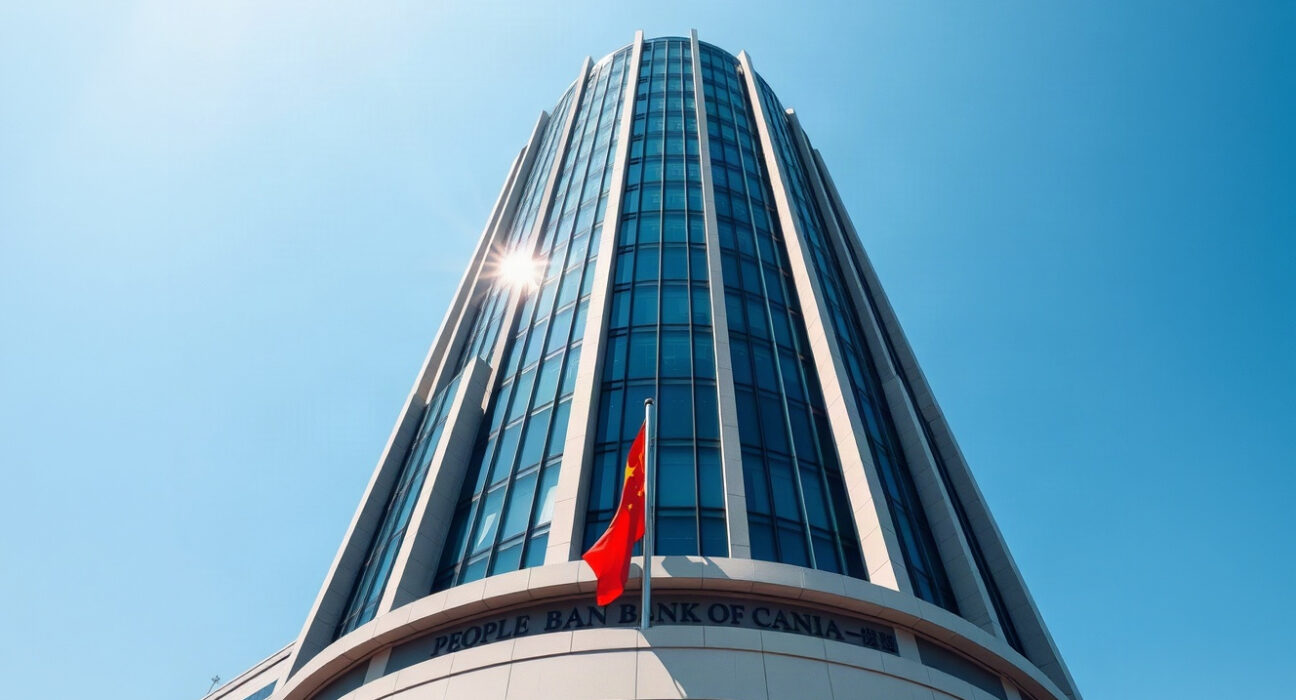
The People’s Bank of China (PBOC) left its benchmark Loan Prime Rates (LPR) unchanged at its monthly fixing on Tuesday, August 20, 2024, keeping the 1-year LPR at 3.45% and the 5-year LPR at 4.20%.
The decision, which was widely anticipated by economists, signals a pause in monetary easing as Beijing balances the need to support a sluggish property sector and consumer demand against concerns about a weakening yuan and narrowing bank profit margins.
Why Did the PBOC Hold Rates Steady?
The central bank’s decision follows a surprise cut to key policy rates in July, which lowered the 7-day reverse repo rate and the 1-year Medium-term Lending Facility (MLF) rate. The August LPR fixing was expected to remain on hold after the PBOC kept the MLF rate unchanged earlier in the month.
Economists point to several factors behind the decision to hold steady. First, the July rate cuts are still filtering through the economy, and policymakers are likely monitoring their impact on credit demand and economic activity. Second, the PBOC is mindful of the depreciation pressure on the yuan, as a widening interest rate differential with the US dollar could trigger capital outflows.
Furthermore, Chinese commercial banks have faced significant pressure on their net interest margins. A further cut to the LPR, particularly the 5-year rate, would compress profitability further, potentially impacting their ability to lend and manage financial risks.
What Is the Impact on the Property Market and Borrowers?
The 5-year LPR, which serves as a benchmark for most household mortgages, remained at 4.20%. The property sector, which has been a major drag on economic growth, has been waiting for further policy support. While the unchanged rate offers no immediate relief to existing homeowners with floating-rate mortgages, it also does not add additional pressure.
New homebuyers in major cities may still benefit from lower mortgage rates through separate policy adjustments by local governments, which have been relaxing home purchase restrictions and cutting down payment ratios. The stability in the LPR, however, suggests that a more aggressive, nationwide easing measure is not imminent.
What Does This Mean for the Broader Economy?
The steady LPR underscores the PBOC’s cautious approach to monetary policy. While the economy faces headwinds from weak consumer confidence, deflationary pressures, and a property market downturn, the central bank is constrained by external factors such as the US Federal Reserve’s high interest rates and global economic uncertainty.
The decision aligns with the government’s broader strategy of targeted, measured stimulus rather than a large-scale, broad-based easing package. The focus remains on fiscal support, such as infrastructure investment and consumer trade-in programs, to complement monetary policy.
For businesses, the unchanged 1-year LPR means the cost of short-term loans remains stable, which is a neutral factor for corporate investment decisions. The key question moving forward is whether the PBOC will resume its easing cycle in the fourth quarter, depending on economic data and the trajectory of the US Federal Reserve’s policy.
Conclusion
The PBOC’s decision to hold Loan Prime Rates unchanged in August reflects a period of policy observation. After the July rate cuts, the central bank is allowing time for the effects to materialize while managing external risks. The move provides stability for borrowers and businesses in the short term, but the path of future easing will depend on incoming economic indicators and global financial conditions.
FAQs
Q1: What are China’s Loan Prime Rates?
The Loan Prime Rate (LPR) is the benchmark lending rate for Chinese banks, set monthly by the PBOC. It is used to price most new loans, including those for households and businesses.
Q2: Why does the 5-year LPR matter for homeowners?
The 5-year LPR is the primary reference rate for long-term loans, including most residential mortgages. A change in this rate directly affects the monthly payments for homeowners with floating-rate loans.
Q3: What is the difference between the LPR and the MLF rate?
The Medium-term Lending Facility (MLF) is a tool the PBOC uses to inject liquidity into the banking system. The MLF rate influences the cost of funds for banks, which in turn is a key input for the LPR fixing. Changes to the MLF rate often signal the direction of future LPR adjustments.
Disclaimer: The information provided is not trading advice, Bitcoinworld.co.in holds no liability for any investments made based on the information provided on this page. We strongly recommend independent research and/or consultation with a qualified professional before making any investment decisions.
