

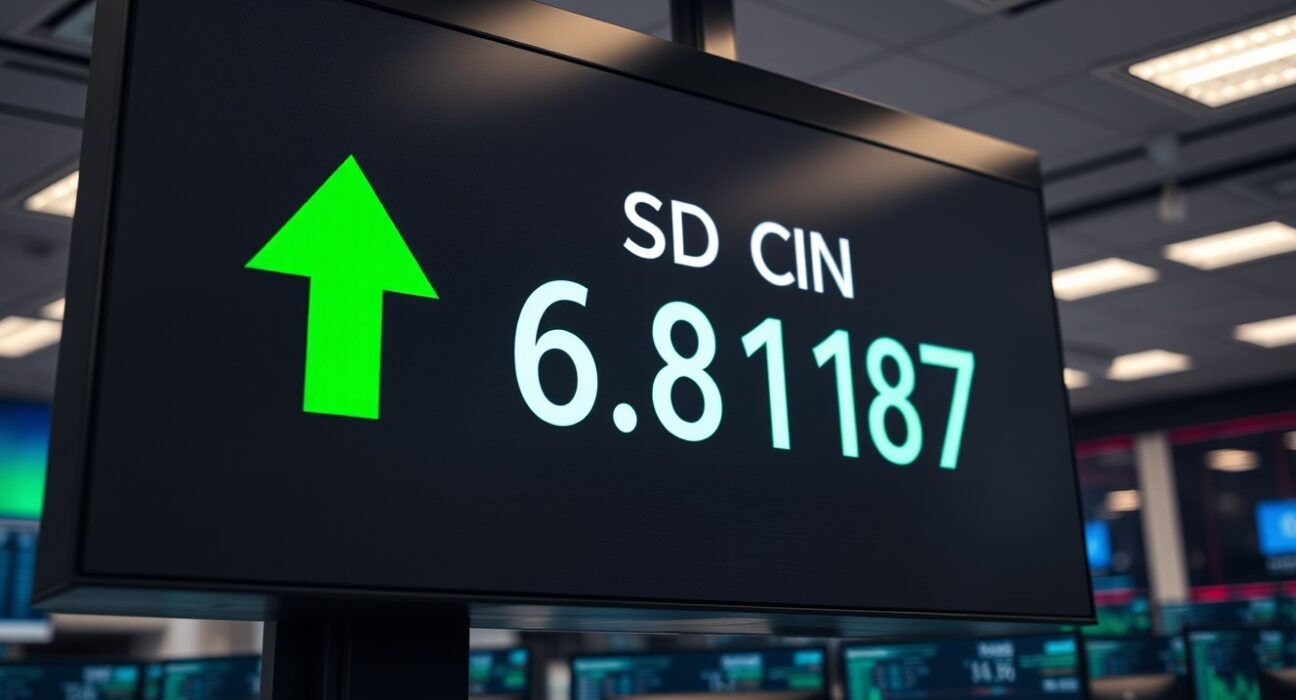
The People’s Bank of China (PBOC) set the daily reference rate for the yuan at 6.8187 against the U.S. dollar on Tuesday, a marginal adjustment from the previous fixing of 6.8167. This move comes amid ongoing market scrutiny of China’s currency policy and its broader economic trajectory.
Understanding the Central Parity Rate
The PBOC establishes a central parity rate for the yuan each trading day. This rate serves as a benchmark, allowing the currency to trade within a 2% band above or below the fixing. The latest adjustment, while small, signals the central bank’s continued management of the yuan’s value in a volatile global forex environment. Traders and analysts closely watch these daily fixings for hints about China’s policy stance on currency stability versus competitiveness.
Market Context and Implications
The slight weakening of the reference rate to 6.8187 from 6.8167 occurs against a backdrop of persistent pressure on the yuan. Factors such as a strong U.S. dollar, expectations of further Federal Reserve rate hikes, and China’s own slowing economic growth have contributed to the yuan’s depreciation trend in recent months. A lower reference rate can make Chinese exports cheaper on global markets, potentially providing a boost to the country’s trade sector, but it also risks capital outflows and inflationary pressures from more expensive imports.
What This Means for Traders and Businesses
For forex traders, the daily PBOC fixing is a critical data point that influences intraday trading strategies for the yuan. A rate set weaker than market expectations can signal official tolerance for further depreciation, while a stronger fixing can be interpreted as a defense of the currency. For businesses engaged in cross-border trade with China, even small changes in the reference rate can affect profit margins on contracts denominated in yuan, making hedging strategies more important.
Conclusion
The PBOC’s decision to set the USD/CNY reference rate at 6.8187 represents a routine but closely watched policy action. While the change from the previous day is minimal, it underscores the central bank’s active role in managing the yuan’s value amid ongoing global economic uncertainties. Market participants will continue to monitor future fixings for clearer directional signals on China’s currency policy.
FAQs
Q1: What is the PBOC reference rate?
The PBOC reference rate, also known as the central parity rate, is a daily fixing set by the People’s Bank of China for the yuan. It serves as the midpoint from which the currency can trade within a 2% band on the interbank market.
Q2: Why does the PBOC change the reference rate?
The PBOC adjusts the rate to reflect market conditions and policy objectives, such as maintaining currency stability, supporting exports, or managing capital flows. The change is based on a formula that considers the previous day’s closing price and a basket of currencies.
Q3: How does a change in the reference rate affect me?
If you trade with Chinese companies, invest in Chinese assets, or travel to China, changes in the reference rate can impact the exchange rate you get. A weaker yuan makes Chinese goods cheaper but can reduce the value of yuan-denominated investments.
Disclaimer: The information provided is not trading advice, Bitcoinworld.co.in holds no liability for any investments made based on the information provided on this page. We strongly recommend independent research and/or consultation with a qualified professional before making any investment decisions.
