

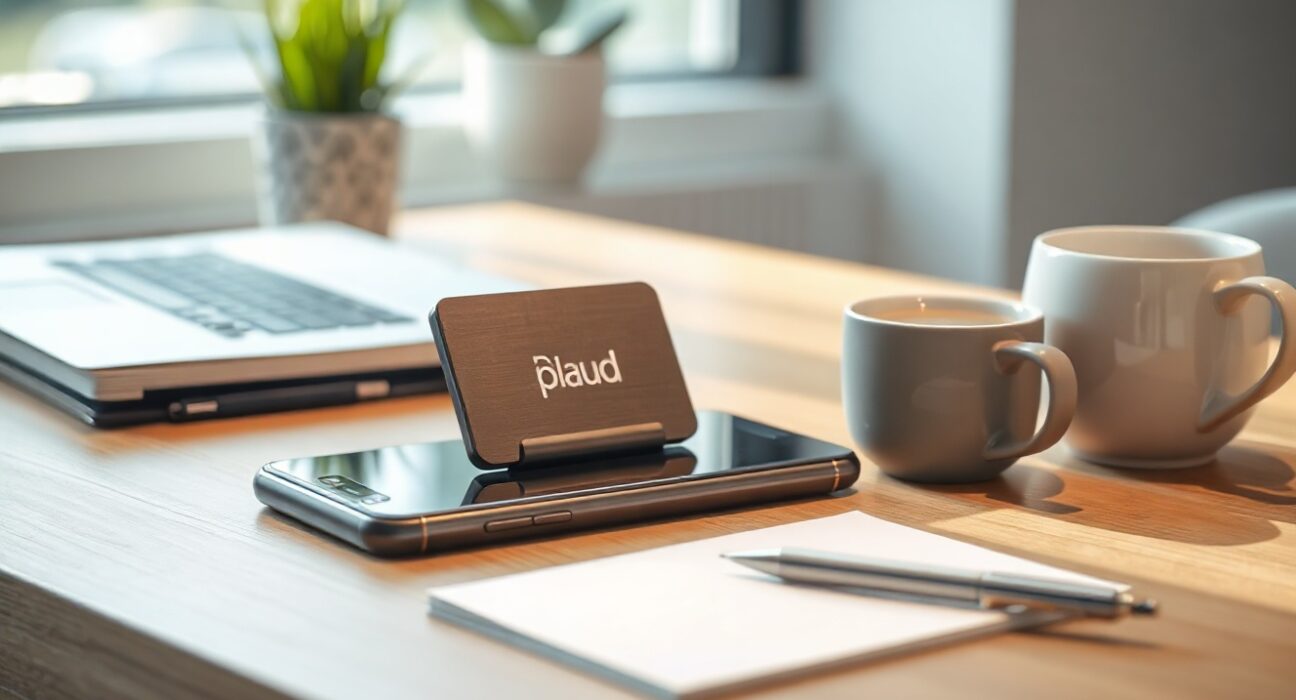
Plaud, a company that builds AI-powered notetaking hardware, said its subscription business has surpassed $100 million in annualized recurring revenue (ARR) after selling more than 2 million devices. The milestone is notable in a market where many AI startups have focused exclusively on software, and where hardware ventures have often struggled to scale.
A bet on real-world conversations
Unlike AI tools that operate entirely through screens and keyboards, Plaud’s devices — including the credit-card-sized Plaud Pro and the newer Plaud Pin S — are designed to capture conversations in person. The gadgets attach to the back of a phone and transcribe meetings, generating summaries and action items without requiring the user to type or look at a screen.
“Most AI companies have scaled through software behind a screen. We took a different path,” said Nathan Xu, co-founder and CEO of Plaud, in a statement. “The conversations that actually move things forward don’t happen on a keyboard.”
The company launched the $179 Plaud Pro last year and introduced the Plaud Pin S at a similar price point this year. Both devices rely on AI to process spoken language, aiming to serve professionals who attend frequent meetings and need reliable notes without manual effort.
Revenue driven by paid upgrades
Plaud’s revenue model combines hardware sales with subscription plans. Users who buy a device receive 300 minutes of free transcription per month. Those who need more — common among heavy meeting-goers — can upgrade to monthly, annual, or add-on plans. According to Xu, nearly 50% of device owners have converted from the free tier to a paid plan, which powers the majority of the company’s subscription revenue.
Notably, Plaud does not currently sell standalone software subscriptions. Every paying user also owns a Plaud device, reinforcing the hardware-first strategy.
Competition and market context
The meeting note-taking hardware segment is becoming crowded. Competitors include Anker, the accessories giant; Transsion-backed Viaim; Sequoia China-backed Vibe; and Y Combinator-backed Pocket. Plaud’s claim of 2 million units sold and $100M ARR positions it as one of the larger players in this niche, though the company has not disclosed whether it is profitable.
Earlier this year, Plaud expanded beyond hardware by launching a desktop app that can take notes from system audio during online meetings — a feature reminiscent of Granola. In March, it introduced Plaud Teams, an enterprise-focused product with shared memory capabilities.
Why this matters
Plaud’s growth offers a counterpoint to the narrative that AI hardware is a difficult market. While many AI wearables and gadgets have failed to gain traction, Plaud’s focus on a specific, high-frequency use case — meeting notes — appears to have resonated with professionals. The company’s ability to convert nearly half its hardware buyers into recurring subscribers also suggests that the product delivers enough value to justify ongoing payments.
Still, the hardware market remains competitive and fast-evolving. Plaud will need to continue differentiating its software features and enterprise offerings to maintain momentum as larger players like Anker enter the space.
Conclusion
Plaud has reached $100M in ARR and sold over 2 million AI notetakers by betting on hardware that captures real-life conversations. The company’s subscription conversion rate and recent enterprise push suggest it is building a sustainable business, but it faces increasing competition from both established hardware makers and AI-native startups. For professionals drowning in meetings, Plaud’s approach offers a screen-free way to stay organized — a value proposition that, for now, appears to be working.
FAQs
Q1: What does Plaud’s AI notetaker do?
A: Plaud’s devices are small, screen-free gadgets that attach to a phone and transcribe in-person or online meetings. They generate summaries, action items, and key points using AI, allowing users to recall important information without manual note-taking.
Q2: How much does a Plaud device cost?
A: The Plaud Pro and Plaud Pin S are both priced around $179. Users get 300 minutes of free transcription per month, with paid plans available for additional minutes and features.
Q3: Is Plaud profitable?
A: The company has not disclosed profitability. It reported $100M in annualized recurring revenue from subscriptions and has sold over 2 million devices, but hardware margins and operating costs remain unclear.
Disclaimer: The information provided is not trading advice, Bitcoinworld.co.in holds no liability for any investments made based on the information provided on this page. We strongly recommend independent research and/or consultation with a qualified professional before making any investment decisions.
