

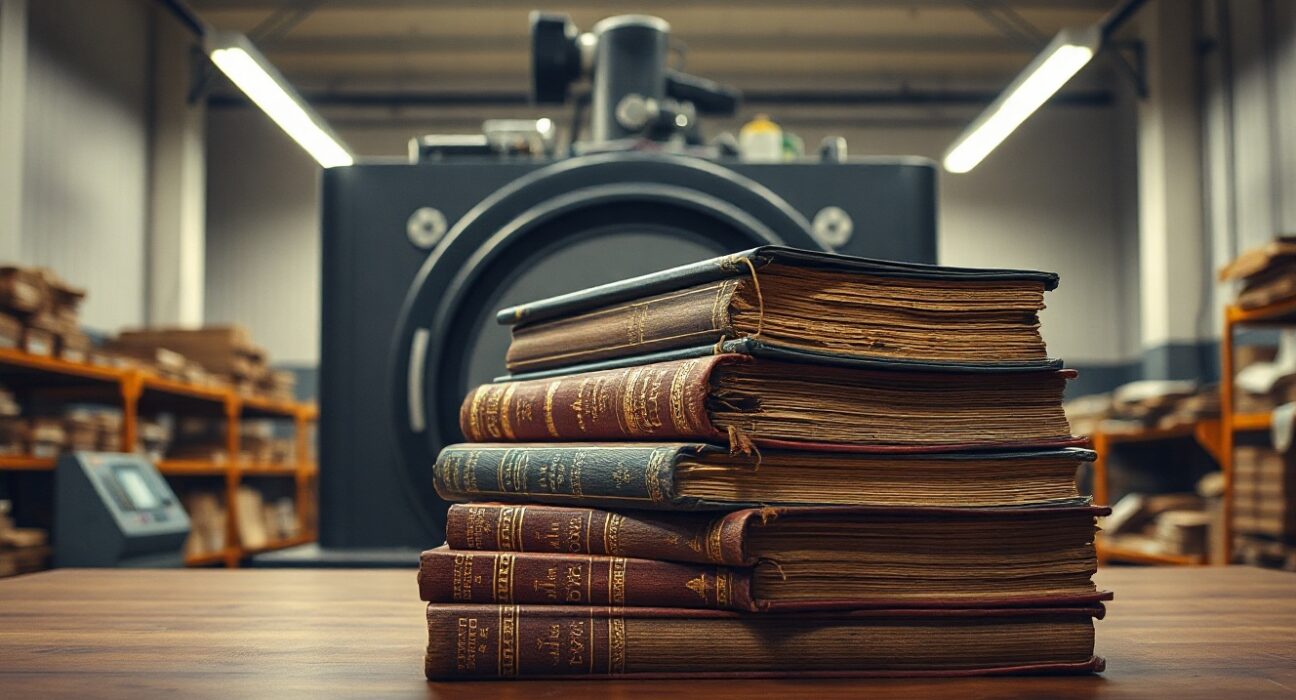
Amazon is purchasing large quantities of rare books, cutting off their spines, and scanning them for AI training, according to a report from 404 Media. The investigation placed a tracking device in a rare book that ultimately arrived at an Amazon facility in Las Vegas, known as VGT3, which is marked with a symbol of a dinosaur holding a book. Amazon confirmed to 404 Media that it “purchases books through commercial channels to improve the products and services customers use,” but did not deny the practice.
Why rare books are valuable for AI training
Companies like Amazon require enormous amounts of text to train large language models (LLMs), and much of the internet has already been ingested. Rare books, especially out-of-print or hard-to-find titles, offer a fresh source of training data. These texts are particularly valuable because anything published before 2022 is guaranteed to be human-written, avoiding the risk of “model collapse.” Model collapse occurs when an LLM trains on AI-generated text, degrading the quality of its outputs over time.
What the investigation found
404 Media placed a tracking device inside a rare book to trace its journey. The book was eventually delivered to Amazon’s VGT3 facility in Las Vegas, where the company processes books for digitization. The facility’s logo—a dinosaur clutching a book—symbolizes the transformation of physical books into digital data. Amazon’s statement to 404 Media did not address the destruction of the books, but the practice of cutting spines is a common method for scanning bound volumes efficiently.
Implications for copyright and the rare book market
This practice raises significant copyright concerns. While Amazon may own the physical copies, the right to digitize and use them for AI training is not automatically granted. Authors and publishers may argue that such use violates their intellectual property rights. Additionally, the destruction of rare books—some of which are irreplaceable—has alarmed collectors and archivists who see it as a loss of cultural heritage. The rare book market could also be affected, as demand for these titles may increase if they become known as AI training sources.
Why this matters to readers
This story highlights the lengths to which tech companies will go to secure high-quality training data. It also underscores the ethical and legal gray areas surrounding AI development. As AI models become more integrated into daily life, understanding how they are built is crucial. For authors, publishers, and book lovers, this practice raises questions about the future of physical books and the rights of creators in the digital age.
Conclusion
Amazon’s reported destruction of rare books for AI training represents a significant intersection of technology, copyright, and cultural preservation. While the company has confirmed purchasing books for this purpose, it has not addressed the ethical implications. As AI training data becomes scarcer, such practices may become more common, prompting a need for clearer regulations.
FAQs
Q1: Why is Amazon destroying rare books?
Amazon is cutting the spines off rare books to scan them for AI training. This method allows for efficient digitization of bound volumes, which are then used as training data for large language models.
Q2: What is model collapse?
Model collapse is a phenomenon where an AI model’s outputs degrade after training on AI-generated text. Using rare, human-written books helps avoid this issue, ensuring higher-quality training data.
Q3: Is this practice legal?
The legality is unclear. While Amazon owns the physical books, the right to digitize and use them for AI training may not be covered by copyright law. This could lead to legal challenges from authors and publishers.
Disclaimer: The information provided is not trading advice, Bitcoinworld.co.in holds no liability for any investments made based on the information provided on this page. We strongly recommend independent research and/or consultation with a qualified professional before making any investment decisions.
