

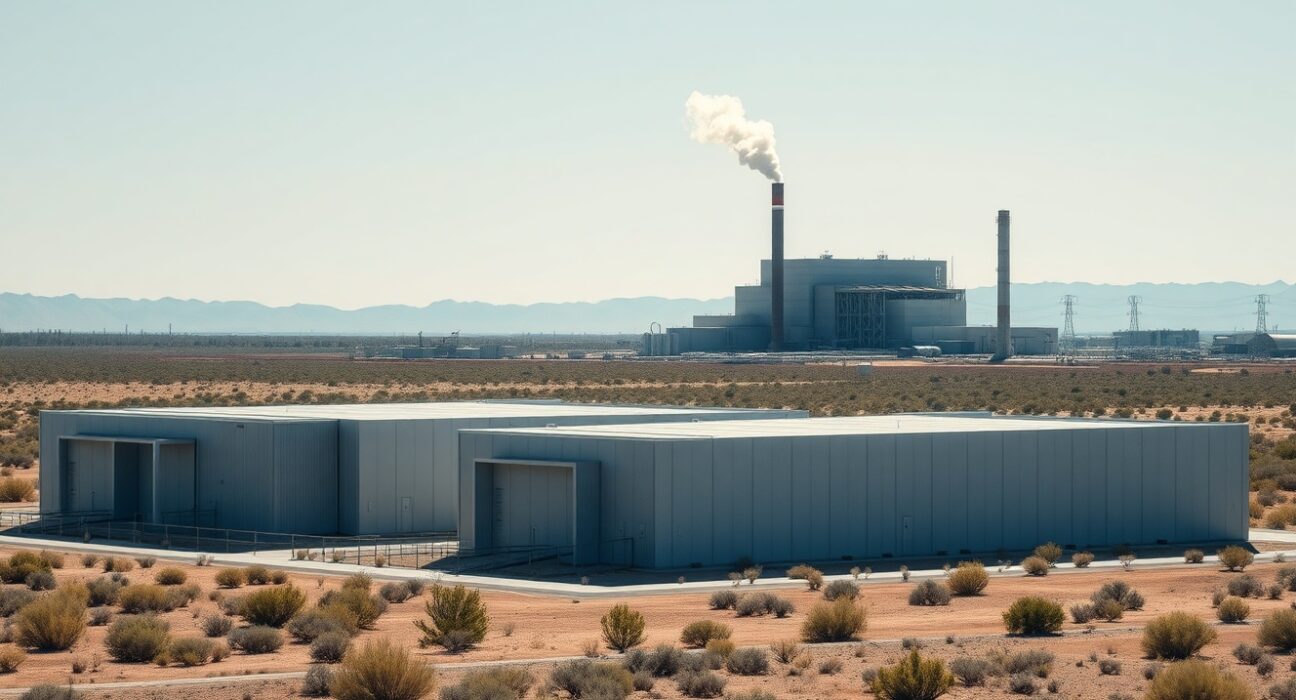
Amazon’s planned data center in Pecos County, Texas, could become the largest source of climate pollution in the United States, according to a report by The New York Times. The company is investing in an on-site natural gas power plant that is permitted to release 33 million tons of carbon dioxide per year, surpassing any other power plant in the country. This development underscores the growing environmental cost of the artificial intelligence boom, which has significantly increased energy demand from tech companies.
What Are the Details of the Planned Facility?
The proposed natural gas plant would be built specifically to power Amazon’s data center in Pecos County, a rural area in West Texas. The plant’s annual emissions of 33 million tons of CO2 would exceed those of the nation’s current largest emitter, according to the NYT report. Amazon has confirmed the data center will be powered by new on-site generation, adding that it won’t raise electricity costs for Texas families. However, the project highlights a broader trend of tech giants turning to fossil fuels to meet the immense power demands of AI infrastructure.
How Does This Affect Amazon’s Climate Commitments?
Amazon has pledged to eliminate its carbon emissions by 2040 under The Climate Pledge, which it co-founded. However, the company’s carbon emissions rose 16% last year, a trend that could worsen with the addition of new fossil-fuel-powered data centers. An Amazon spokesperson acknowledged that “the world looks different now than when we co-founded the climate pledge,” but maintained that “our commitment hasn’t changed.” This tension between growth and sustainability is a central challenge for the tech industry as AI expands.
Why Is This Significant for the Tech Industry?
The Amazon project is not isolated. Other major tech companies are also backing large natural gas plants to support their data centers, raising concerns about the environmental impact of AI. Data centers already face growing political opposition due to their electricity consumption and effect on local power costs. This case exemplifies the conflict between rapid technological advancement and environmental responsibility, a debate that will likely intensify as AI continues to scale.
Conclusion
The planned Pecos County data center represents a pivotal moment in the intersection of technology, energy, and climate policy. With emissions projected to exceed all other U.S. power plants, the project poses significant questions about the sustainability of AI growth. As Amazon and its peers navigate these challenges, the decisions made now will shape the industry’s environmental legacy for decades.
FAQs
Q1: Why is Amazon building a natural gas plant for its data center?
Amazon is building the plant to ensure reliable, on-site power for its data center in Pecos County, Texas, which requires massive amounts of electricity. The company states this approach won’t increase electricity costs for Texas families, but it will result in significant carbon emissions.
Q2: How does this affect Amazon’s goal to be carbon neutral by 2040?
The new plant could substantially increase Amazon’s carbon footprint, moving the company further from its 2040 net-zero goal. Amazon’s emissions already rose 16% last year, and this project may accelerate that trend, despite the company’s pledge.
Q3: Are other tech companies doing the same thing?
Yes, several major tech companies are investing in natural gas plants to power data centers, driven by the energy demands of AI. This has led to concerns about the environmental impact of the tech sector and increased political scrutiny over data center energy use.
Disclaimer: The information provided is not trading advice, Bitcoinworld.co.in holds no liability for any investments made based on the information provided on this page. We strongly recommend independent research and/or consultation with a qualified professional before making any investment decisions.
