

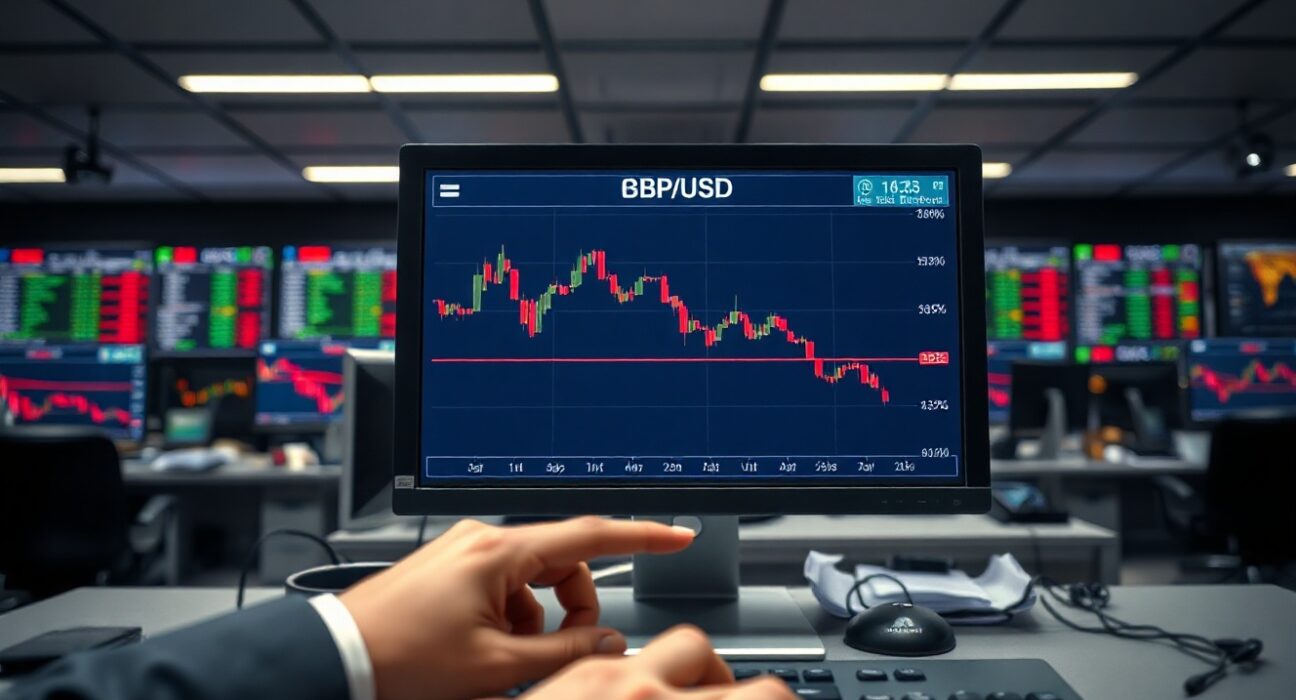
The British pound weakened against the US dollar in recent trading sessions, with the GBP/USD pair moving lower even as demand for the dollar as a safe-haven asset appeared to ease. This divergence highlights the complex dynamics currently driving the foreign exchange market, where traditional risk correlations are not holding as strongly as they typically do.
Why is the dollar gaining ground?
The US dollar’s resilience comes despite a perceived reduction in global risk aversion. Typically, the dollar strengthens when investors seek safety during times of economic or geopolitical turmoil. However, the current move appears to be driven more by domestic economic factors than by a flight to safety. Recent economic data from the United States has pointed to a more resilient economy than many analysts had anticipated, leading to speculation that the Federal Reserve may maintain higher interest rates for a longer period. This prospect of elevated yields makes the dollar more attractive to international investors seeking better returns, thereby supporting its value against other major currencies.
What is weighing on the British pound?
On the other side of the pair, the British pound is facing its own set of headwinds. Market participants are closely monitoring the UK’s economic outlook, which remains clouded by persistent inflationary pressures and sluggish growth figures. The Bank of England’s policy path is under scrutiny, with traders pricing in potential interest rate cuts later this year to stimulate the economy. The prospect of looser monetary policy in the UK, juxtaposed with a potentially tighter stance from the Federal Reserve, narrows the interest rate differential in favor of the dollar, putting downward pressure on the pound. This dynamic is occurring even as the initial panic that often drives safe-haven flows has subsided, indicating that the currency movement is more about relative monetary policy expectations than about risk sentiment.
Market Implications and Trader Sentiment
For traders and investors, this unusual market behavior underscores the importance of focusing on central bank policy and macroeconomic data rather than solely on geopolitical headlines. The current price action suggests that currency markets are recalibrating their expectations for economic growth and inflation on both sides of the Atlantic. The dollar’s strength, in this context, is less about fear and more about the relative performance of the US economy. Similarly, the pound’s weakness is a direct reflection of the UK’s economic challenges. This creates a trading environment where economic indicators, such as employment reports, GDP figures, and inflation data, will likely be the primary catalysts for the next significant move in the GBP/USD pair.
Conclusion
The recent decline in the British pound against the US dollar, despite easing safe-haven demand, points to a market driven by diverging monetary policy expectations. The dollar is finding support from a resilient US economy and the potential for prolonged high interest rates, while the pound is pressured by a weak UK growth outlook and anticipated rate cuts. For market observers, this underscores a shift in focus from global risk sentiment to relative economic performance, a trend that is likely to define the currency pair’s trajectory in the near term.
FAQs
Q1: Why is the US dollar strengthening if safe-haven demand is easing?
The dollar’s strength is currently more tied to the resilience of the US economy and expectations that the Federal Reserve will keep interest rates higher for longer, which attracts foreign investment and supports the currency, rather than being driven by a global flight to safety.
Q2: What is the primary reason for the British pound’s weakness?
The pound is under pressure due to a sluggish UK economic outlook and growing market expectations that the Bank of England will need to cut interest rates to stimulate growth. This potential for looser monetary policy makes the pound less attractive compared to the dollar.
Q3: How do interest rate expectations affect the GBP/USD exchange rate?
Interest rate differentials are a major driver of currency exchange rates. If the US is expected to keep rates high while the UK is expected to cut them, the yield advantage of holding dollars increases, leading to higher demand for USD and a subsequent decline in the GBP/USD pair.
Disclaimer: The information provided is not trading advice, Bitcoinworld.co.in holds no liability for any investments made based on the information provided on this page. We strongly recommend independent research and/or consultation with a qualified professional before making any investment decisions.
