

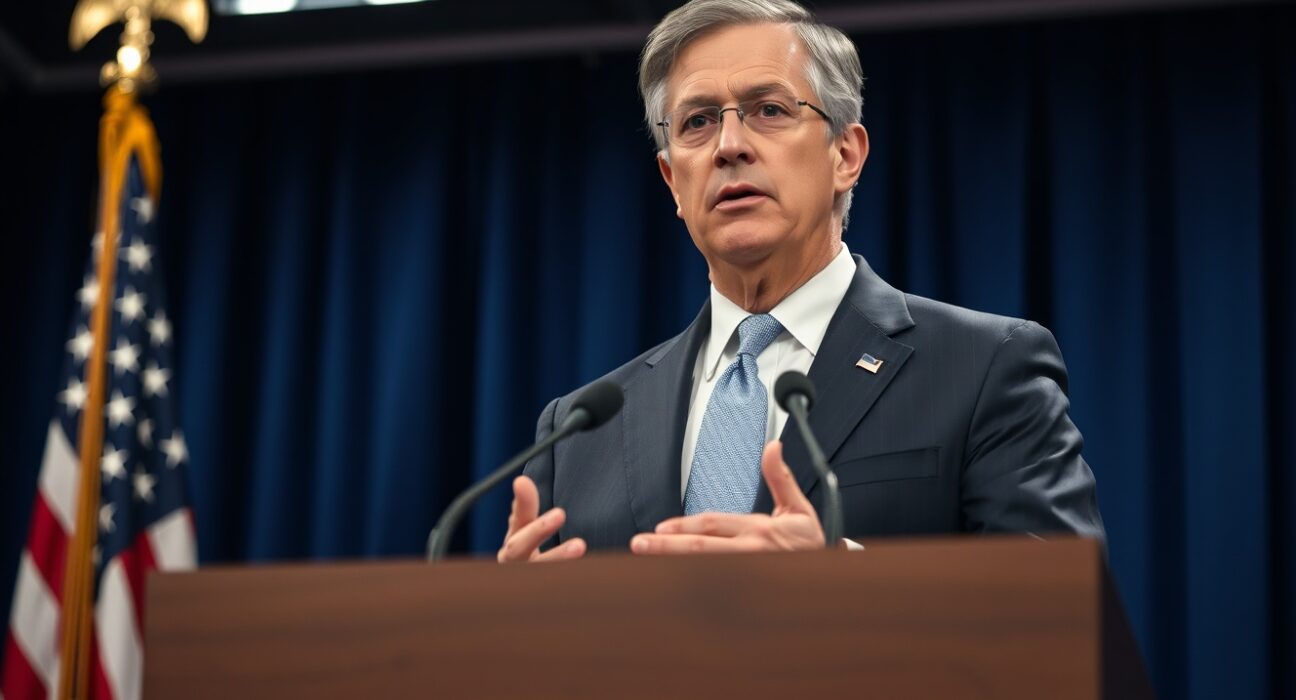
Federal Reserve Chairman Jerome Powell delivered a critical warning on Thursday, stating that the full impact of recent tariffs on the U.S. economy will materialize within the next two quarters. Speaking at a press conference in Washington, D.C., Powell also revealed that the surge in energy inflation has not yet reached its peak. This announcement sends a clear signal to markets and consumers: economic headwinds are intensifying.
Powell’s Tariff Impact Statement: Key Takeaways
Chairman Powell’s comments came during the Federal Open Market Committee (FOMC) press conference. He emphasized that the effects of newly imposed tariffs on imported goods are still working their way through supply chains. Businesses, he noted, are beginning to pass higher costs onto consumers. This process, he explained, typically takes between two to six months. Therefore, the most significant price increases will appear in the second and third quarters of this year. The central bank is closely monitoring these developments.
Powell stated clearly that the current inflationary pressures are not transitory. The tariff impact, combined with rising energy costs, creates a challenging environment for monetary policy. The Fed must balance controlling inflation with supporting economic growth. This balancing act becomes more difficult as external shocks, like tariffs, push prices higher. Consequently, the Fed may need to maintain higher interest rates for longer than previously anticipated.
Energy Inflation Surge: Not Yet Peaked
A particularly concerning aspect of Powell’s statement involved energy prices. He confirmed that the surge in energy inflation has not yet peaked. Global oil and natural gas markets remain volatile due to geopolitical tensions and supply constraints. These factors continue to drive up costs for producers and consumers alike. The energy sector’s influence on overall inflation is substantial. When energy prices rise, they ripple through nearly every other sector of the economy. Transportation costs increase, manufacturing becomes more expensive, and household utility bills climb.
Powell warned that this trend will persist for the foreseeable future. The Fed’s models show that energy prices will remain elevated through the end of the year. This prolonged period of high energy costs threatens to embed inflation expectations into the economy. Workers may demand higher wages to compensate for rising living costs. Companies, in turn, may raise prices further to cover increased labor expenses. This wage-price spiral is exactly what the Fed aims to prevent.
Impact on Consumers and Businesses
The immediate impact of Powell’s tariff impact statement falls on American consumers. Households already face higher prices for groceries, gasoline, and rent. The new wave of tariff-driven inflation will add to this burden. Essential goods, such as electronics, clothing, and automobiles, will see noticeable price increases. Businesses, especially small and medium-sized enterprises, struggle to absorb these rising costs. Many must choose between reducing profit margins or passing costs to customers.
Importers of Chinese goods are particularly affected. The tariffs target a wide range of products, from industrial machinery to consumer electronics. Supply chain disruptions from previous years have not fully resolved. Now, new tariffs compound these existing challenges. Companies that rely on just-in-time inventory systems face the greatest risk. They cannot easily switch suppliers or relocate production facilities quickly. Therefore, the tariff impact will be felt broadly across the retail and manufacturing sectors.
Federal Reserve Policy Implications
Powell’s tariff impact statement carries significant implications for future Federal Reserve policy. The central bank’s primary mandate is price stability and maximum employment. With inflation remaining stubbornly above the 2% target, the Fed cannot ease monetary policy. In fact, Powell hinted that rate cuts are unlikely in the near term. The economy continues to show resilience, with a strong labor market and solid consumer spending. However, these conditions also allow inflation to persist.
The Fed now faces a difficult decision. If it cuts rates too soon, inflation could reaccelerate. If it keeps rates high for too long, economic growth could stall. Powell emphasized that the committee will rely on incoming data. Every meeting will be a live meeting, with decisions made based on the latest economic indicators. The tariff impact timeline is a key variable in these calculations. The Fed will watch for signs that inflation is sustainably declining before adjusting policy.
Market participants reacted quickly to Powell’s comments. Stock markets fell, and bond yields rose. Investors now price in a higher probability of a prolonged period of restrictive monetary policy. The U.S. dollar strengthened against major currencies, reflecting expectations of higher interest rates. These market movements demonstrate the sensitivity of financial markets to Fed communication. Powell’s tariff impact statement, therefore, has immediate and far-reaching consequences.
Historical Context: Tariffs and Inflation
Historical data shows that tariffs consistently lead to higher consumer prices. The Smoot-Hawley Tariff Act of 1930, for example, exacerbated the Great Depression. More recently, the trade war between the U.S. and China from 2018 to 2019 resulted in measurable price increases. Studies from the Federal Reserve Bank of New York found that tariffs raised consumer prices by approximately 0.3% in the first year. The current round of tariffs is broader and includes higher rates. Therefore, the expected impact is larger.
Economists compare the current situation to the 1970s oil shocks. During that period, energy prices spiked dramatically, leading to stagflation. Stagflation combines high inflation with stagnant economic growth. The Fed under Chairman Paul Volcker eventually raised interest rates to unprecedented levels to break inflation. Powell’s approach appears similar, though the current inflation is less severe. Nevertheless, the risk of a stagflationary environment is real. The tariff impact adds to this risk by increasing costs without boosting productive capacity.
Expert Analysis and Market Reactions
Financial analysts have interpreted Powell’s tariff impact statement as a hawkish signal. Many believe the Fed will maintain its current rate level for at least the next two quarters. Some economists predict that rate cuts will not occur until early next year. The energy inflation surge complicates the outlook further. If oil prices continue to rise, the Fed may need to tighten policy even more. This scenario would put additional pressure on the housing market and corporate borrowing costs.
Investment strategists advise clients to prepare for continued volatility. Sectors sensitive to interest rates, such as real estate and utilities, may underperform. Conversely, energy stocks benefit from higher oil prices. Defensive sectors, like healthcare and consumer staples, offer stability during uncertain times. The tariff impact also favors companies with strong domestic supply chains. Firms that rely heavily on imported goods face margin compression.
International markets also feel the effects. Trading partners, including the European Union and Japan, monitor U.S. trade policy closely. Retaliatory tariffs from other countries could escalate the situation. A full-blown trade war would harm global economic growth. Powell acknowledged these risks in his statement. He called for diplomatic solutions to trade disputes, emphasizing that tariffs are a blunt instrument with unintended consequences.
Timeline: What to Expect in the Coming Quarters
The tariff impact will unfold over a predictable timeline. In the first quarter, businesses absorb higher import costs. By the second quarter, these costs begin appearing in producer prices. By the third quarter, consumer prices reflect the full effect. Powell’s statement confirms that the Fed expects this timeline to hold. Therefore, consumers should anticipate higher prices for goods throughout the summer and fall.
Energy inflation follows a different trajectory. Global oil supply constraints, including OPEC+ production cuts and geopolitical instability, keep prices high. The transition to renewable energy sources has not yet reduced dependence on fossil fuels. Consequently, energy prices remain a persistent inflationary force. The Fed’s models show that energy inflation will peak in the third quarter. After that, a gradual decline is possible, but uncertainty remains high.
Powell emphasized that the Fed will remain data-dependent. Key indicators to watch include the Consumer Price Index (CPI), the Producer Price Index (PPI), and the Personal Consumption Expenditures (PCE) price index. Employment data, such as nonfarm payrolls and wage growth, also inform policy decisions. The Fed’s next meeting in six weeks will provide further clarity. Until then, markets will continue to digest Powell’s tariff impact statement.
Conclusion
Federal Reserve Chairman Jerome Powell’s tariff impact statement provides a sobering outlook for the U.S. economy. The impact of tariffs will emerge within the next two quarters, driving consumer prices higher. Simultaneously, the surge in energy inflation has not yet peaked, adding another layer of pressure. The Fed faces a challenging path forward, balancing inflation control with economic growth. Consumers and businesses must prepare for higher costs and continued uncertainty. Powell’s clear and direct communication helps markets understand the central bank’s stance. However, the ultimate resolution depends on trade policy, energy markets, and global economic conditions. Staying informed and adaptable is essential in this evolving landscape.
FAQs
Q1: What did Fed Chair Powell say about tariffs?
Powell stated that the full impact of recent tariffs on the U.S. economy will emerge within the next two quarters, leading to higher consumer prices.
Q2: Has energy inflation peaked according to the Fed?
No, Powell confirmed that the surge in energy inflation has not yet peaked and will remain elevated for the foreseeable future.
Q3: How will Powell’s tariff impact statement affect interest rates?
The statement suggests the Fed will maintain higher interest rates for longer to combat persistent inflation, delaying potential rate cuts.
Q4: What sectors are most vulnerable to the tariff impact?
Import-heavy sectors like retail, electronics, and automotive are most vulnerable. Small businesses and consumers will bear the brunt of higher costs.
Q5: When will consumers see the full effect of tariffs?
Consumers can expect the full effect to materialize in the second and third quarters of this year, as businesses pass on higher import costs.
Disclaimer: The information provided is not trading advice, Bitcoinworld.co.in holds no liability for any investments made based on the information provided on this page. We strongly recommend independent research and/or consultation with a qualified professional before making any investment decisions.
