

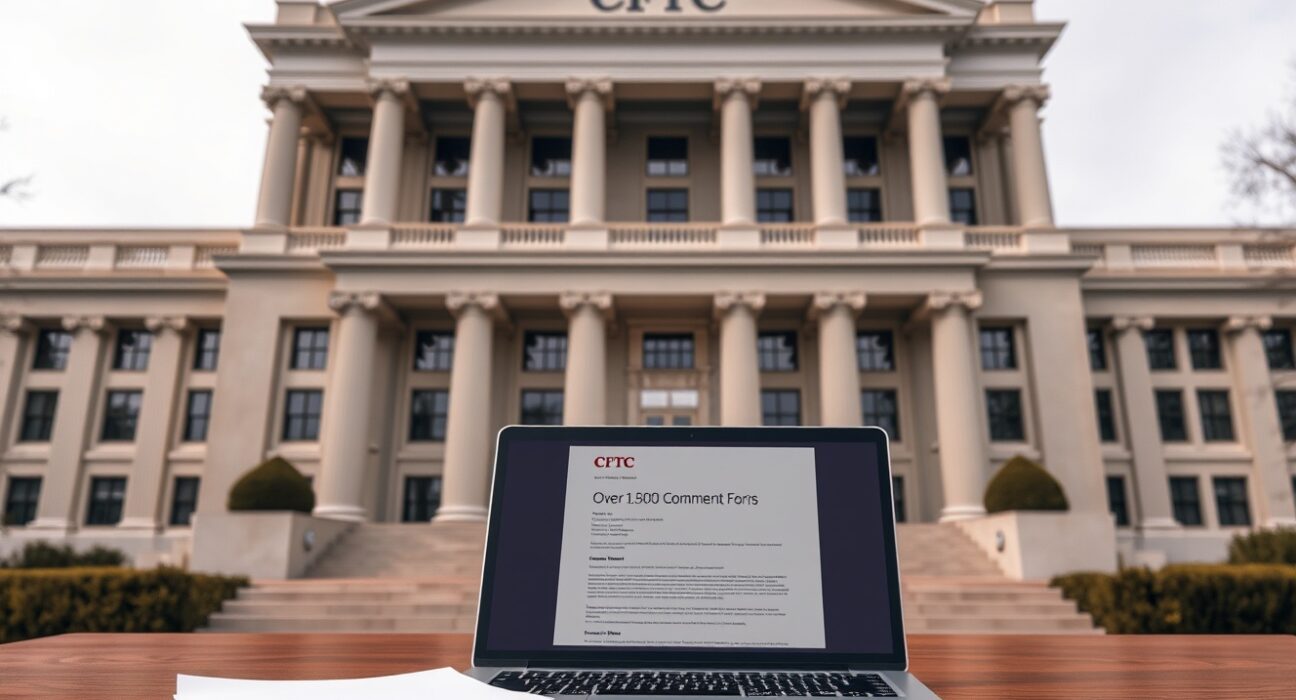
The U.S. Commodity Futures Trading Commission (CFTC) has received more than 1,500 comment letters on its proposed regulations for prediction markets. This flood of feedback highlights a deepening divide over how these platforms should operate. The comment period centers on rules proposed in March 2025, which aim to modify existing regulations or introduce new ones for event contracts within these markets.
CFTC Prediction Market Rules Draw Massive Public Response
The CFTC’s proposed rulemaking targets event contracts, which allow traders to bet on outcomes like election results, economic indicators, or sports events. The agency seeks to clarify which contracts are permissible under the Commodity Exchange Act. This move follows years of rapid growth in prediction market platforms, such as Kalshi and Polymarket, which have attracted millions of users.
According to the CFTC, the comment period closed on May 15, 2025. The agency received input from a wide range of stakeholders, including industry executives, academics, state regulators, and consumer advocacy groups. This volume of feedback is unprecedented for a rulemaking of this scope.
Key Arguments from Comment Letters
Among the most prominent voices, Luana Lopes Lara, co-founder of Kalshi, submitted a detailed letter. She argues that current regulations are effectively designed. She urges the CFTC to provide clear guidelines that allow event contracts to continue trading without unnecessary restrictions. Lopes Lara emphasizes that prediction markets offer valuable data for forecasting and risk management.
In contrast, Kevin O’Toole, Executive Director of the Pennsylvania Gaming Control Board, expresses strong opposition. He states that prediction market platforms operate like sports betting in a regulatory blind spot. O’Toole warns that these platforms lack the consumer protections and oversight required for legal gambling. He calls for the CFTC to classify many event contracts as illegal gaming.
Background: The Rise of Event Contracts
Event contracts have exploded in popularity since 2020. Platforms like Kalshi and Polymarket allow users to trade contracts on binary outcomes, such as “Will the Fed raise rates in June?” or “Will Team X win the Super Bowl?” These markets often resemble sports betting, but they operate under different legal frameworks.
The CFTC first proposed rules for event contracts in 2023. However, the agency delayed final action due to legal challenges and industry pushback. The current proposal seeks to create a clear regulatory perimeter. It would prohibit contracts that involve illegal activity, terrorism, or gaming. Yet, the definition of “gaming” remains a point of contention.
Comparing Prediction Markets and Sports Betting
Critics like O’Toole argue that many prediction markets are indistinguishable from sports betting. For example, a contract on the outcome of a football game mirrors a wager placed at a sportsbook. However, proponents contend that prediction markets serve a different purpose. They aggregate information and provide real-time probability estimates, which can inform business decisions and public policy.
A key difference lies in regulation. Sports betting is overseen by state gaming commissions, while prediction markets fall under federal commodities law. This jurisdictional gap creates confusion and potential for regulatory arbitrage.
Impacts on the Cryptocurrency and Financial Sectors
The CFTC’s decision will have significant ripple effects. For the cryptocurrency industry, prediction markets represent a growing use case for blockchain technology. Platforms like Polymarket use smart contracts to settle trades, offering transparency and decentralization. Stricter rules could stifle innovation and drive users offshore.
Traditional financial firms also watch closely. Some hedge funds and investment banks use prediction market data to gauge market sentiment. If the CFTC bans certain contracts, these firms may lose a valuable tool for risk assessment.
Timeline of Regulatory Actions
- March 2023: CFTC first proposes rules for event contracts.
- September 2024: Kalshi wins a legal victory against the CFTC, allowing election contracts to trade temporarily.
- March 2025: CFTC issues a revised proposal, seeking comments on broader definitions of gaming and illegal activity.
- May 2025: Comment period closes with over 1,500 submissions.
- Expected Q4 2025: CFTC to issue final rule.
Expert Analysis: What Comes Next?
Legal experts predict that the final rule will face immediate court challenges. The CFTC must balance competing interests: protecting consumers from harm and fostering innovation. The agency’s definition of “gaming” will be critical. A narrow definition could allow most prediction markets to continue. A broad definition could effectively ban them.
Industry observers note that the CFTC’s decision may also influence international regulators. The UK’s Financial Conduct Authority and the European Securities and Markets Authority are developing their own frameworks for event contracts. A U.S. precedent could shape global standards.
Conclusion
The CFTC’s receipt of over 1,500 comments on prediction market rules underscores the high stakes involved. The agency must now sift through diverse perspectives, from industry advocates like Kalshi to state regulators like Kevin O’Toole. The final rule will determine the future of event contracts in the United States. It will impact everything from sports betting to financial forecasting. The decision, expected by late 2025, will set a precedent for how emerging markets are regulated in the digital age.
FAQs
Q1: What are prediction market rules?
Prediction market rules are regulations proposed by the CFTC to govern event contracts, which allow trading on outcomes like elections or sports events. The rules aim to clarify which contracts are legal and how platforms must operate.
Q2: Why did the CFTC receive over 1,500 comments?
The CFTC received over 1,500 comments because the proposed rules affect a wide range of stakeholders, including platform operators, traders, state regulators, and consumer advocates. The high volume reflects intense interest and debate.
Q3: What is Kalshi’s position on the CFTC regulations?
Kalshi co-founder Luana Lopes Lara argues that current regulations are effectively designed. She urges the CFTC to provide clear guidelines that allow event contracts to continue trading, emphasizing their value for forecasting.
Q4: How do prediction markets relate to sports betting?
Critics say prediction markets operate like sports betting, especially for contracts on sports outcomes. However, proponents argue they serve different purposes, such as information aggregation, and are regulated under commodities law, not gaming law.
Q5: When will the CFTC finalize the prediction market rules?
The CFTC is expected to issue a final rule by late 2025, following the comment period that ended in May 2025. The timeline may shift due to potential legal challenges.
Disclaimer: The information provided is not trading advice, Bitcoinworld.co.in holds no liability for any investments made based on the information provided on this page. We strongly recommend independent research and/or consultation with a qualified professional before making any investment decisions.
