

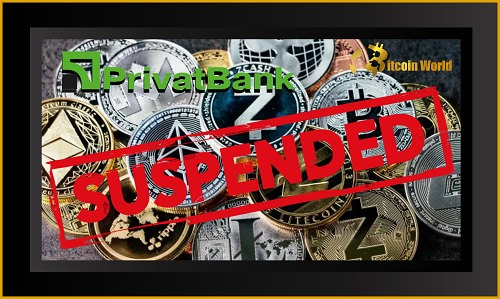
The ongoing conflict in Ukraine has led to significant shifts in the country’s financial landscape, particularly concerning cryptocurrency. Amidst the war, Privatbank, Ukraine’s largest bank, has implemented a ban on Hryvnia (UAH) transfers to crypto exchanges. What implications does this have for the Ukrainian crypto community and the broader adoption of digital currencies in the region?
Why the Ban? Understanding the Restrictions
Privatbank’s decision stems from a resolution issued by the National Bank of Ukraine (NBU) following Russia’s invasion. While not explicitly targeting crypto, the resolution imposes stricter controls on banking operations during martial law. Key restrictions include:
- Cross-border Transfer Limits: Banks are prohibited from cross-border currency transfers on behalf of clients, which includes transfers intended for use on cryptocurrency exchanges.
- Cash Withdrawal Limits: Daily cash withdrawals are capped at 100,000 Hryvnia (approximately $3,400 USD).
- Fixed Exchange Rate: The Hryvnia’s exchange rate has been fixed to stabilize the currency during the crisis.
While the NBU’s measures aim to stabilize the financial system, the indirect impact on cryptocurrency transactions is significant.
Binance’s Response and Alternative Solutions
Binance, the world’s leading crypto exchange, has acknowledged Privatbank’s decision and is advising users to explore alternative methods for trading. The exchange suggests utilizing peer-to-peer (P2P) trading platforms as a workaround. This allows users to directly exchange crypto with each other, bypassing traditional banking channels.
Crypto’s Role in Supporting Ukraine
Despite the restrictions, cryptocurrency continues to play a vital role in supporting Ukraine during the conflict. The Ukrainian government and various organizations have been actively soliciting crypto donations to fund defense efforts and humanitarian aid. Binance Charity, for example, has established the Ukraine Emergency Relief Fund, accepting donations in BTC, ETH, and BNB to assist Ukrainian families, children, refugees, and displaced persons. You can contribute here.
The Future of Crypto in Ukraine: A Complex Landscape
The situation presents a mixed bag for the future of cryptocurrency in Ukraine. On one hand, the government has recently approved the “On Virtual Assets” law, signaling a willingness to regulate and integrate digital assets into the economy. On the other hand, the current restrictions on Hryvnia transfers highlight the challenges and uncertainties surrounding crypto adoption during times of crisis.
Looking Ahead
The Privatbank ban on Hryvnia transfers to crypto exchanges underscores the complex interplay between traditional finance and the emerging digital asset landscape, especially in times of geopolitical instability. While challenges remain, the ongoing use of crypto for donations and the government’s long-term regulatory efforts suggest that digital currencies will continue to play a significant role in Ukraine’s future.
Related Posts – Bank DBS’s Crypto Business Grows Massively Due To Growing Demand From Investors
Disclaimer: The information provided is not trading advice, Bitcoinworld.co.in holds no liability for any investments made based on the information provided on this page. We strongly recommend independent research and/or consultation with a qualified professional before making any investment decisions.
