

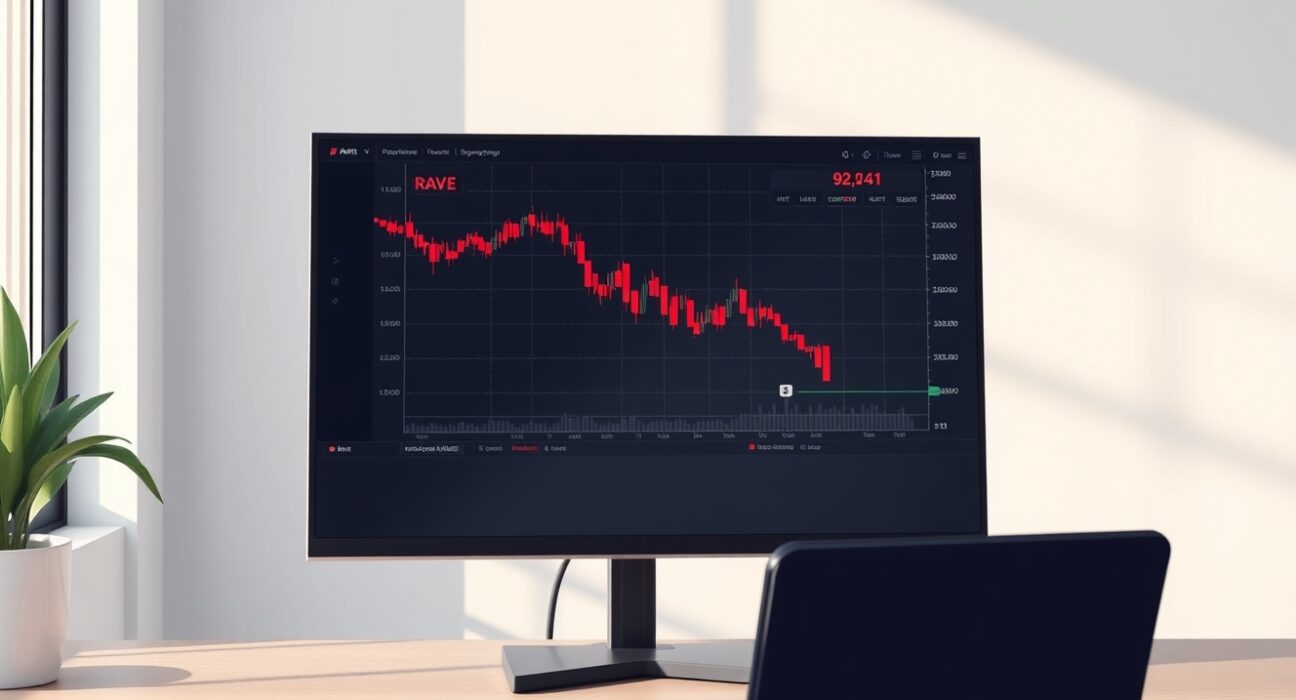
The RAVE cryptocurrency experienced a dramatic market shock on Thursday, November 20, 2025, when its price briefly plunged below the critical $10 threshold on Binance’s futures market. This sudden decline followed explosive allegations from prominent on-chain analyst ZachXBT, who publicly accused unknown parties of orchestrating sophisticated price manipulation schemes. Consequently, the token’s value dropped by 38.3% within hours, triggering immediate investigations from major cryptocurrency exchanges including Bitget. Market analysts now scrutinize the incident’s broader implications for cryptocurrency regulation and investor protection mechanisms.
RAVE Cryptocurrency Faces Unprecedented Market Pressure
RAVE’s price action on Binance futures markets revealed extraordinary volatility throughout the trading session. Initially, the token maintained relative stability around $18.40 during Asian trading hours. However, selling pressure intensified dramatically following the publication of ZachXBT’s detailed thread on social media platform X. Consequently, the price broke through multiple support levels in rapid succession. Market data shows the most severe drop occurred between 14:30 and 15:15 UTC, when RAVE futures contracts traded as low as $9.87 USDT. This represented the token’s lowest valuation since its listing on major exchanges in early 2024.
Trading volume surged to approximately 450% above the 30-day average during the decline. Furthermore, open interest in RAVE perpetual futures contracts increased by $12.7 million despite the price drop. This unusual combination typically indicates heightened speculative activity rather than organic market movement. Market makers subsequently intervened, stabilizing the price at $11.3623 by the European trading session’s close. Nevertheless, the recovery remained fragile with bid-ask spreads widening significantly across all major trading pairs.
ZachXBT Allegations Trigger Immediate Exchange Responses
On-chain investigator ZachXBT published comprehensive evidence suggesting coordinated price manipulation across multiple cryptocurrency exchanges. His analysis identified several suspicious wallet addresses that executed nearly simultaneous large sell orders. These transactions reportedly totaled approximately $4.2 million across Binance, OKX, and Bybit futures markets. Additionally, the investigator highlighted unusual options activity preceding the price decline. Specifically, he noted a substantial increase in put options for RAVE with strike prices between $9 and $11.
Bitget CEO Gracy Chen responded within hours of the allegations becoming public. She announced a formal investigation into the trading patterns on her platform. Moreover, Chen committed to sharing findings with other affected exchanges and relevant regulatory bodies. This collaborative approach represents an evolving industry standard for addressing market integrity concerns. Other exchanges including Binance and OKX have since confirmed they are reviewing the unusual trading activity, though neither has confirmed evidence of manipulation at this time.
Historical Context of Cryptocurrency Market Manipulation
This incident follows several high-profile market manipulation cases in recent cryptocurrency history. Notably, the 2023 Mango Markets exploit involved approximately $117 million in manipulated trades. Similarly, the 2022 Wonderland TIME token controversy revealed coordinated trading among project insiders. Regulatory responses have intensified following these events. For instance, the U.S. Securities and Exchange Commission has increasingly pursued enforcement actions against wash trading and spoofing in digital asset markets.
The table below compares key metrics from recent alleged manipulation incidents:
| Incident | Asset | Price Impact | Estimated Volume |
|---|---|---|---|
| November 2025 | RAVE | -38.3% | $42M |
| October 2023 | Mango Markets | -89% | $117M |
| March 2022 | Wonderland TIME | -76% | $28M |
Technical Analysis Reveals Critical Support Breakdown
Technical indicators signaled vulnerability before the dramatic price movement. The RAVE/USDT perpetual swap chart showed weakening momentum throughout the preceding week. Specifically, the Moving Average Convergence Divergence (MACD) histogram turned negative on November 18. Additionally, the Relative Strength Index (RSI) declined from 58 to 42 within 48 hours before the crash. These technical developments suggested growing selling pressure even before the manipulation allegations surfaced.
Key technical levels failed to provide meaningful support during the decline:
- $15.20: 50-day moving average (broken within 15 minutes)
- $13.75: Previous weekly low (offered minimal resistance)
- $11.50: Psychological support level (briefly held before breaking)
- $10.00: Critical round number support (ultimately failed)
The rapid succession of support breaks indicates exceptionally strong selling momentum. Typically, cryptocurrency assets find temporary support at major moving averages or previous price consolidation areas. However, RAVE sliced through these levels with unusual speed. This behavior often characterizes forced liquidations or coordinated selling rather than organic market sentiment shifts.
Market Structure and Liquidity Considerations
Futures market structure contributed significantly to the price decline’s severity. Binance’s RAVE/USDT perpetual swap maintains approximately $8-12 million in daily liquidity under normal conditions. However, the sudden influx of sell orders overwhelmed available buy-side liquidity. Consequently, the order book displayed unusually wide spreads exceeding 2.5% during peak volatility. Market makers reportedly reduced their quoting activity due to the uncertainty surrounding the allegations.
Liquidity providers face increased risks during such events. Specifically, they must balance maintaining orderly markets against potential losses from adverse selection. Several liquidity providers temporarily widened their spreads or reduced quote sizes during the most volatile periods. This defensive behavior, while rational from a risk management perspective, exacerbated the price decline by reducing available liquidity at critical price points.
Regulatory Implications and Future Market Safeguards
This incident occurs during a period of intensified regulatory scrutiny for cryptocurrency markets globally. The European Union’s Markets in Crypto-Assets (MiCA) regulation implementation begins in December 2025. Similarly, the United States Financial Stability Oversight Council recently recommended enhanced surveillance for digital asset trading platforms. These developments suggest increased regulatory attention to market manipulation prevention mechanisms.
Exchange responses will likely focus on several key areas:
- Enhanced surveillance: More sophisticated trade monitoring algorithms
- Improved coordination: Cross-exchange information sharing protocols
- Transparency measures: Public reporting of suspicious activity findings
- Liquidity requirements: Minimum market maker obligations during volatility
Industry participants emphasize the importance of proportional responses. Excessive regulation could stifle legitimate market activity and innovation. However, inadequate safeguards risk undermining investor confidence in cryptocurrency markets. Consequently, exchanges must balance these competing priorities while addressing genuine market integrity concerns.
Conclusion
The RAVE cryptocurrency’s dramatic decline below $10 highlights persistent vulnerabilities in digital asset markets. While investigations continue, the incident underscores the critical importance of market surveillance and integrity mechanisms. Exchange responses, particularly Bitget’s immediate investigation announcement, demonstrate evolving industry standards for addressing manipulation concerns. Furthermore, this event will likely influence ongoing regulatory discussions regarding cryptocurrency market structure. Market participants should monitor developments closely, as findings from exchange investigations could establish important precedents for future market protection measures. The RAVE token’s recovery trajectory will provide valuable insights into market resilience following significant integrity challenges.
FAQs
Q1: What caused RAVE cryptocurrency to drop below $10?
The price decline followed allegations of potential market manipulation published by on-chain analyst ZachXBT. These allegations prompted significant selling pressure across multiple cryptocurrency exchanges, particularly on Binance futures markets.
Q2: How have cryptocurrency exchanges responded to the allegations?
Bitget CEO Gracy Chen announced an immediate investigation into trading activity on her platform. Other major exchanges including Binance and OKX have confirmed they are reviewing the unusual trading patterns but have not yet confirmed evidence of manipulation.
Q3: What technical indicators signaled vulnerability before the price drop?
Technical analysis showed weakening momentum with the MACD histogram turning negative and RSI declining from 58 to 42 within 48 hours preceding the crash. Multiple support levels including the 50-day moving average failed to hold during the decline.
Q4: How does this incident compare to previous cryptocurrency market manipulation cases?
While smaller in scale than incidents like the 2023 Mango Markets exploit, the RAVE situation shares characteristics including coordinated selling across exchanges and unusual options activity preceding the price movement.
Q5: What are the potential regulatory implications of this event?
The incident occurs during increased global regulatory scrutiny of cryptocurrency markets. It may influence implementation of the EU’s MiCA regulation and strengthen calls for enhanced surveillance and cross-exchange coordination to prevent market manipulation.
Disclaimer: The information provided is not trading advice, Bitcoinworld.co.in holds no liability for any investments made based on the information provided on this page. We strongly recommend independent research and/or consultation with a qualified professional before making any investment decisions.
