
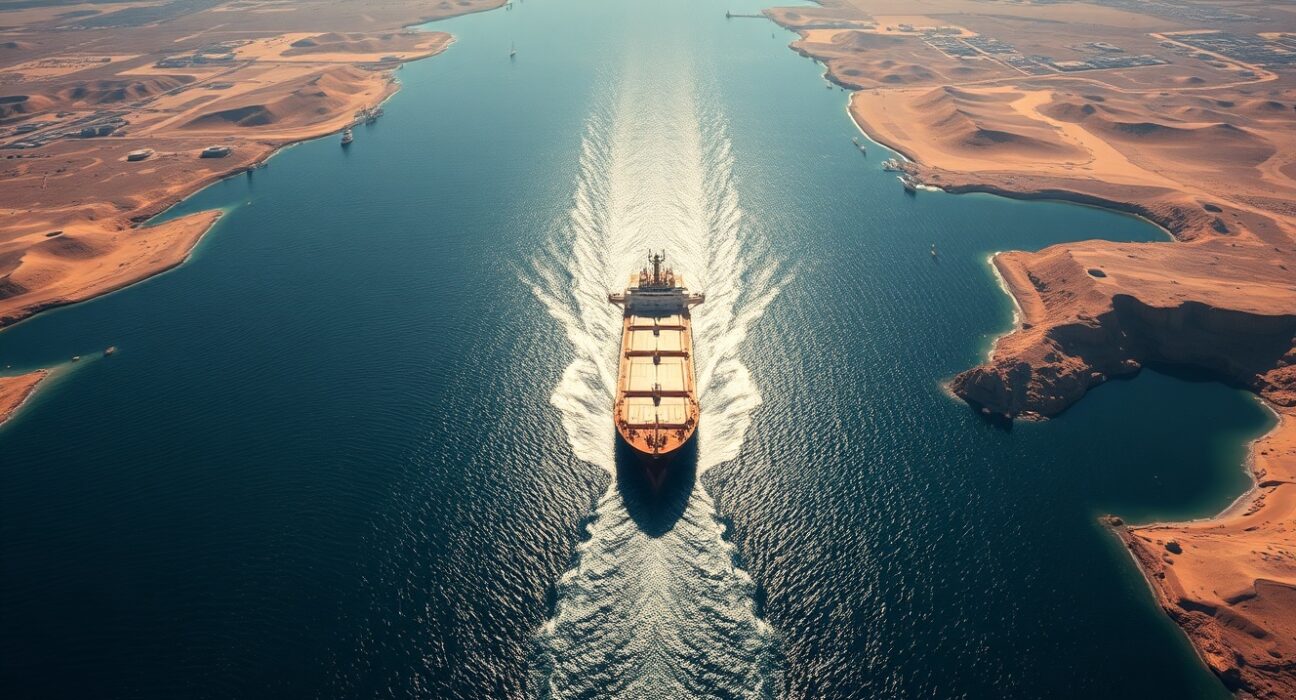
RIYADH, SAUDI ARABIA — March 15, 2025: Global energy markets face immediate turbulence today as Saudi Arabia implements a substantial 20% reduction in crude oil production. This decisive Saudi Arabia oil output cut responds directly to escalating maritime disruptions in the Strait of Hormuz following recent military actions. Consequently, the kingdom’s daily production now stands at approximately eight million barrels, according to verified reports from Reuters and industry analysts.
Saudi Arabia Oil Output Cut: Analyzing the Production Decision
The Saudi energy ministry confirmed the production adjustment early this morning. This strategic move follows confirmed shutdowns at major offshore fields. Specifically, the Safaniya and Zuluf fields have suspended operations. Together, these facilities normally contribute over two million barrels daily to global supply. Therefore, their closure represents a significant portion of the overall reduction.
Energy analysts immediately noted the decision’s timing and scale. “This isn’t a routine market adjustment,” observed Dr. Elena Rodriguez, Senior Fellow at the Global Energy Institute. “A 20% cut from the world’s largest exporter signals profound supply concerns. Moreover, it reflects tangible security assessments about shipping lanes.” Industry data shows Saudi Arabia maintained production near ten million barrels daily throughout early 2025. Thus, the drop to eight million marks a sharp operational pivot.
Geopolitical Context of the Strait of Hormuz Disruption
The Strait of Hormuz serves as the world’s most critical oil transit corridor. Approximately 21 million barrels pass through this narrow waterway daily. This volume represents nearly one-third of global seaborne traded oil. Recent U.S. and Israeli airstrikes on Iranian military targets have heightened regional tensions significantly. Subsequently, maritime security incidents and insurance premium spikes have disrupted normal shipping patterns.
International Energy Agency (IEA) reports now confirm broader regional production cuts. Major Gulf producers including Iraq, Qatar, Kuwait, and the United Arab Emirates have collectively reduced output. Since hostilities with Iran intensified, total reductions exceed ten million barrels per day across the Gulf Cooperation Council (GCC) nations. The IEA further warns of additional cuts if shipping disruptions persist through the second quarter.
Historical Precedents and Market Implications
Current events recall previous Hormuz crises, yet analysts highlight key differences. The 2019 tanker attacks and 2021-2022 supply chain pressures caused temporary spikes. However, today’s coordinated production cuts represent a more structural supply withdrawal. “We’re witnessing a deliberate supply-side contraction, not just a logistical delay,” explains commodities strategist Marcus Chen. “This fundamentally alters the global inventory equation for 2025.”
The immediate market reaction has been pronounced. Brent crude futures surged over 8% in early Asian trading. Meanwhile, U.S. West Texas Intermediate (WTI) followed with similar gains. Energy stocks and related exchange-traded funds (ETFs) also experienced heavy trading volume. Conversely, airline and transportation sectors faced immediate downward pressure on cost concerns.
Economic Consequences of the Global Oil Supply Shock
The production cuts will ripple through the global economy with measurable impact. First, consumer fuel prices will inevitably rise across North America, Europe, and Asia. Second, manufacturing and transportation costs will increase for countless industries. Third, central banks may reconsider inflation trajectories, potentially affecting interest rate policies.
Key immediate impacts include:
- Increased gasoline and diesel prices worldwide
- Higher production costs for plastics, chemicals, and fertilizers
- Renewed inflationary pressures in recovering economies
- Potential shifts in strategic petroleum reserve releases
Developing nations reliant on energy imports face particular vulnerability. Countries like India, Pakistan, and South Africa maintain limited strategic reserves. Consequently, their balance of payments and currency stability may come under strain. The International Monetary Fund (IMF) has already flagged energy-driven inflation as a primary 2025 risk factor.
Technical Analysis of the Production Reduction Mechanism
Saudi Arabia’s production system allows relatively rapid scaling. The kingdom utilizes advanced reservoir management and floating storage. However, the Safaniya field shutdown presents technical challenges. As the world’s largest offshore oil field, Safaniya requires complex maintenance during prolonged idling. Restarting production may take weeks even after security conditions improve.
Industry sources indicate Aramco, the state oil company, has activated contingency plans. These measures prioritize worker safety and asset protection. Additionally, the company is rerouting some remaining production through the East-West Petroline pipeline. This pipeline bypasses the Strait of Hormuz, offering alternative export routes via the Red Sea. Nevertheless, pipeline capacity constraints limit this workaround’s effectiveness.
Global Energy Security and Alternative Supply Routes
The crisis accelerates existing trends in energy security planning. European nations, having reduced Russian imports, now depend more heavily on Middle Eastern supplies. Similarly, Asian economies like China and Japan require stable Gulf shipments. This dependency underscores the strategic importance of alternative corridors.
Potential alternatives include increased use of the SUMED pipeline in Egypt and expanded capacity at the Port of Fujairah. Furthermore, the crisis may boost investment in overland routes through Iraq and Turkey. However, these alternatives cannot fully replace Hormuz transit in the short term. The table below illustrates current Gulf oil export routes and their capacities:
| Export Route | Capacity (Million bpd) | Primary Users | Status |
|---|---|---|---|
| Strait of Hormuz | ~21.0 | All Gulf producers | Disrupted |
| East-West Petroline | ~5.0 | Saudi Arabia | Operational |
| SUMED Pipeline | ~2.5 | Saudi Arabia, UAE | Near Capacity |
| Fujairah Port | ~2.0 | UAE | Operational |
Conclusion
The Saudi Arabia oil output cut represents a pivotal moment for global energy markets. This 20% production reduction directly responds to Strait of Hormuz disruptions, creating immediate supply constraints. Furthermore, coordinated cuts across Gulf producers amplify the market impact significantly. Consequently, consumers and industries worldwide will face higher energy costs. The situation underscores the fragile nature of global energy infrastructure and its susceptibility to geopolitical events. Monitoring shipping lane security and diplomatic developments remains crucial for forecasting market stability through 2025.
FAQs
Q1: How long will Saudi Arabia maintain the 20% oil production cut?
The duration depends entirely on Strait of Hormuz security conditions. Saudi officials indicate the cut will persist while shipping disruptions continue. No specific timeline has been announced, but analysts suggest weeks or possibly months.
Q2: What percentage of global oil supply travels through the Strait of Hormuz?
Approximately 21 million barrels per day, representing about 21% of global petroleum liquid consumption and nearly one-third of all seaborne traded oil passes through this chokepoint.
Q3: Which specific oil fields did Saudi Arabia shut down?
The kingdom confirmed shutdowns at the offshore Safaniya and Zuluf fields. These are among the world’s largest offshore fields, collectively producing over two million barrels daily under normal operations.
Q4: How will this affect gasoline prices in the United States and Europe?
Prices will increase significantly. Historical patterns suggest a 20% crude price increase typically translates to a 10-15% rise at the pump within 2-3 weeks, though exact impacts vary by region and taxation.
Q5: Are there any immediate alternatives to Hormuz for Gulf oil exports?
Limited alternatives exist. The East-West Petroline and SUMED pipeline offer partial capacity, while Fujairah Port provides some redundancy. However, no single route can replace Hormuz’s massive throughput capacity in the short term.
Disclaimer: The information provided is not trading advice, Bitcoinworld.co.in holds no liability for any investments made based on the information provided on this page. We strongly recommend independent research and/or consultation with a qualified professional before making any investment decisions.